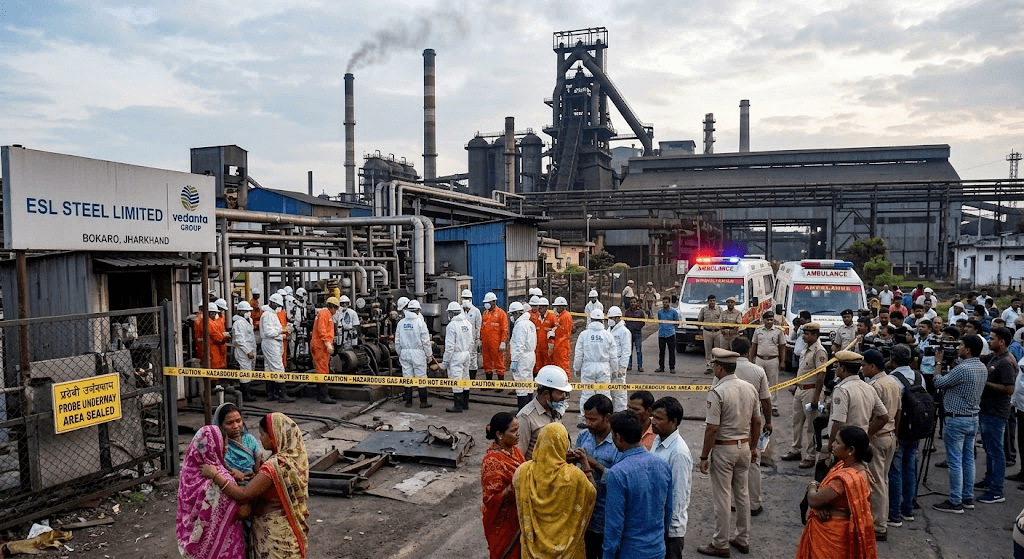
There are outbreaks that arrive with noise — sirens, headlines, urgency shouted aloud. And then there are those that move more quietly, carried not by panic but by watchfulness. In parts of India, the return of the Nipah virus has unfolded in this softer, more unsettling way, marked by containment zones, contact lists, and a careful tightening of public health vigilance.
Nipah is not a virus that spreads widely with ease, yet it carries a reputation that far outweighs its numbers. Health authorities describe it as having “epidemic potential” — a phrase that reflects not certainty, but risk. When it appears, it commands attention because of what medicine cannot yet offer: there is no approved vaccine and no specific treatment.
The virus is believed to originate in fruit bats, passing to humans either through contaminated food or close contact, before occasionally spreading from person to person. In recent cases reported in India, infections have prompted rapid tracing of contacts, isolation of patients, and temporary restrictions in affected districts.
What makes Nipah particularly feared is not only its transmission, but its severity. Early symptoms often resemble common illness — fever, headache, fatigue — before escalating in some patients to acute respiratory distress or encephalitis, an inflammation of the brain that can become fatal. Mortality rates recorded in past outbreaks have ranged widely but remain among the highest of known viral diseases.
Indian health authorities have responded with experience earned through earlier encounters. Surveillance teams have been deployed, hospitals placed on alert, and neighbouring states advised to heighten monitoring. Schools and public institutions in affected areas have been temporarily closed as a precaution, while laboratories work to confirm and rule out suspected cases.
Globally, the Nipah virus occupies a worrying position on the World Health Organization’s list of priority pathogens — viruses considered most likely to spark serious outbreaks due to limited medical countermeasures. Research is ongoing, with experimental vaccines and treatments under development, but none are yet available for public use.
For now, containment remains the strongest defence. Isolation, hygiene protocols, protective equipment for healthcare workers, and public awareness form the thin but essential barrier between clusters and wider spread.
The situation in India continues to be closely monitored, not because a large outbreak is inevitable, but because history has taught health officials the cost of delay. Nipah’s danger lies not in speed, but in severity — a virus that asks to be taken seriously even when numbers are small.
In moments like these, public health becomes an act of patience rather than panic. Watching closely. Acting early. And hoping that caution, once again, proves enough.
AI IMAGE DISCLAIMER Illustrations were produced with AI and are intended for conceptual representation only.
SOURCES World Health Organization BBC News Reuters The Guardian India Ministry of Health and Family Welfare
Published by Banx Network. This article is part of the Banx decentralized media programme, powered by the BXE token on the XRP Ledger.