
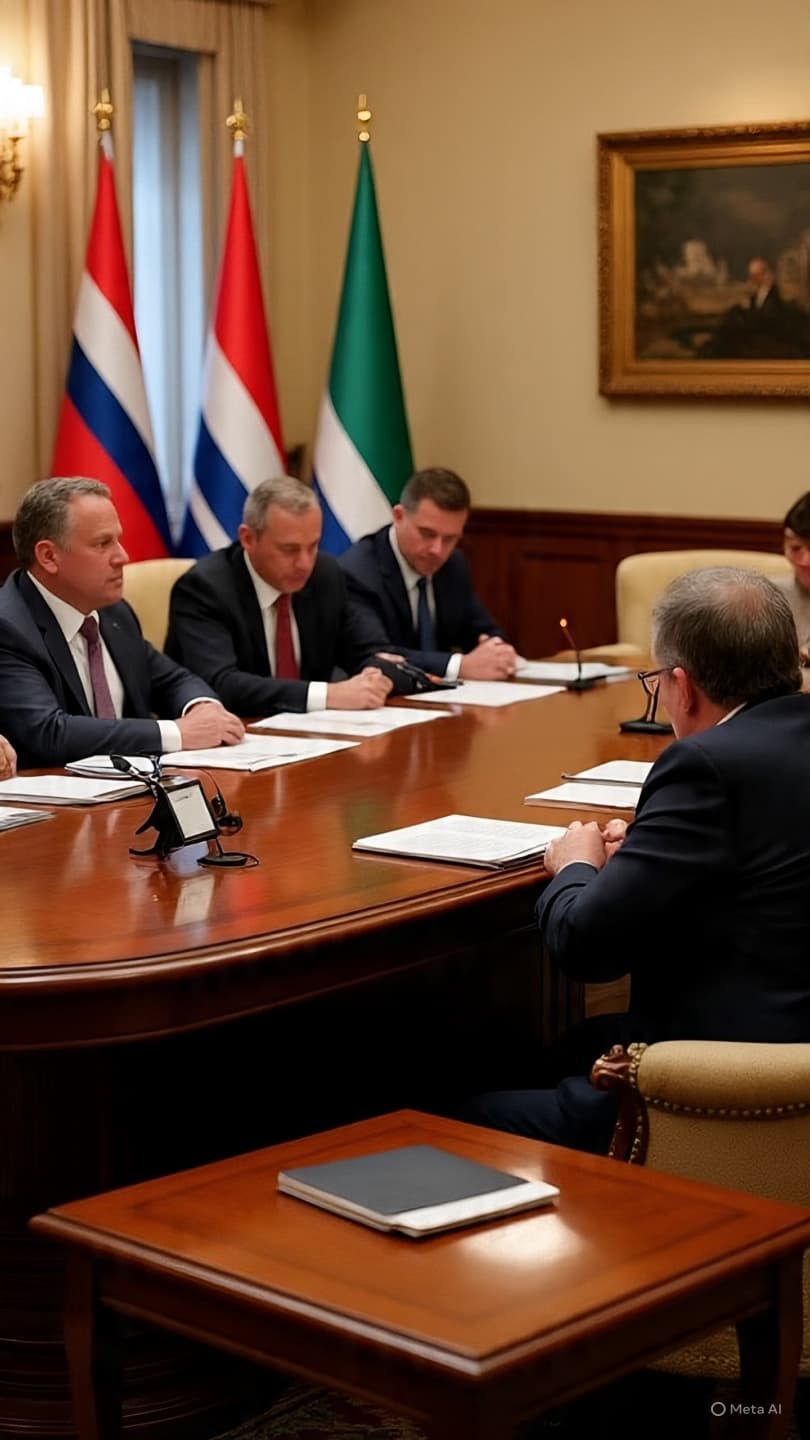
Key Highlights
- Iran secures a role in a UN body, backed by Western nations.
- The U.S. takes a differing stance, highlighting diplomatic tensions.
- The appointment reflects shifting global alliances and engagement strategies.
In the intricate world of international diplomacy, decisions often emerge not from abrupt declarations but through the gradual alignment of voices. Within the United Nations, where diplomacy unfolds in measured cadence, the recent appointment of Iran to a UN body stands out as a significant development, particularly given the support it received from countries like the United Kingdom, France, Canada, and Australia. This coalition's backing is noteworthy, especially as it contrasts with the position taken by the United States, which has opted for a more cautious approach.
The appointment of Iran reflects a broader context of complex relations with Western nations and ongoing diplomatic negotiations. It underscores a moment of divergence in international relations, where some countries view engagement within multilateral institutions as preferable to exclusion. This shift suggests a recalibration of alliances, as nations navigate their foreign policy priorities in an increasingly polarized global landscape.
Within the UN framework, such appointments are rarely isolated events. They are indicative of ongoing negotiations and reciprocal understandings that shape global relationships. A country's presence in a UN body does not necessarily imply alignment on all issues; rather, it signifies participation in a dialogue that accommodates differences while fostering communication. The backing of Iran by several Western nations may be seen as a strategic move to maintain channels of communication in a system that thrives on presence and interaction.
The U.S. position, standing apart from its allies in this instance, adds another layer of complexity to the diplomatic landscape. Differences among allies are not uncommon within the UN system, where voting patterns often reflect immediate strategic calculations as much as long-term policy alignment. The absence of consensus in this case is as significant as the support Iran received, highlighting the nuanced dynamics at play in international diplomacy.
The countries supporting Iran's appointment each have their own foreign policy priorities, which may influence their decision to engage with Iran in this context. This participation can be viewed as both a practical and symbolic act, reinforcing the notion that international institutions function through inclusion, even amid disagreement. The ongoing tension between principle and pragmatism is evident in this development, as the UN continues to gather states with differing perspectives under a shared framework.
As this decision settles into the institutional record, its significance will unfold gradually. It becomes part of a larger pattern of engagement, where alliances shift subtly in response to changing circumstances. The appointment of Iran within the UN body serves as a reminder that global diplomacy is rarely defined by unanimity; rather, it is shaped by the careful coexistence of agreement and difference, held together within a framework that continues to facilitate dialogue among nations.
In the quiet continuity of UN proceedings, where each vote and appointment adds another layer to an already intricate system, this moment stands as a testament to the complexities of global governance. The inclusion of Iran in this context does not resolve underlying tensions but may reshape how they are expressed, moving from isolation toward structured interaction.
Published by Banx Network. This article is part of the Banx decentralized media programme, powered by the BXE token on the XRP Ledger.



