
Key Highlights
- Ongoing Conflict:Myanmar's civil unrest continues with no clear resolution in sight.
- Military Gains:The junta has made territorial advances but faces persistent resistance.
- Humanitarian Crisis:Displacement and aid access remain critical issues for civilians.
The conflict in Myanmar has evolved into a multifaceted struggle since the military coup in February 2021. The military junta, which seized power from the democratically elected government, has faced significant opposition from various resistance groups. These groups have emerged across the country, challenging the junta's authority through both organized and localized efforts, creating a complex battlefield where control is fragmented and contested.
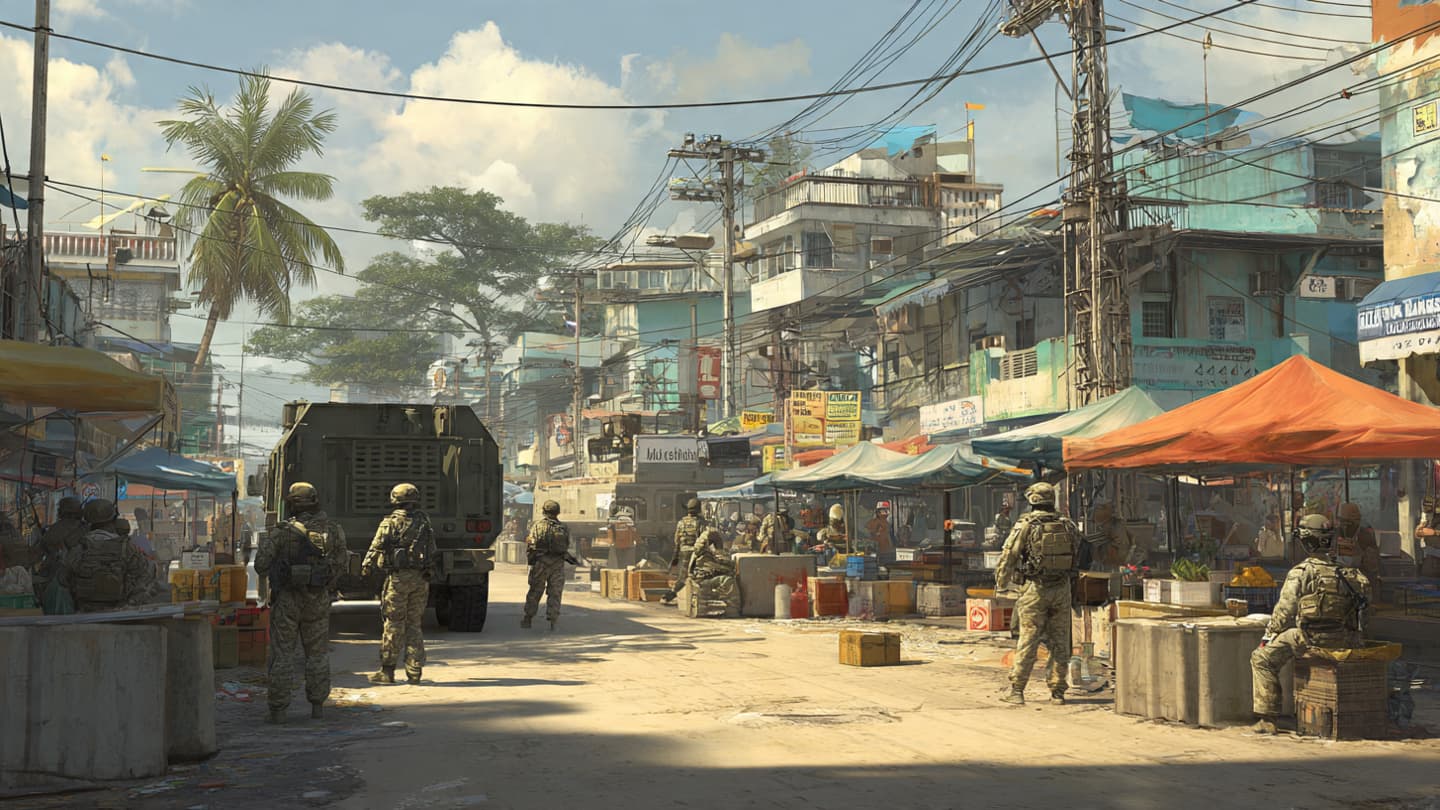
Recent reports indicate that the junta has made some territorial gains, particularly in urban areas and strategic locations. This consolidation of power has been facilitated by access to heavy weaponry and a structured command hierarchy. Observers note that these developments have led to perceptions of a strengthened military position, yet the reality on the ground remains far more complicated.
Resistance forces, often operating in rural and border regions, continue to mount pressure on the junta. Their ability to sustain localized engagements highlights the ongoing fragmentation of the conflict. Despite the junta's advances, these groups have demonstrated resilience, suggesting that the situation is far from settled. The dynamics of control are fluid, with shifts occurring frequently as both sides adapt to the evolving landscape.
Humanitarian concerns are paramount in this ongoing conflict. Millions of civilians have been displaced due to violence, and access to essential services and aid remains severely restricted in many areas. The international community has responded with a mix of sanctions and calls for dialogue, but coordinated action has proven challenging given the complexity of the situation.
Experts caution against oversimplifying the conflict as a binary struggle of victory versus defeat. Instead, they emphasize the need to understand the nuanced realities on the ground. The potential for shifts in power dynamics remains, and the question of whether a true resolution can be achieved is still open.
As the situation continues to unfold, the people of Myanmar face an uncertain future, marked by ongoing conflict and humanitarian challenges. The path forward will require careful navigation of the intricate relationships between the military, resistance groups, and the international community.
Published by Banx Network. This article is part of the Banx decentralized media programme, powered by the BXE token on the XRP Ledger.



