
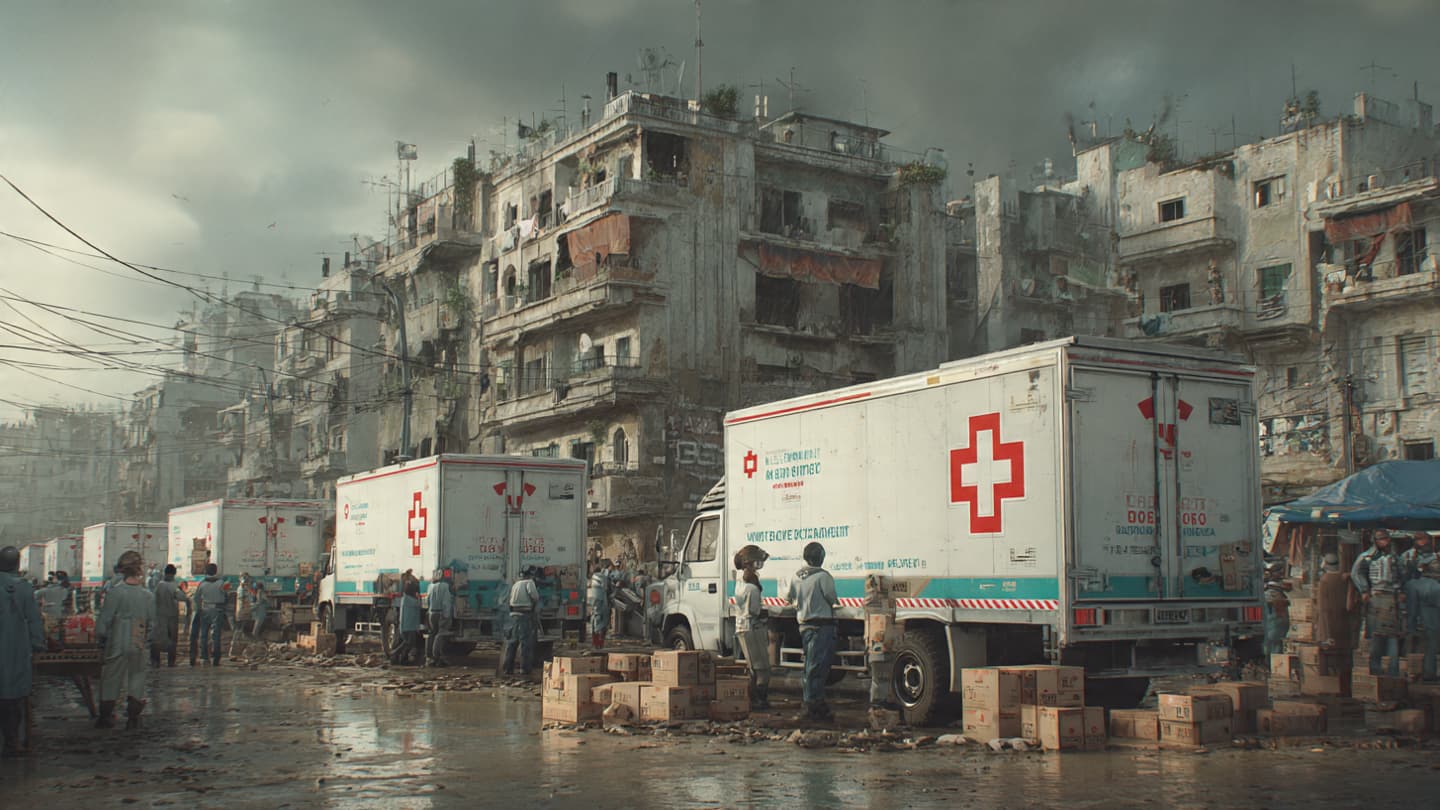
Key Highlights
- France has increased humanitarian support for civilians in Gaza amid ongoing conflict.
- Access to essential resources like food and medical supplies remains critical.
- Humanitarian efforts face significant logistical and security challenges.
France has intensified its humanitarian support efforts for civilians affected by the ongoing conflict in Gaza, reflecting a broader international concern regarding the dire humanitarian conditions in the region. As the conflict continues, millions of ordinary lives are shaped by circumstances beyond their control, with families searching for safety and communities coping with shortages. Humanitarian organizations are working under increasingly difficult conditions, reminding the world that the human dimension of conflict cannot be ignored.
Access to food, medical supplies, clean water, and shelter has become a central issue for aid organizations operating on the ground in Gaza. The humanitarian needs remain substantial, prompting governments and international institutions to explore additional avenues of support. France's decision to bolster its humanitarian efforts underscores the importance of ensuring that assistance reaches civilian populations facing hardship.
Delivering aid in conflict zones presents numerous logistical and security challenges, requiring careful planning and cooperation among multiple stakeholders, including governments, international agencies, and non-governmental organizations. The situation in Gaza continues to attract attention from the international community, with humanitarian organizations highlighting the difficulties associated with maintaining essential services and delivering relief supplies under complex conditions. This has led to increased diplomatic engagement surrounding humanitarian access and support mechanisms.
French assistance is part of a broader international effort aimed at addressing immediate needs while supporting longer-term humanitarian objectives. Aid initiatives may include medical supplies, emergency assistance, logistical support, and financial contributions to organizations working directly with affected populations. Such measures seek to alleviate suffering regardless of political or military developments.
Humanitarian action occupies a unique position in international affairs. Unlike diplomatic negotiations, which often involve competing interests and lengthy discussions, humanitarian assistance focuses primarily on addressing urgent human needs. The objective is not to resolve underlying conflicts directly but to reduce the suffering experienced by civilians caught within them.
Observers note that humanitarian operations frequently depend on cooperation between multiple parties. Safe access routes, secure distribution mechanisms, and coordination among aid agencies all influence the effectiveness of relief efforts. As conditions evolve, organizations must adapt to changing circumstances while continuing to prioritize assistance delivery.
France has consistently supported humanitarian initiatives through both bilateral programs and multilateral institutions. The country's involvement reflects a broader commitment shared by many nations seeking to address the consequences of conflict through practical support measures. Humanitarian assistance is often viewed as an essential complement to diplomatic efforts aimed at promoting stability and dialogue.
Despite the considerable challenges facing humanitarian organizations, including resource constraints, operational difficulties, and ongoing insecurity, relief agencies continue their work, driven by the principle that assistance should reach those most in need regardless of the complexity of the environment. As international attention remains focused on developments in Gaza, France’s expanded humanitarian support underscores the continuing importance of humanitarian action during times of crisis. While aid alone cannot resolve the underlying causes of conflict, it can provide meaningful assistance to those facing its consequences. In a world often defined by divisions, humanitarian efforts serve as a reminder that compassion remains a force capable of crossing borders, politics, and circumstances.
Published by Banx Network. This article is part of the Banx decentralized media programme, powered by the BXE token on the XRP Ledger.



