
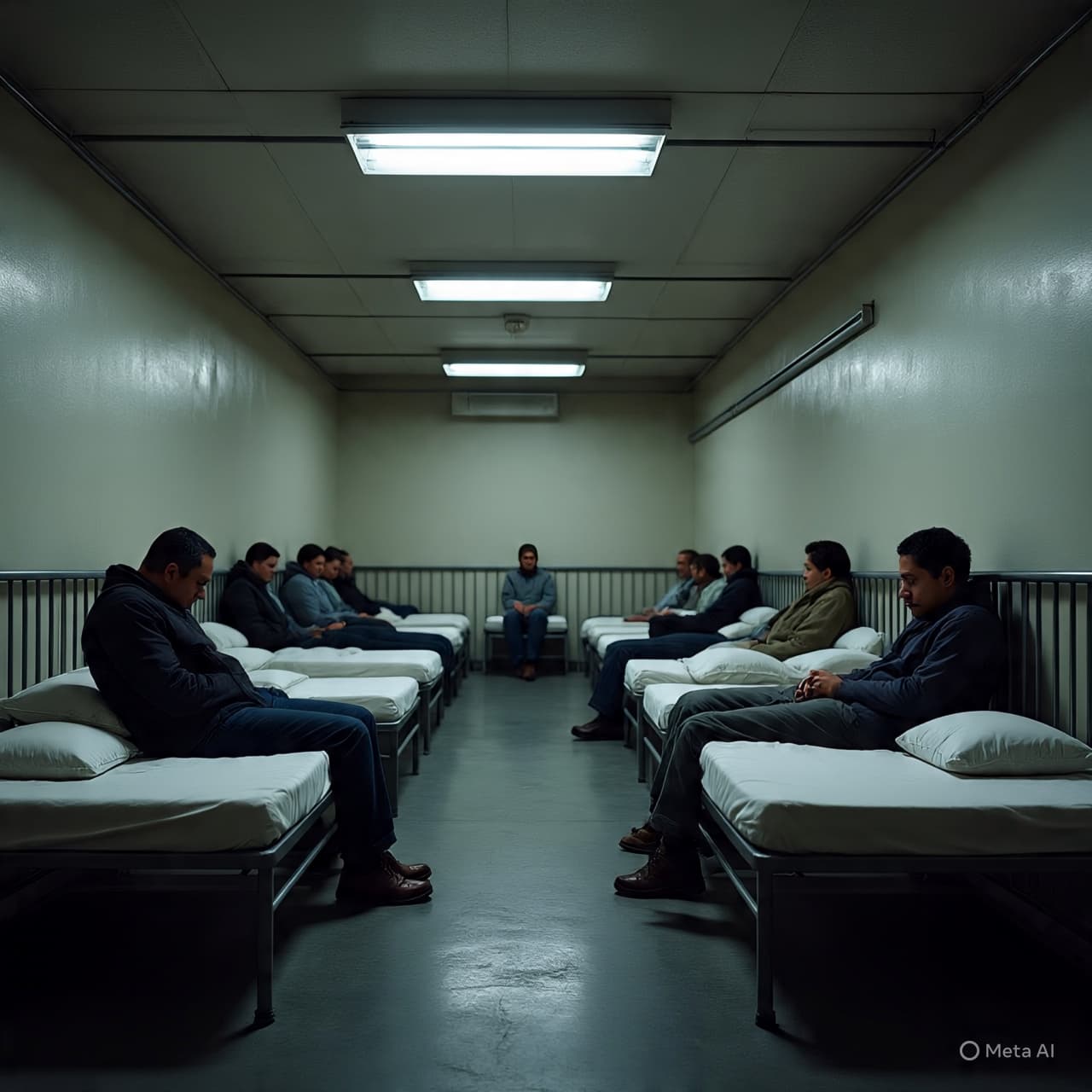
A detention center is designed to hold people in place, but illness does not respect walls. It moves quietly, carried on breath, shared surfaces, and delayed care. Inside immigration detention facilities across the United States, that movement has become harder to ignore. What was once framed as a bureaucratic holding system now increasingly resembles something else entirely: a public health risk unfolding behind locked doors.
Recent outbreaks of vaccine-preventable diseases inside ICE detention centers have exposed conditions long warned about by doctors and advocates. Overcrowded dormitories, limited ventilation, and delayed medical screening create an environment where infection spreads faster than intervention. When illness appears, containment often comes too late, leaving quarantine as a last resort rather than a preventive measure.
These centers were never built to function as long-term congregate housing, yet many detainees remain for weeks or months. Medical staffing frequently lags behind population size, and access to outside hospitals can be slow and opaque. Families and legal representatives report difficulty obtaining basic information when detainees are transferred for treatment, turning health crises into periods of silence and uncertainty.
Public health experts emphasize that detention does not isolate risk; it concentrates it. Infectious diseases thrive where people sleep, eat, and wait in close proximity, especially when vaccination histories are incomplete and preventive care is inconsistent. Mental health strain compounds physical vulnerability, weakening immune response and increasing the likelihood of complications.
The consequences extend beyond those held inside. Staff move between facilities and surrounding communities. Detainees are transferred across state lines. Illness circulates outward, carried unknowingly into towns, hospitals, and transportation networks. In this way, detention centers become not just sites of confinement, but nodes in a broader public health system — one operating without transparency or sufficient safeguards.
Public health is not solely a matter of treatment; it is a measure of foresight. It depends on conditions that prevent harm before it begins. When detention facilities fall short of basic health standards, the risk is no longer contained within immigration policy. It becomes collective, shared by everyone downstream of a system that allowed preventable disease to flourish behind closed gates.
AI Image Disclaimer Illustrations are AI-generated and serve as conceptual representations.
Sources Reuters KFF Health News The Guardian Centers for Disease Control and Prevention Human Rights Watch
Published by Banx Network. This article is part of the Banx decentralized media programme, powered by the BXE token on the XRP Ledger.


