
Key Highlights
- 600 schools reported damaged in Iran amid ongoing geopolitical tensions.
- The destruction reflects broader impacts on education and community resilience.
- International observers face challenges in verifying claims in conflict zones.
The quiet rhythm of a school day often symbolizes hope and continuity, a promise that learning can thrive even in uncertain times. However, when conflict casts its shadow over these spaces, the silence that follows is laden with stories of disruption and loss. Currently, parts of Iran are experiencing such a silence, as the country’s foreign minister has reported that approximately 600 schools have been damaged due to escalating tensions involving the United States and Israel.
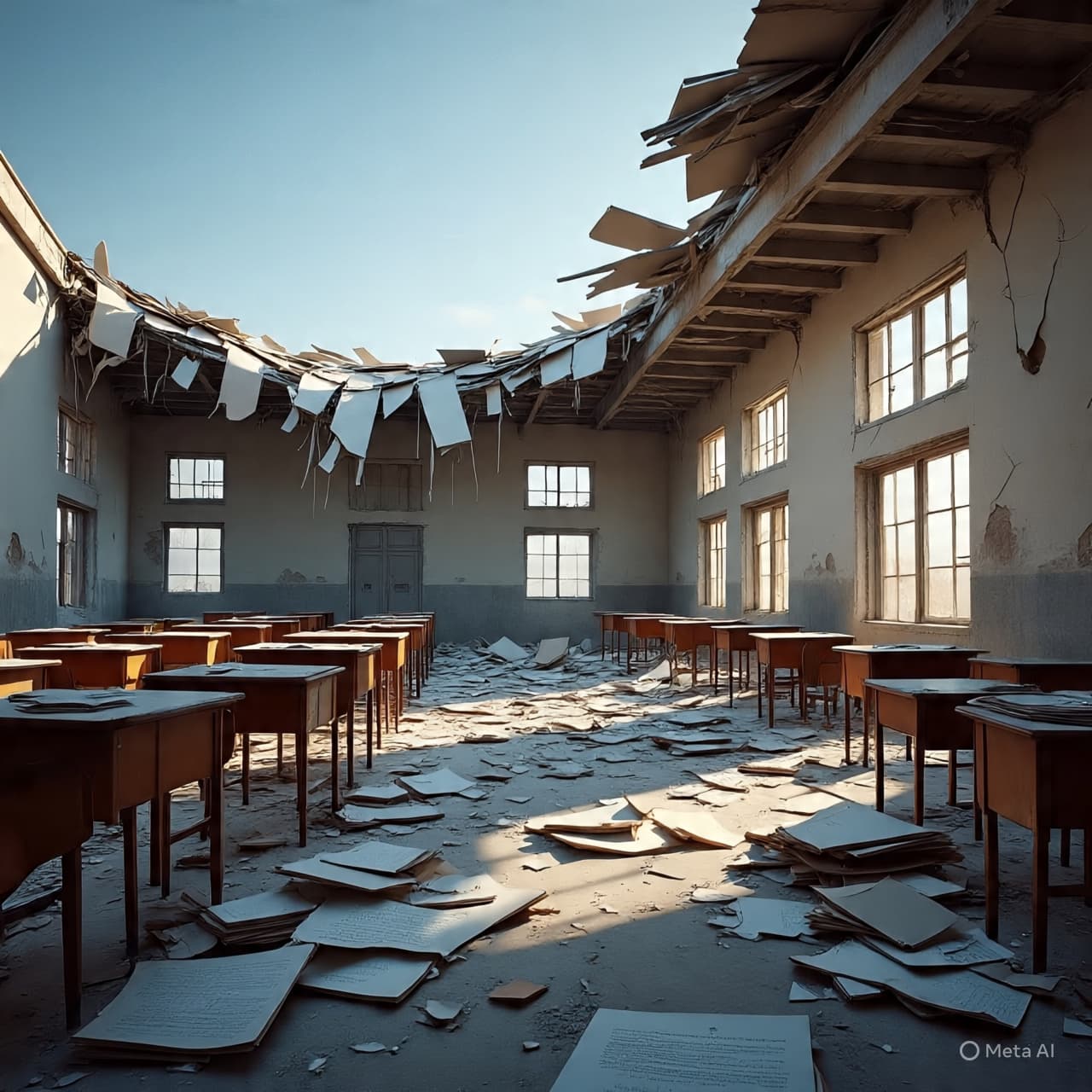
This figure, stark and alarming, transcends mere statistics; it represents a map of interrupted journeys for countless students. Each damaged school signifies a pause in the lives of children who once filled classrooms with laughter and learning. The reported destruction of these educational institutions highlights how deeply geopolitical conflicts can penetrate the fabric of civilian life, affecting the most fundamental aspects of society—education.
Iranian officials have framed the damage as a direct consequence of military actions attributed to foreign powers. While discussions surrounding such conflicts often focus on military strategy and political maneuvering, the mention of schools introduces a more human dimension to the narrative. Schools are not just buildings; they symbolize continuity and the collective effort of a society to nurture knowledge and memory amidst chaos.
International media and observers have approached these claims with caution, acknowledging the severity of the allegations while recognizing the challenges of independently verifying damage in complex conflict zones. The landscape of information is fraught with difficulties, shaped by varying perspectives and the realities of reporting in uncertain environments. Nonetheless, it is evident that education—often viewed as a stable constant—can be one of the first casualties when tensions escalate.
Despite the destruction, there is a remarkable resilience within communities that continue to prioritize education. Temporary classrooms and improvised lessons emerge as adaptive responses to disruption, showcasing the determination of both teachers and students. These efforts do not erase the loss but illustrate that the spirit of learning can endure, much like water carving its path through stone.
The implications of damaged schools extend beyond immediate educational disruptions. Schools are integral to the social fabric, connecting families and communities across generations. The loss of educational infrastructure can reverberate through time, shaping opportunities and altering life trajectories in ways that may not be immediately apparent. The absence of a classroom today could translate into lost chances tomorrow, a subtle yet profound shift that accumulates over the years.
As the situation evolves, the reported figure of 600 damaged schools serves as both a claim and a call for deeper understanding. It invites scrutiny and awareness of the stakes involved when conflict reaches beyond its immediate boundaries. Amid the discourse of geopolitics, there are softer voices—those of students and educators—whose interrupted lessons and unfinished stories deserve to be heard.
Ultimately, the image that remains is not just of damaged buildings but of the spaces they once represented—rooms filled with potential, now altered by forces beyond their control. As the world watches and interprets these events, there is hope that the rhythm of learning will return, one voice, one page, one day at a time.
Published by Banx Network. This article is part of the Banx decentralized media programme, powered by the BXE token on the XRP Ledger.



