In the early hours when cities feel suspended between night and the first pale suggestion of morning, Kyiv often holds a particular kind of stillness—one shaped not only by architecture and river winds, but by the awareness that silence in such places is never entirely neutral. It carries memory within it, and sometimes anticipation.
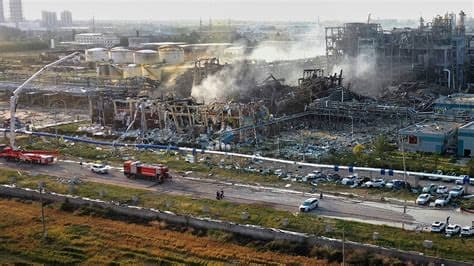
In this atmosphere, a devastating strike on a residential housing block in Kyiv has left at least 24 people dead, according to reports from local authorities. The building, part of an ordinary urban landscape of apartments and shared courtyards, became the center of emergency response efforts as rescue teams worked through collapsed structures and smoke-laced corridors in search of survivors.
The attack, attributed by Ukrainian officials to Russian military action, has once again drawn attention to the ongoing war between Ukraine and Russia, where civilian infrastructure has repeatedly been caught within the expanding perimeter of conflict. In Kyiv, emergency services moved through the aftermath with the practiced urgency of teams accustomed to sudden ruptures in the urban fabric—stretchers, cranes, and search lights forming temporary constellations across damaged streets.
President Volodymyr Zelenskyy responded to the strike with vows of retribution, framing the attack within a broader narrative of accountability and continued resistance. His remarks, delivered in the familiar cadence of wartime leadership, echoed through a national environment already shaped by years of alternating escalation and endurance.
In the neighborhoods affected, the immediate reality was quieter and more fragmented than official statements suggest. Residents described shattered windows, collapsed stairwells, and the disorienting transition from sleep to evacuation. Such scenes have become, over time, part of a recurring pattern in the war—moments where domestic spaces are abruptly redefined as sites of emergency response.
The targeting of residential buildings continues to raise concerns among international observers, who have repeatedly emphasized the importance of protecting civilian infrastructure under international humanitarian law. Yet in the ongoing conflict, the distinction between military and civilian spaces has often been blurred by proximity, trajectory, and the evolving nature of aerial warfare.
Across Ukraine, such incidents are absorbed into a broader wartime rhythm—periods of relative quiet punctuated by sudden, concentrated violence. Each event adds to an accumulating record of damage that is measured not only in physical destruction but also in the reshaping of daily life: altered routes, reinforced shelters, and the quiet recalibration of what safety means in practice.
In Russia, official narratives typically frame such strikes within strategic objectives of the ongoing campaign, reflecting a parallel discourse that runs alongside international reporting and diplomatic response. These competing accounts form part of the informational landscape in which the conflict continues to unfold, each side presenting its own interpretation of events that are simultaneously immediate and contested.
Emergency operations in Kyiv continued through the day, with rescue teams working carefully through debris in search of survivors. The process is slow and methodical, shaped by both the fragility of the remaining structures and the urgency of the human toll. Each recovered fragment of space—doorways, stairwells, fragments of living rooms—becomes part of a broader attempt to reconstruct what occurred in the moments before collapse.
As night approaches again over the city, the damaged building stands as part of a wider pattern of destruction that has marked urban centers throughout the war. Yet even within the repetition of such events, each strike carries its own immediate rupture, its own localized grief, and its own recalibration of resilience.
President Zelenskyy’s pledge of retribution now enters that ongoing cycle of response and counter-response, adding another layer to a conflict that continues to move forward through both action and aftermath. For Kyiv, the day closes not with resolution, but with the continuation of a pattern already deeply familiar: recovery efforts under artificial light, conversations in shelters, and the slow attempt to restore order in spaces where order has been disrupted once again.
AI Image Disclaimer Visuals are AI-generated and intended as conceptual representations of conflict zones and emergency response scenes, not real photographs.
Sources Reuters, Associated Press, BBC News, Al Jazeera, The Guardian
Published by Banx Network. This article is part of the Banx decentralized media programme, powered by the BXE token on the XRP Ledger.