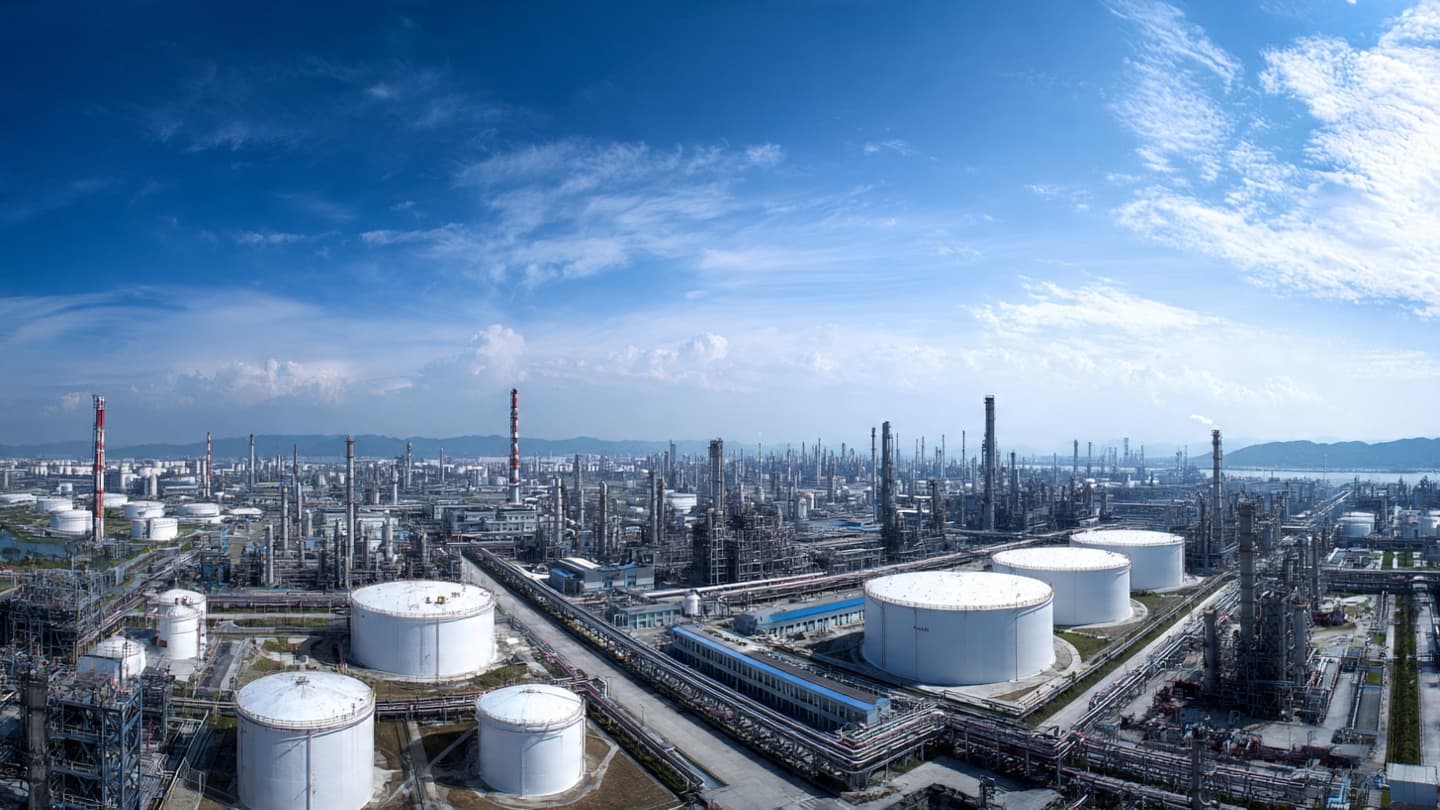
For decades, the movement of oil toward China has been one of the defining currents of the global energy market. Tankers crossed oceans carrying crude toward refineries that supplied an economy expanding at remarkable speed.
That rhythm is changing. China has cut crude oil imports by roughly 400 million barrels compared with the previous year, according to Reuters, as lower refinery output and growing electric-vehicle adoption weaken demand.
The change is significant because China has long been one of the world's largest oil consumers. Its demand has helped influence prices, production decisions, tanker markets, and investment across the global petroleum industry.
Refinery activity is one reason for the decline. When refineries process less crude, fewer barrels are required, even if underlying economic activity remains relatively stable.
Electric vehicles provide another part of the explanation. As more drivers use electric cars, some petroleum demand that would previously have come from gasoline gradually disappears.
The effect is particularly interesting because it changes the relationship between transportation and oil consumption. For much of the modern era, economic growth and vehicle ownership were closely connected to greater petroleum demand.
China's rapidly expanding electric-vehicle industry is weakening that connection. Manufacturers are producing increasingly affordable electric models, while charging infrastructure continues to expand.
The shift does not mean oil has become unimportant. Petroleum remains essential for aviation, shipping, petrochemicals, heavy industry, and many other activities that are not easily electrified.
But China's changing consumption pattern gives global energy markets another variable to consider. Supply disruptions can push prices higher, yet weaker demand from one of the world's largest consumers can create an offsetting force.
Reuters described China as an increasingly important "swing demand centre," reflecting the country's growing ability to influence global oil balances through changes in consumption.
For oil producers, this creates a long-term planning challenge. Investment decisions must account not only for supply conditions but also for changing demand patterns in major economies.
The global oil market is therefore moving through a gradual transition rather than a sudden departure. China continues to consume large quantities of energy, but the composition and pace of that consumption are changing.
As electric vehicles spread and refinery activity adjusts, the world's energy map may increasingly be shaped by a different question: not simply where oil is produced, but where demand is quietly beginning to move elsewhere.
AI Image Disclaimer The illustrations were created with AI and serve as conceptual representations of China’s changing energy consumption and automotive landscape.
Sources Reuters International Energy Agency OPEC
Published by Banx Network. This article is part of the Banx decentralized media programme, powered by the BXE token on the XRP Ledger.