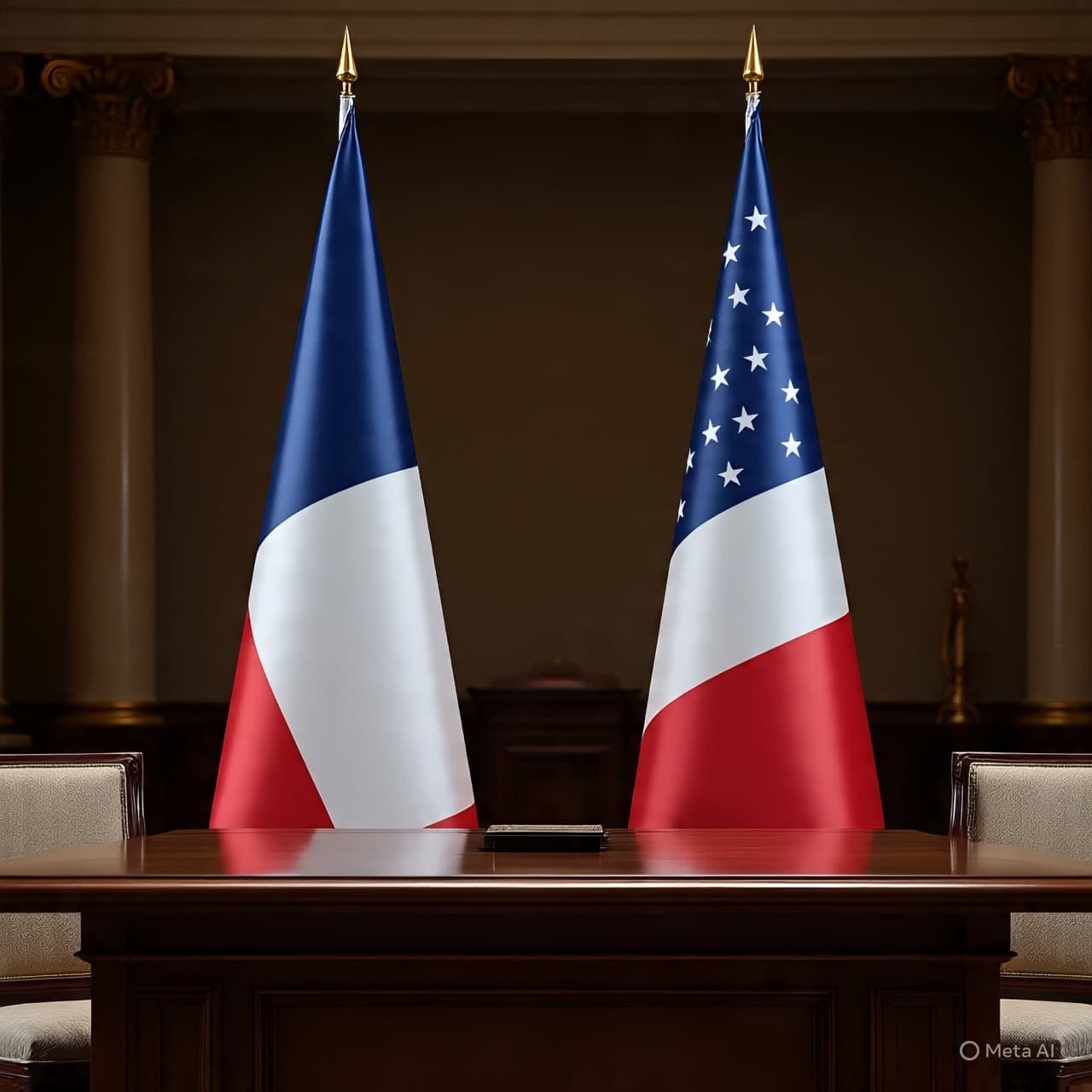
Diplomacy, like weather, is often remembered by feel rather than forecast. There was a time when the encounters between Emmanuel Macron and Donald Trump carried a certain warmth—measured in handshakes held a second longer than necessary, in smiles that suggested conversation could still bend outcomes. Those moments felt deliberate, carefully staged against the marble corridors of power, as though familiarity itself might soften disagreement.
Lately, that atmosphere has changed.
As tensions rise over trade, security, and the future of the Arctic, France’s president appears less inclined to rely on personal chemistry as a governing tool. The gestures remain polite, the language restrained, but the confidence that rapport could redirect policy has faded. Where once Macron leaned into personal diplomacy, he now speaks more often through institutions, alliances, and collective European resolve.
The shift has been gradual, almost seasonal. Early in Trump’s political ascent, Macron positioned himself as a bridge—someone who could speak Trump’s language while anchoring European interests. Their meetings were closely watched, parsed for subtext, as if body language might reveal more than statements. For a time, it seemed to work. France retained access, and dialogue stayed open even as policies diverged.
But relationships built on tone eventually confront substance. Trade disputes hardened. NATO disagreements resurfaced. And Trump’s recent remarks on Greenland—delivered with ambiguity rather than reassurance—placed Europe on alert. Macron’s response, measured yet firm, suggested a recalibration: less persuasion through proximity, more through principle.
This is not necessarily a loss of personal touch so much as an acknowledgment of its limits. Trump’s political style thrives on unpredictability, on statements that resist definition. In such an environment, intimacy offers diminishing returns. France, like much of Europe, has begun to treat uncertainty not as something to be charmed away, but as a condition to be managed.
Behind this shift lies a broader evolution in Europe’s posture. Strategic autonomy, once an abstract ambition, now informs real policy choices. Macron’s public language reflects that turn—calm, controlled, and increasingly collective. The emphasis has moved from individual rapport to shared leverage.
Yet the absence of warmth does not mean the absence of dialogue. Channels remain open. Meetings still happen. The difference is tonal rather than procedural. Where there was once optimism that personality could bridge policy gaps, there is now a quieter realism.
Perhaps this is the natural arc of political relationships. Familiarity gives way to friction; charm yields to structure. What remains is not hostility, but distance—a recognition that influence does not always travel through smiles and gestures.
As winter settles over transatlantic relations, the question is no longer whether Macron has lost his personal touch, but whether the moment still calls for one. In a world shaped by sharper edges and colder calculations, diplomacy may be entering a season where warmth matters less than clarity.
AI Image Disclaimer
Illustrations were created using AI tools and are not real photographs.
Sources (names only)
Reuters The New York Times Associated Press The Guardian Financial Times
Published by Banx Network. This article is part of the Banx decentralized media programme, powered by the BXE token on the XRP Ledger.