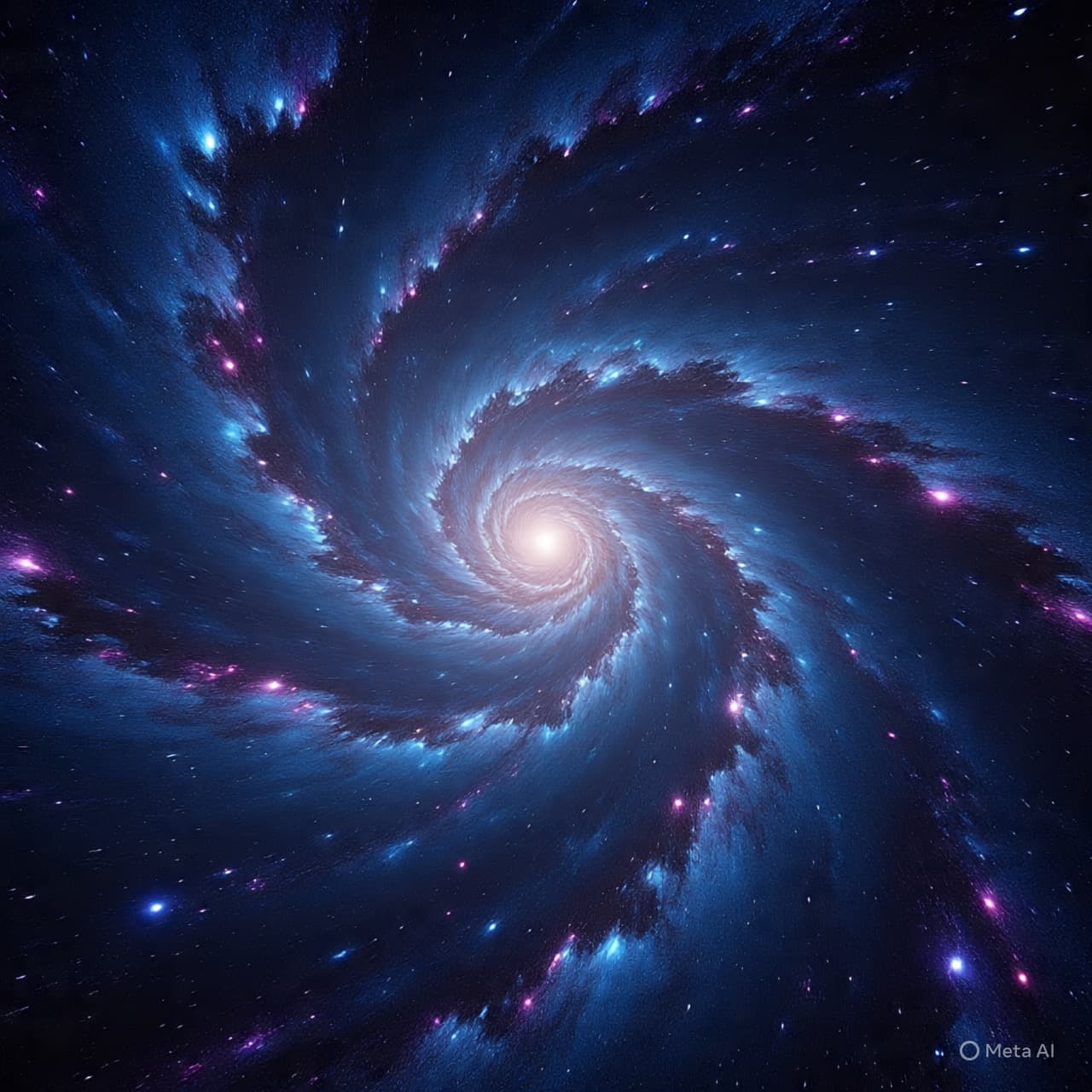
At the center of the Milky Way, where distance dissolves into abstraction, light bends and time loosens its grip. Astronomers speak of this region in numbers too large to picture and forces too strong to touch. For decades, one idea has anchored our understanding of that invisible heart: a supermassive black hole, quietly reigning from the galaxy’s core, shaping the orbits of stars with its immense gravity.
Yet even the most settled cosmic stories are subject to revision. Recently, a daring theory has begun to circulate among physicists and astronomers, suggesting that the Milky Way’s center may not be ruled solely—or perhaps at all—by a traditional black hole. Instead, it proposes something more elusive, something that challenges not only observation, but imagination itself.
The object long known as Sagittarius A* has earned its reputation through indirect evidence. Stars whip around an unseen mass at extraordinary speeds, tracing precise, predictable paths. Radio waves flare and fade. Gravitational calculations point unambiguously to something enormous and compact. For many, the case for a black hole has seemed closed, its presence a quiet certainty amid cosmic chaos.
The new theory does not deny the mass at the center of the galaxy. It questions its nature. Some researchers suggest that what lies there could be an exotic alternative—perhaps a dense cluster of dark matter, or a theoretical object such as a boson star, one that mimics a black hole’s gravitational pull without possessing an event horizon. In such models, matter and light behave almost the same from afar, while the true difference remains hidden at scales just beyond our instruments’ reach.
What gives the theory traction is not defiance, but subtle discomfort. Black holes, while mathematically elegant, raise unresolved questions about information, singularities, and the limits of physics itself. Alternatives offer a way to test those boundaries, to ask whether gravity might organize matter in forms we have not yet fully imagined. The challenge is not to dethrone the black hole out of contrarian impulse, but to probe how much we truly know versus how much we infer.
Observations from increasingly powerful telescopes have sharpened this debate. Images of galactic cores, including the first direct pictures of black hole silhouettes, have provided striking confirmation of long-held ideas. Yet even these images leave room for interpretation. The glow around the darkness tells a story of motion and heat, not of what ultimately resides at the very center.
In this space of uncertainty, theory becomes a kind of compass. It does not replace observation but points toward new questions worth asking. If Sagittarius A* is something other than a classical black hole, future measurements—of gravitational waves, stellar motion, or subtle distortions in spacetime—may eventually reveal inconsistencies too precise to ignore.
For now, the Milky Way’s core remains an exercise in humility. It reminds scientists that even the most dominant ideas in astronomy are provisional, shaped by the tools and assumptions of their time. The galaxy does not announce its secrets; it allows them to be approached, slowly, through patience and doubt.
As Earth continues its quiet orbit on the outskirts of this vast spiral, the debate itself becomes part of the story. Whether ruled by a black hole or something stranger still, the center of the Milky Way endures as a place where certainty thins and curiosity deepens—a reminder that science advances not only by confirming what we expect, but by daring to ask what else might be possible.
AI Image Disclaimer
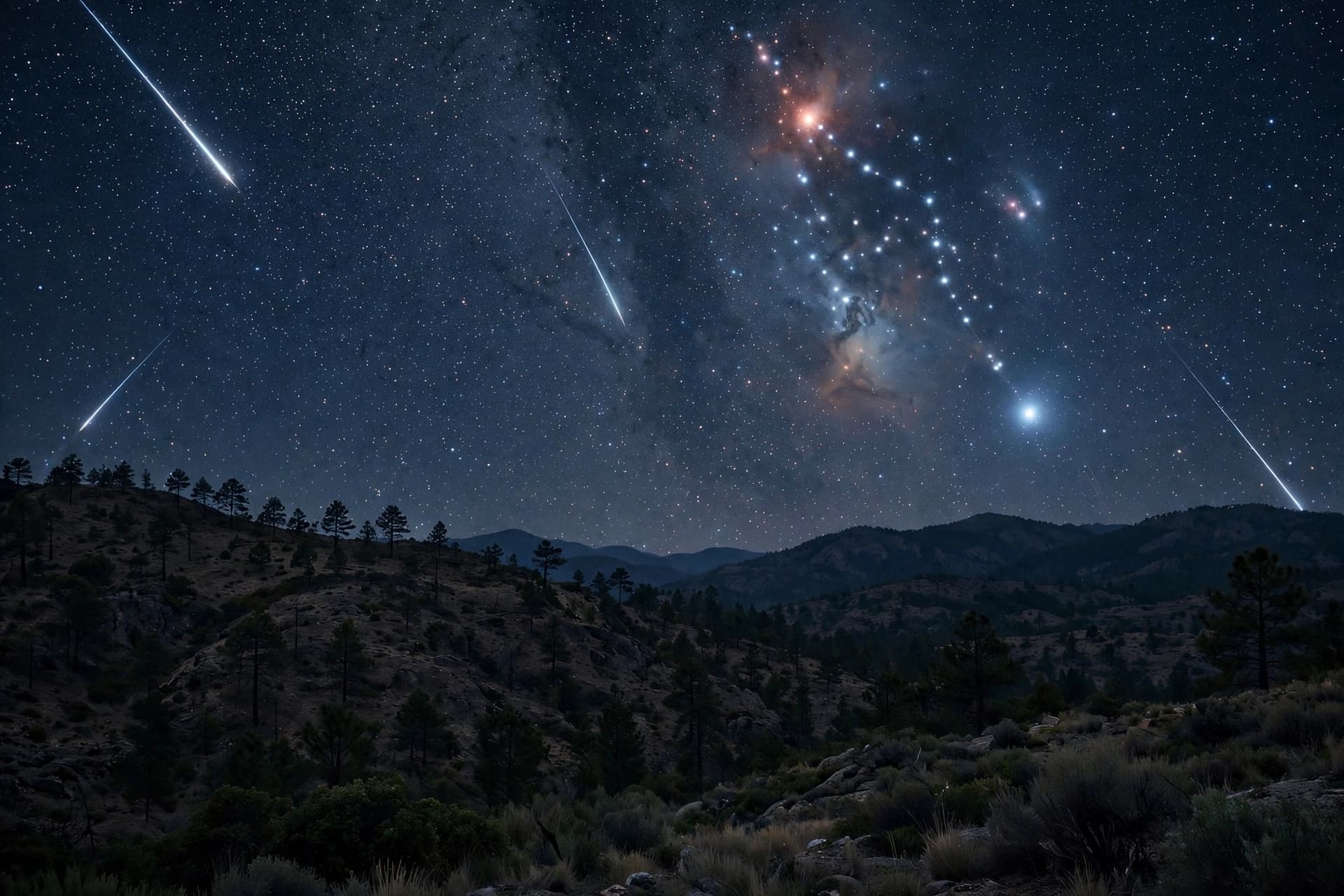
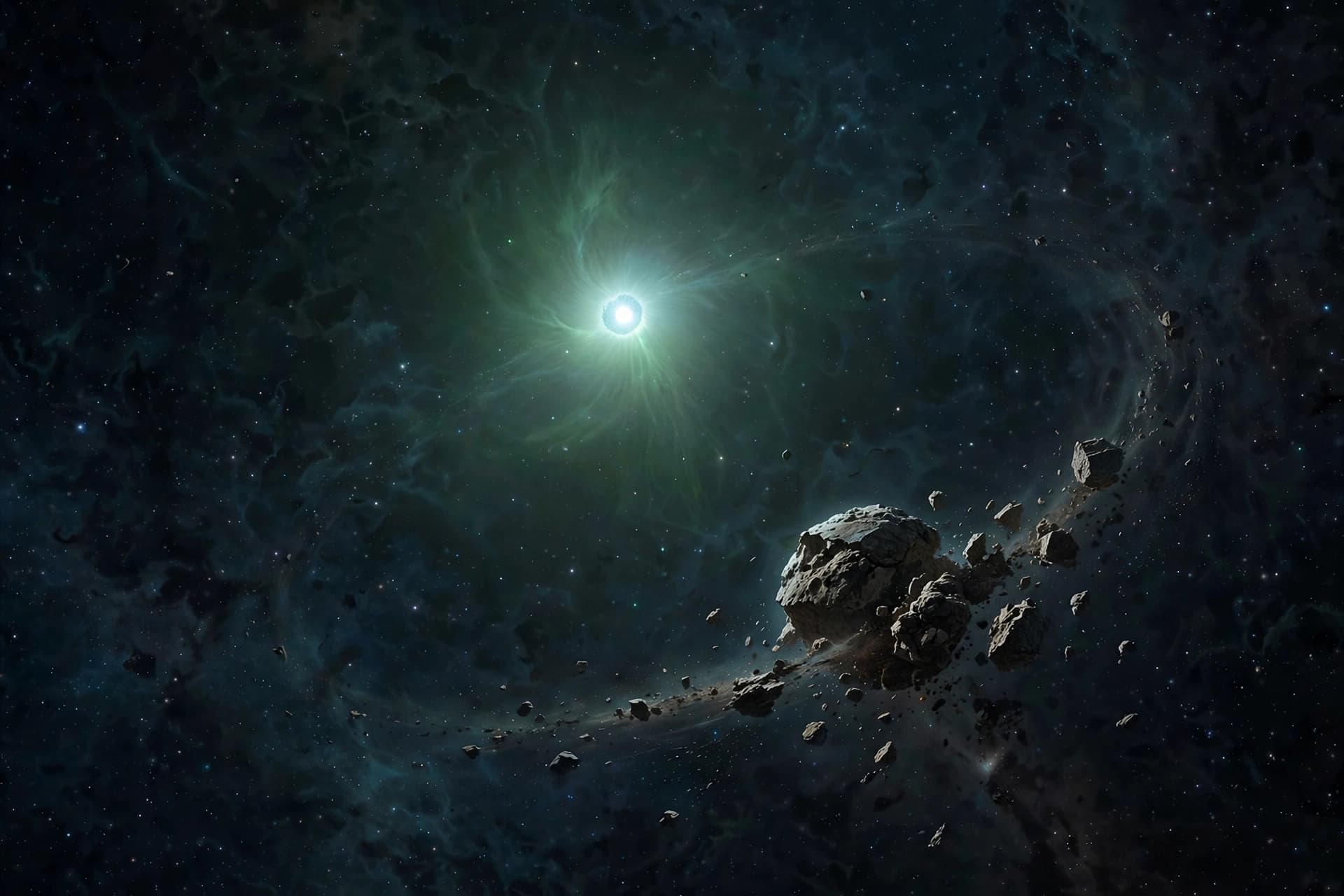
Visuals are AI-generated and serve as conceptual representations.
Sources
• Nature
• Science
• Astrophysical Journal
• NASA
Published by Banx Network. This article is part of the Banx decentralized media programme, powered by the BXE token on the XRP Ledger.