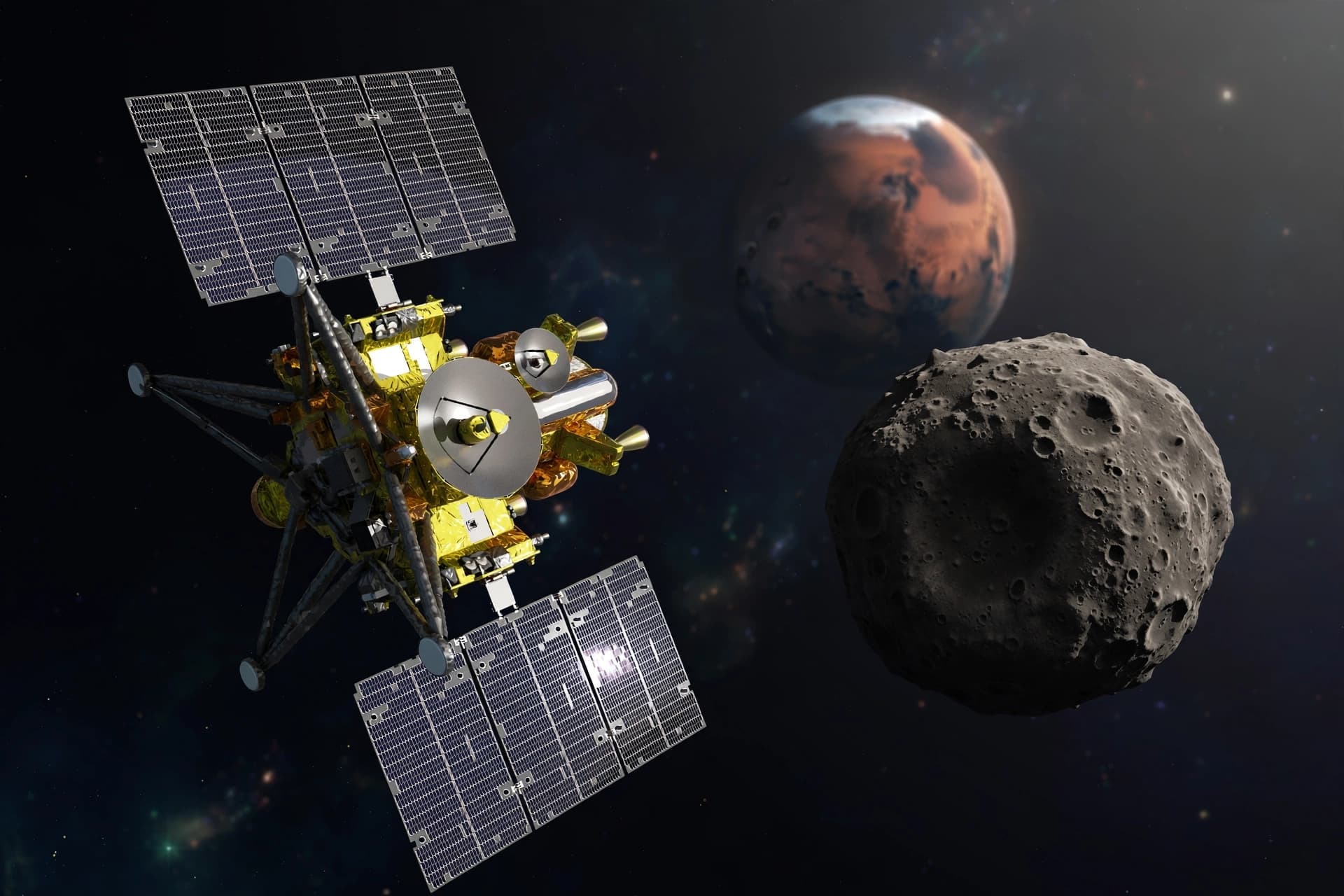
In the quiet mathematics of space exploration, there are moments when engineering meets philosophy, and decisions become more than technical outcomes. The story of Cassini’s final descent into Saturn reads like a carefully written farewell, where precision and caution guided a spacecraft toward its end rather than leaving it to chance.
The Cassini spacecraft, a joint mission led by NASA, the European Space Agency, and the Italian Space Agency, spent over a decade studying Saturn and its complex system of rings and moons. As its mission neared completion, its remaining fuel became a critical constraint that shaped its final trajectory.
Engineers faced a choice that extended beyond operational limits. One possibility involved leaving Cassini in a distant orbit, but this carried a long-term risk: an uncontrolled path could eventually lead it toward moons such as Enceladus, which is considered a candidate for subsurface habitability due to its icy ocean.
To eliminate any chance of contamination, mission planners chose a controlled descent into Saturn’s atmosphere. This decision reflected planetary protection protocols developed by NASA and international partners to preserve potentially habitable worlds from biological interference.
Before its final plunge, Cassini performed a series of daring “Grand Finale” orbits, passing through the narrow region between Saturn and its innermost rings. This gap, approximately 1,500 miles wide, had never been traversed by a spacecraft before, making the maneuver both scientifically valuable and operationally complex.
During these final orbits, Cassini collected unprecedented data on Saturn’s magnetic field, ring structure, and atmospheric composition. The spacecraft transmitted this information in real time as it moved closer to its planned termination point.
Each pass through the gap provided insights into particle density and gravitational interactions that had previously been modeled only theoretically. These observations refined understanding of how planetary ring systems evolve over time.
Cassini’s deliberate descent into Saturn marked a controlled end to a mission defined by discovery, ensuring both scientific legacy and planetary protection were preserved in its final act.
AI Image Disclaimer: Some images used for illustrative purposes in this article may be AI-generated to represent mission concepts.
Source Verification Check: NASA, JPL (Jet Propulsion Laboratory), ESA, Nature Astronomy, Scientific American
Published by Banx Network. This article is part of the Banx decentralized media programme, powered by the BXE token on the XRP Ledger.