
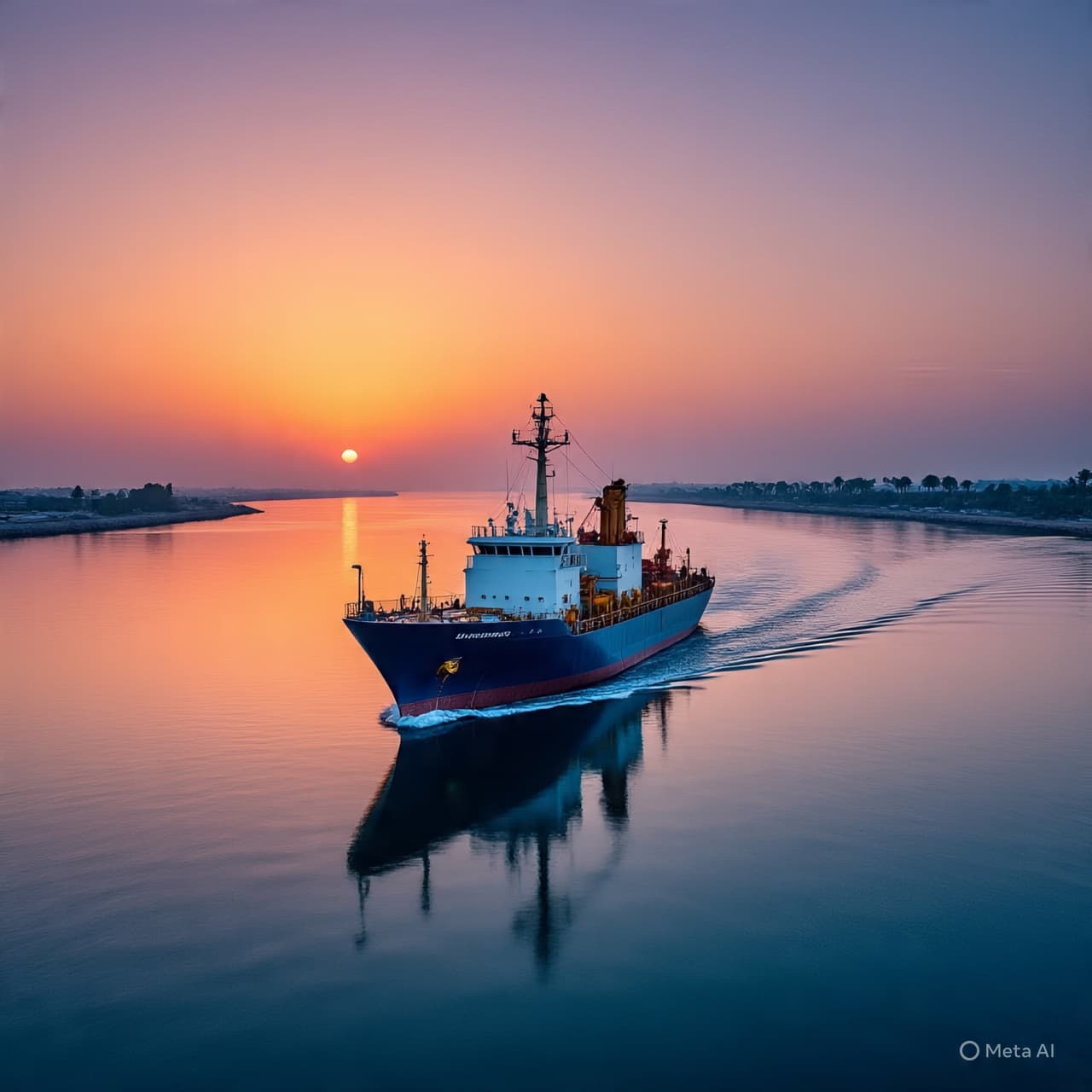
Along the shores of the Persian Gulf, glass towers have long risen like declarations of certainty. In cities carved from desert and ambition — Dubai, Doha, Manama, Kuwait City — light bends off mirrored façades and settles into marinas where yachts drift without urgency. For years, these skylines have sold a quiet promise: stability in a restless region, commerce uninterrupted, refuge from the tempests that sometimes gather beyond the horizon.
Yet even the calmest waters remember that they are connected to open sea.
In recent days, that promise of distance has thinned. Iran’s retaliatory missile and drone attacks, launched in response to coordinated U.S.–Israeli strikes on its territory, did not stop at symbolic gestures. Projectiles crossed airspace over the Gulf, targeting U.S. military installations in Bahrain and Qatar, and threatening shipping lanes near the Strait of Hormuz — that narrow artery through which a significant portion of the world’s oil supply passes. Air defense systems illuminated night skies that tourists once photographed only for their fireworks displays.
In Bahrain, home to the U.S. Navy’s Fifth Fleet, authorities confirmed incoming missiles aimed at military infrastructure. In Qatar, where Al Udeid Air Base anchors American operations in the region, defense systems were activated amid reports of aerial threats. While officials emphasized that many of the projectiles were intercepted, the sound of sirens and the brief closure of airspace unsettled cities accustomed to calm predictability. Flights were rerouted; embassies advised caution; hotels quietly reassured guests.
For decades, Gulf states have cultivated an image distinct from the conflicts that have shaped parts of the Middle East. The United Arab Emirates positioned Dubai as a crossroads of finance and tourism; Qatar leveraged diplomacy and global events to project influence; Saudi Arabia embarked on vast economic transformation plans designed to anchor its future beyond oil. Their skylines became shorthand for insulation — gleaming proof that prosperity could coexist with regional complexity.
But geography has a long memory. The Gulf is both marketplace and maritime corridor, bordered by Iran to the north and westward allies across the water. When tensions rise, its currents tighten. Oil markets reacted swiftly to the recent exchanges, with prices spiking amid fears of disruption to tanker traffic. Insurance premiums for shipping increased. Governments convened emergency sessions, reinforcing air defenses and reaffirming commitments to protect civilian populations and economic lifelines.
And yet, amid statements and strategic recalibrations, daily life persists. In Dubai’s financial district, office workers returned to towers that still reflected the same brilliant sky. In Doha, families strolled along the Corniche under careful watch. In Manama, café tables filled by afternoon, conversations drifting between ordinary concerns and the unfamiliar proximity of missile alerts.
The safe-haven image has not collapsed; it has been tested. These states remain comparatively stable, their infrastructure intact, their institutions functioning. But the illusion of detachment — the idea that regional conflict can be contained neatly beyond the horizon — has softened. The recent attacks underscored how interwoven defense alliances, energy corridors, and political alignments truly are.
As night settles again over the Gulf, lights shimmer across water as they always have. Cargo ships move slowly through dark channels; aircraft trace careful arcs above reinforced airspace. The towers still stand, luminous and composed. Yet beneath their glow is a quieter awareness: that security, like glass, is both strong and fragile, and that even in places built to symbolize refuge, the wider currents of history are never entirely at bay.
AI Image Disclaimer Visuals are AI-generated and serve as conceptual representations.
Sources Reuters Associated Press Financial Times Al Jazeera Bloomberg
Published by Banx Network. This article is part of the Banx decentralized media programme, powered by the BXE token on the XRP Ledger.


