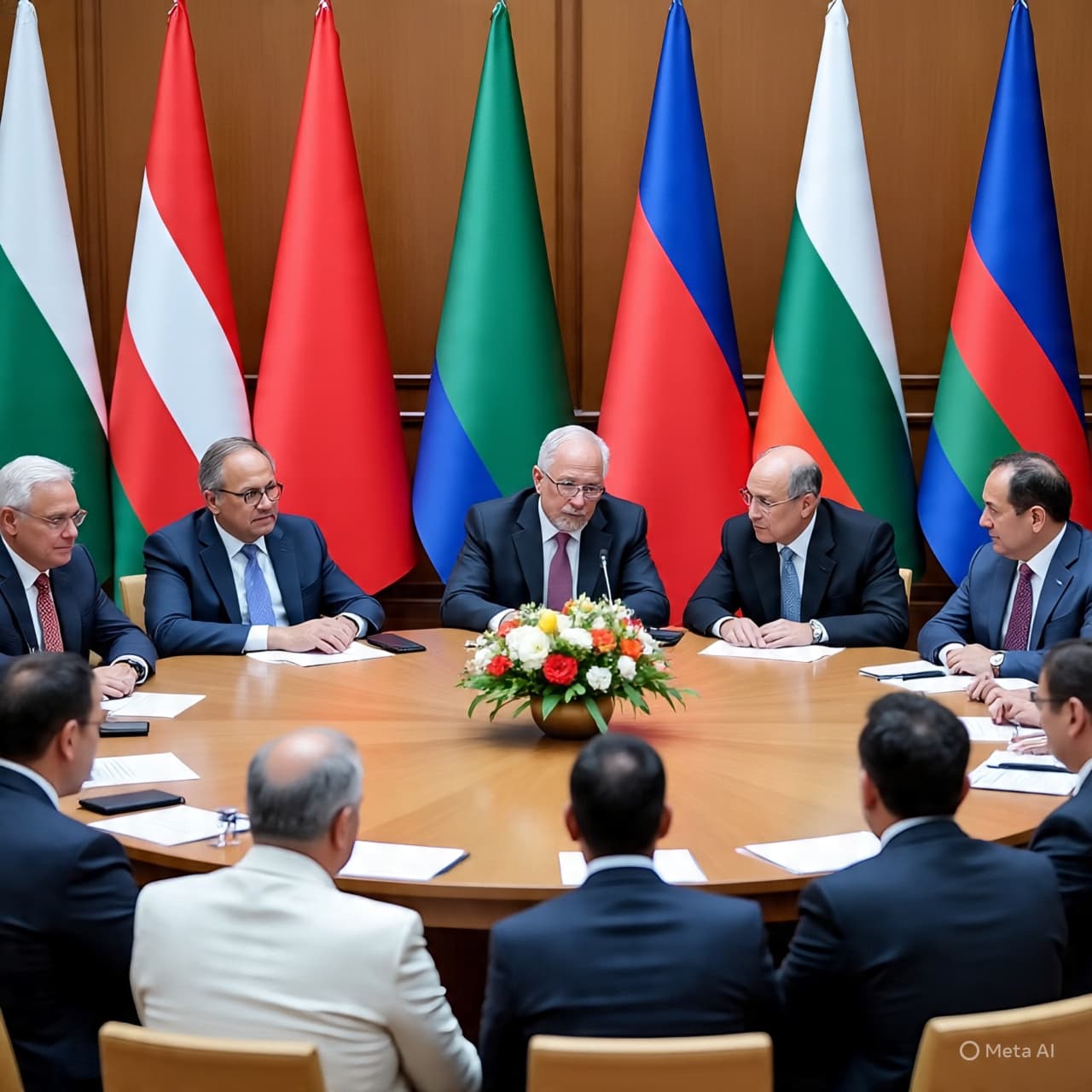
There are moments in global affairs that feel like dawn breaking over a long night — soft in its first light, hopeful in its promise, yet uncertain in the shadows it leaves behind. On a winter day in Washington, as leaders gathered under the formal banner of peace, Indonesia’s presence at the first-ever Board of Peace summit carried just such a sense of new day. It was not a triumphant parade, but a measured step, as though a nation familiar with the tides of history sought to chart a calmer course through a turbulent sea. At the heart of that gathering was the idea of rebuilding, reconciliation, and shared commitment. On February 19, 2026, the inaugural Board of Peace — an international effort convened in the shadow of prolonged conflict in Gaza — brought together over forty nations to explore how reconstruction and stability might take shape after years of strife. In President Donald Trump’s announcement, nine countries pledged billions for reconstruction and five, including Indonesia, volunteered troops for a new stabilization force aimed at assisting in Rafah and beyond. For observers in Indonesia and beyond, the nation’s role resonated beyond sums and troop numbers. To many experts on Middle Eastern affairs, it represented the archipelago’s attempt to lend voice and action to a vision of peace grounded in humanitarian commitment and diplomatic balance. Indonesia has repeatedly reaffirmed its support for the two-state solution and adherence to the United Nations Charter as guiding principles for its participation. Foreign Ministry officials underscored that any engagement would be aligned with the UN’s ongoing efforts, and not seek to replace or undermine them. But like most ambitious diplomatic efforts, Indonesia’s role is seen through varied lenses. Analysts in the region note that while the involvement signals a willingness to participate in global stabilization, it also comes with questions about how the force will operate, the clarity of its mandate, and the implications of joining a body initiated outside the traditional UN framework. Some worry that without careful alignment with established international norms, the initiative could inadvertently weaken multilateral mechanisms built over decades. At home, voices across the political spectrum have weighed in on the government’s path. Prominent figures called for a consistent and principled advocacy for Palestinian sovereignty, urging that Indonesia’s participation be anchored in its long-held foreign policy of free and active engagement — that is, contributing to peace without falling into the rivalries of great powers. Others see Indonesia’s role as a potential bridge for dialogue in an era where global diplomacy often feels fragmented and contentious. For ordinary citizens watching from afar, the summit has been a mirror reflecting hopes and concerns alike — a reminder that peacebuilding is rarely linear, and rarely simple. In a world where the echoes of conflict can outlast the treaties meant to end them, Indonesia’s steps at the Board of Peace are part of a wider tapestry of global efforts seeking to turn the long shadows of war into the promise of renewal. As the day’s meetings concluded with statements of intent and resolutions seeking implementation, the atmosphere was less triumphant than contemplative — as though the participants, aware of history’s weight, chose not to herald victory but to acknowledge responsibility. For Indonesia, this moment at the Board of Peace may well be remembered not for loud declarations, but for the quiet resolve to persist toward an inclusive peace that respects the rights and dignity of those most affected.
📌 AI Image Disclaimer (Rotated Wording)
“Visuals are created with AI tools and are not real photographs.”
---
🧾 Sources
(Media names only, per your request) Associated Press, The Guardian, ANTARA News, Reuters, The Star.
Published by Banx Network. This article is part of the Banx decentralized media programme, powered by the BXE token on the XRP Ledger.