

Key Highlights
- Discovery Location:Neumark-Nord site in central Germany.
- Evidence Found:Over 172 large mammal bones and tools indicating organized resource management.
- Historical Significance:Pushes back the timeline for systematic grease extraction by tens of thousands of years.
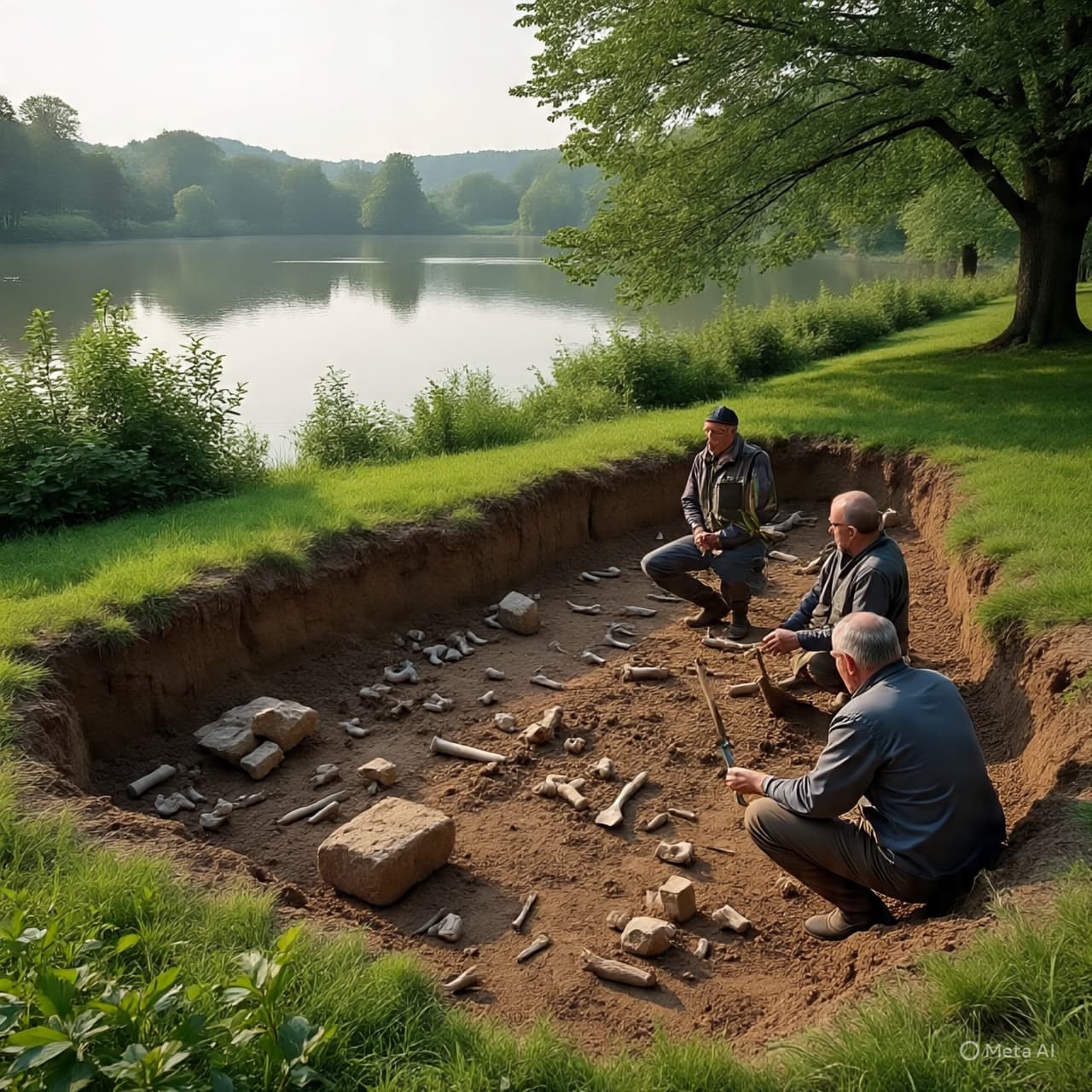
Archaeologists have made a groundbreaking discovery at the Neumark-Nord site in central Germany, revealing a sophisticated method of resource management employed by Neanderthals. This site, rich in archaeological significance, has yielded a remarkable concentration of smashed bones, stone tools, and traces of fire, suggesting that Neanderthals were not merely hunters but skilled processors of animal remains. The evidence indicates that these ancient humans engaged in a labor-intensive strategy to extract every possible calorie from their environment, effectively creating what researchers are calling a prehistoric "fat factory."
The findings include hundreds of thousands of bone fragments from at least 172 large mammals, such as deer, horses, and aurochs. Archaeologists discovered that these bones were not just cracked open for marrow; they were meticulously reduced to tiny pieces and heated in water. This method allowed Neanderthals to render fat from the dense interior of the bones, producing high-calorie grease that could be stored, transported, or consumed. This innovative approach to food processing highlights the adaptability and resourcefulness of Neanderthals, challenging previous assumptions about their cognitive and cultural capacities.
Previous excavations at the Neumark-Nord site have provided insights into the lives of Neanderthals, revealing evidence of elephant hunts, fire use, and plant processing. However, the scale and deliberation of the grease-producing operation discovered in this latest excavation deepen our understanding of Neanderthal adaptability. What was once thought to be simple scavenging now appears to be a complex practice requiring foresight, planning, and an understanding of seasonal rhythms in nature.
This discovery pushes back the timeline for systematic grease extraction by tens of thousands of years, previously believed to be a practice associated with later human contexts. The evidence found at Neumark-Nord suggests that Neanderthals were organizing their work and meals with a level of sophistication that was previously unrecognized. This challenges long-held beliefs about the capabilities of Neanderthals and their place in the evolutionary narrative.
As archaeologists continue to sift through the remains, the delicate fragments of bone tell a story of endurance, patience, and ingenuity. The layers of soil that have accumulated over millennia serve as a testament to the purposeful labor of these ancient people. The echoes of their work resonate through time, inviting us to reconsider the bounds of human ingenuity long before the advent of written history.
In this exploration of past climates and the silent testimony of fractured bones, we glimpse a shared ancestry of thought and survival. The Neanderthal "fat factory" serves as a reminder that the roots of human resourcefulness run deep, intertwined with the landscape, fire, and the quiet unfolding of time.
Published by Banx Network. This article is part of the Banx decentralized media programme, powered by the BXE token on the XRP Ledger.




