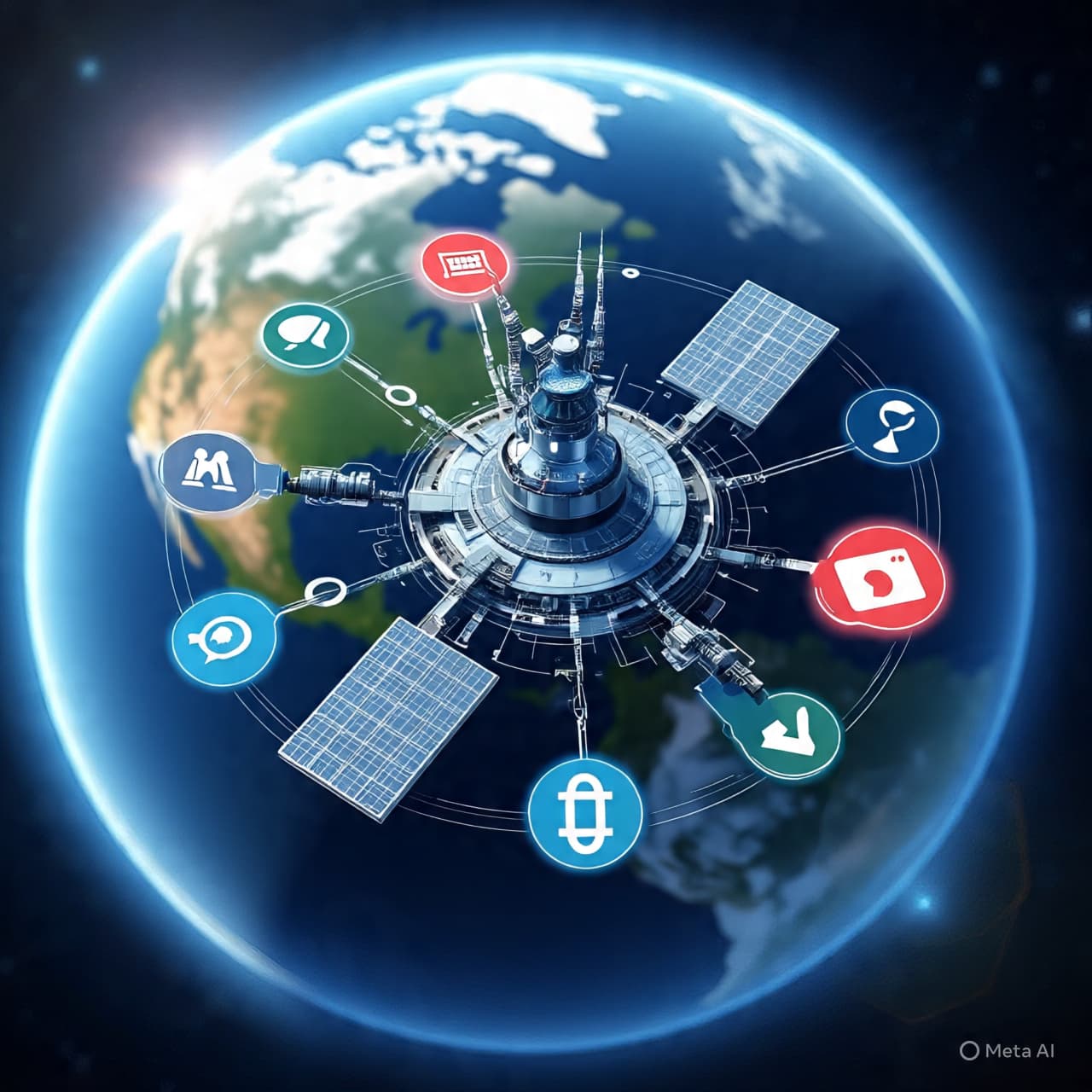
There is a quiet poetry to the space between Earth and the first flicker of stars an expanse where light travels without hurry and where human curiosity feels at home. In this vast nothingness, the oldest exchanges of goods and ideas find an unlikely companion in the most modern technologies we’ve born: the decentralized systems of code and cryptography. As we peer outward, the notion of transactions once bound to banks, borders, and boards begins to take a new shape, drifting beyond terrestrial chains into the boundless contract of space itself.
Imagine a marketplace that hums not with the chatter of brokers or the fluorescence of trading floors, but with encrypted signatures and smart contracts floating through orbit. In recent experiments, satellites such as the nanosatellite deployed by Spacecoin successfully transmitted encrypted blockchain data from Chile to Portugal a demonstration that cryptographic transactions can survive the immense gulf between points in space and return to Earth whole and verifiable. This moment feels emblematic, like the first whisper of a civilization peering outward, ready to create new forms of exchange that respect both human intention and cosmic scale.
The heart of this transformation lies in distributed ledgers and decentralized networks systems that do not depend on a central authority but instead spread trust across nodes, whether on Earth or in orbit. Where traditional networks falter under signal delays and gaps, space‑ready blockchains are being reimagined with consensus mechanisms designed for resilience against long radio silences and unpredictable orbital conditions. The dream, gently carried forward by technologists and visionaries, is of autonomous smart contracts that can manage supply shipments to a lunar base or verify interplanetary resource rights without a mission control’s directive.
This isn’t merely technological play it is a philosophical shift in how value and cooperation might be encoded among celestial neighbors. Tokenized assets, decentralized autonomous organizations (DAOs), and open‑ governance networks can, in theory, widen participation in a domain long dominated by nation states and aerospace giants. From fractional ownership of satellites and lunar payloads to community‑run mission fundings, these structures aspire to broaden who might hold a stake in the extraterrestrial economy.
Yet the path ahead is gentle and deliberate, requiring patience as much as ingenuity. Issues of regulation, consensus reliability, and the sheer physical cost of space operations remind us that every orbit cleared and every protocol written is part of a long‑term journey. Even so, the melding of space’s infinite horizon with decentralized principles fosters a narrative that is as hopeful as it is profound where the next chapter of human exchange reaches not just across oceans and continents, but into the cosmic arena that invites us all to participate.
In measured, forward‑leaning news terms, industry efforts are accelerating: satellites capable of processing blockchain transactions are being tested in orbit, and research into decentralized governance for space contracts and asset tokenization is active within international space forums. These developments suggest that decentralized transactions in space once a speculative idea are evolving into tangible projects that could influence commerce and cooperation above Earth’s atmosphere in the decade ahead.
AI Image Disclaimer “Illustrations were produced with AI and serve as conceptual depictions.”
Sources SpaceDaily Reuters TechCrunch Forbes IAF Digital Library
Published by Banx Network. This article is part of the Banx decentralized media programme, powered by the BXE token on the XRP Ledger.