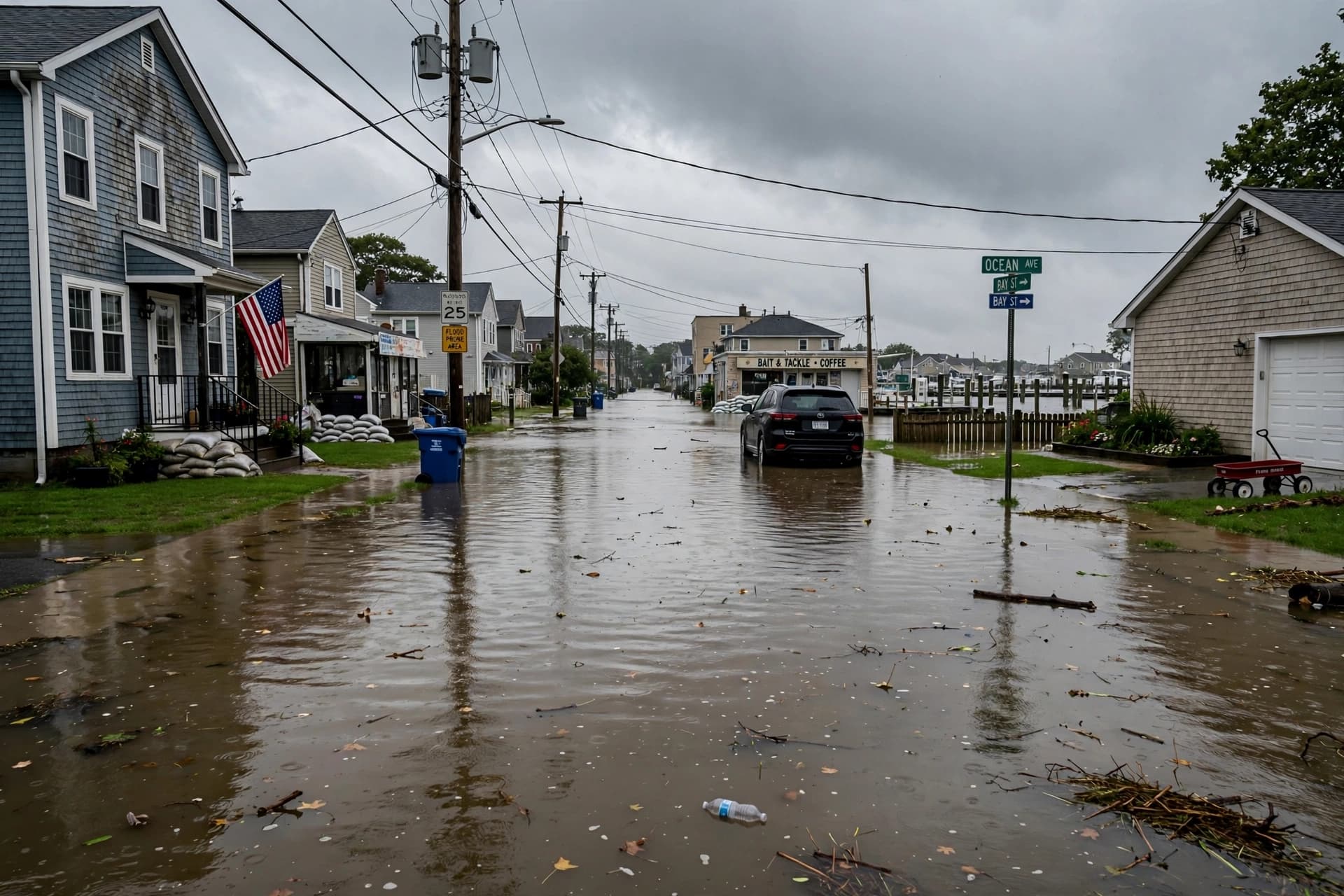
Autumn storms often arrive as a gentle reminder that seasons are turning, but the nor'easter that crept along the northeastern United States coastline this weekend carried no such gentleness. It moved slowly, almost deliberately, as though unwilling to release its grip on the communities in its path. By Saturday, the storm had claimed a life in Brooklyn, where a 56-year-old Housing Authority employee was struck by a falling tree, and left tens of thousands without power across six states .
The storm's character was defined by its stubbornness. Nor'easters, named for their northeasterly winds, are not uncommon in autumn, but this one arrived with unusual ferocity for September. Winds gusted up to 70 miles per hour along the New England coast, and forecasters warned that waves could reach twenty feet in some areas. New York Governor Kathy Hochul described the conditions in stark terms: "Anyone who goes in or near the water this weekend is literally gambling with their life" .
In coastal New Jersey, the town of Surf City witnessed scenes that residents associated with Hurricane Sandy more than a decade ago. Kenny Formica, who owns a marina there, watched through surveillance cameras as water rose inside his building—something he said had not happened since 2012. A customer's 25-foot boat, valued at approximately $150,000, was torn from its lift and carried away. "Just gone," Formica said, with the quiet resignation of someone who has seen such losses before .
The storm disrupted daily life in ways both large and small. Hundreds of flights were canceled at Boston Logan International Airport and at tourist destinations like Martha's Vineyard and Nantucket. A baseball series between the Red Sox and Cubs was reshuffled, with the final game moved to Florida. Ed Sheeran canceled two stadium concerts near Boston. An Ironman triathlon in New York and a three-day music festival in Maryland were called off. In North Carolina, a highway closure on Hatteras Island stranded most of the guests invited to a wedding, though a local campground and a volunteer DJ stepped in to salvage the celebration .
Emergency crews worked through the weekend to restore power, with outages reported across New York, New Jersey, Connecticut, Massachusetts, Rhode Island, and Pennsylvania. The Federal Emergency Management Agency said response coordination centers were operating at an enhanced posture, and teams stood ready in New England in case the outages spread .
By Sunday, tens of millions of people remained in the storm's projected path, with major flooding forecast for coastal areas and no immediate relief in sight. Bob Oravec, a lead forecaster with the National Weather Service, offered a straightforward assessment: "A lot of high winds, a lot of high tides and heavy rain possibility over the next few days for the northeastern U.S."
The nor'easter will eventually move on, as all storms do. But for those who lost power, property, or a loved one, the aftermath will linger long after the skies clear.
AI Image Disclaimer: This image is an AI-generated illustration intended for editorial context and does not represent an actual photograph of the storm.
Sources: Associated Press, NBC News, AFP, National Weather Service, PowerOutage.com
Published by Banx Network. This article is part of the Banx decentralized media programme, powered by the BXE token on the XRP Ledger.