
Power, when it recedes, rarely leaves silence behind. It lingers in habits, in posture, in the way a name continues to draw attention long after the office itself has emptied. For Donald Trump, whose presidency was marked by constant motion and volume, the question of what follows has always felt less like retirement and more like repositioning.
Recently, the idea has surfaced—quietly, almost experimentally—that Trump could one day preside over a board devoted to peace after leaving the presidency. Not a government ministry, not a campaign apparatus, but an advisory or symbolic body aimed at conflict resolution and dialogue. The suggestion itself carries an air of contradiction, which may be why it invites reflection.
Post-presidential roles are often acts of reinvention. Some leaders retreat into foundations and libraries, others into diplomacy conducted far from cameras. A board of peace, if it were to exist, would sit somewhere between legacy and aspiration—less about authority, more about influence. It would not command armies or sign treaties. It would convene, listen, and suggest.
Trump’s political identity has long been defined by disruption rather than mediation. Yet his supporters often point to moments of negotiation—talks opened, tensions reframed, unexpected meetings arranged—as evidence that his style, however abrasive, produced results. Critics counter that peace requires patience, consistency, and restraint, qualities they argue were often absent. Between these interpretations lies the ambiguity that makes the idea conceivable, if not inevitable.
A board of peace would also reflect a broader trend in global politics, where former leaders seek relevance through moral or symbolic roles rather than formal power. Such boards rarely reshape history outright. Instead, they function as spaces where narratives are curated, where experience is repackaged as wisdom, and where reputations attempt a second life.
The effectiveness of such a role would depend less on title than on temperament. Peace work is slow. It unfolds in closed rooms and quiet compromises, far from rallies and headlines. It requires an acceptance that progress is incremental and often invisible. For someone accustomed to immediate reaction, that adjustment would be profound.
Still, politics has a way of surprising even its most certain observers. Figures once defined by confrontation sometimes find their later years shaped by reflection, if only because time insists upon it. The shift from decision-maker to advisor is not just institutional; it is psychological.
Whether Trump would ever chair a board of peace remains speculative. No structure has been announced, no mandate defined. Yet the idea itself speaks to a larger question about how power evolves after its peak. Does it harden into grievance, or does it soften into counsel?
When the presidency ends, the noise does not disappear overnight. But eventually, it fades. What remains is choice—how to be remembered, and in what setting one chooses to speak next. A board of peace, real or imagined, would be less a destination than a statement about what comes after command: not silence, but a different tone.
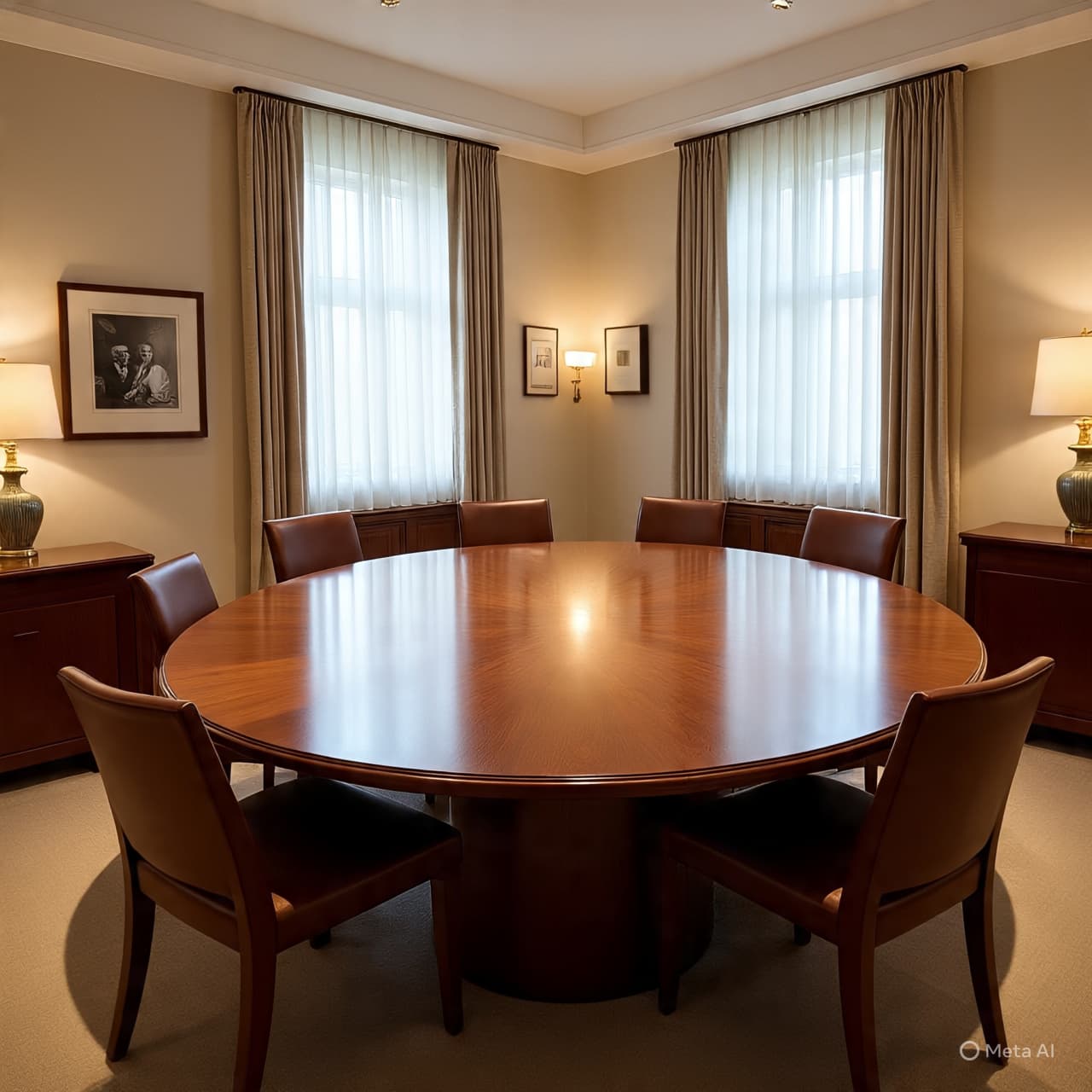
AI Image Disclaimer Visuals are AI-generated and serve as conceptual representations.
Sources (names only) Reuters Associated Press The New York Times Financial Times The Guardian
Published by Banx Network. This article is part of the Banx decentralized media programme, powered by the BXE token on the XRP Ledger.


