
Key Highlights
- U.S. naval forces are repositioning towards the Middle East amid rising tensions with Iran.
- Iran perceives military movements as threats to its sovereignty, demanding clear responses.
- The balance of deterrence relies on perception and intent between the two nations.
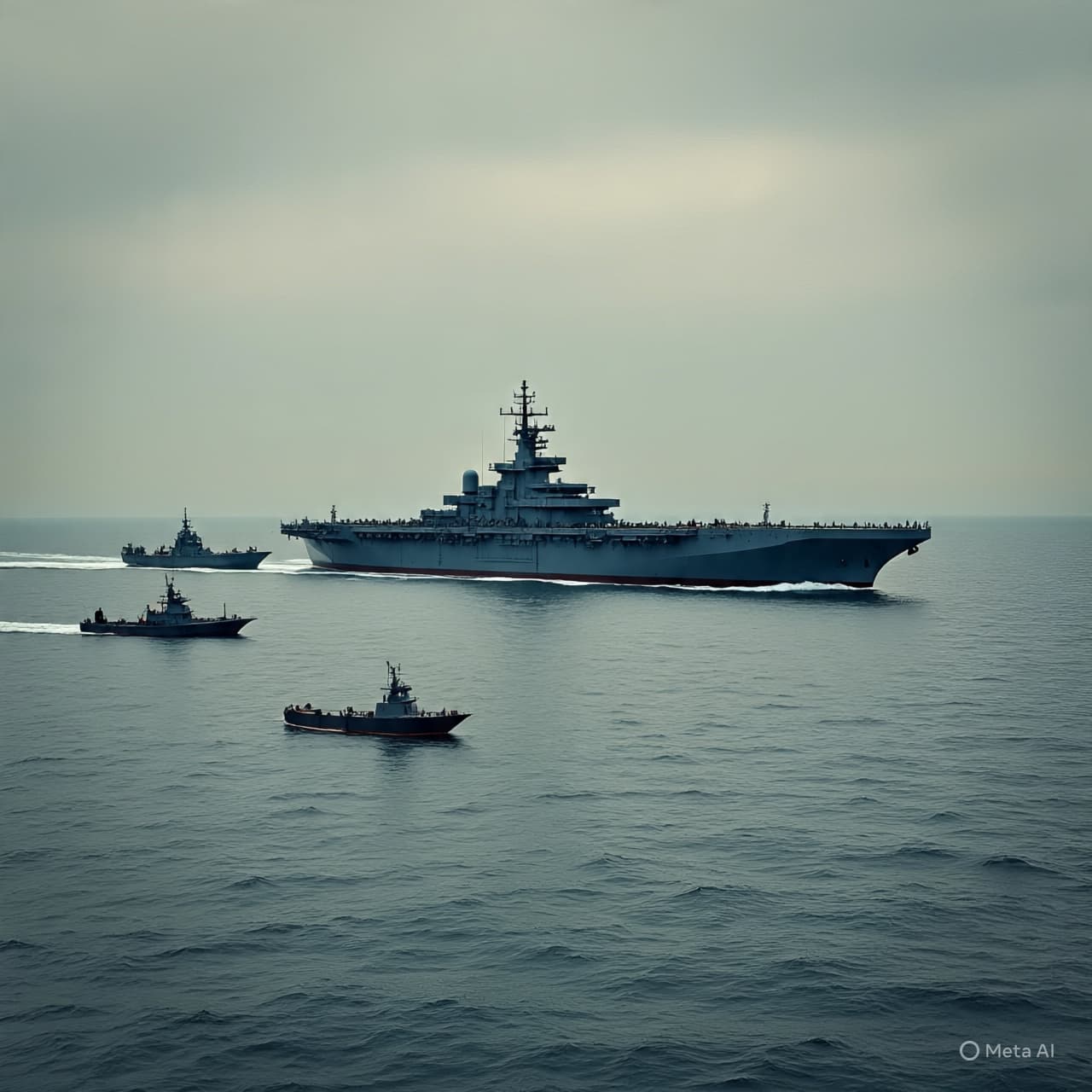
In the complex geopolitical landscape of the Middle East, the movement of military forces often speaks louder than words. Recently, the United States has begun repositioning its naval assets closer to Iran, a maneuver framed as precautionary rather than provocative. This shift includes the deployment of a carrier strike group, which serves as a powerful symbol of readiness without explicitly indicating a destination for potential conflict. The timing of this deployment is critical, coinciding with ongoing diplomatic tensions, regional instability, and stern warnings from Iranian officials regarding any direct military action against their territory.
Iran's response to these developments has been characterized by a measured yet resolute stance. Senior Iranian officials have reiterated their view that military threats are not mere abstractions but direct challenges to their sovereignty. This perspective is deeply rooted in decades of historical context, where Iran has faced various forms of external pressure and intervention. The language used by Iranian leaders reflects a commitment to resilience, emphasizing that while they do not seek escalation, they will not appear unprepared in the face of perceived threats.
The notion of “sending another deterrence message” implies that previous signals may have diminished in effectiveness or that the current geopolitical climate necessitates a stronger military presence. For the United States, this strategy serves multiple purposes: it reassures allies in the region, showcases operational capabilities, and establishes a clear boundary around actions that would be deemed unacceptable. In this context, deterrence functions as both a warning and a reassurance, aimed at maintaining stability in a volatile environment.
Conversely, for Iran, the presence of foreign naval forces in proximity to its waters evokes historical memories of intrusion and vulnerability. Iranian officials frame their military posturing as defensive, aimed at preventing miscalculations that could lead to conflict. However, the effectiveness of deterrence is not solely based on intent; it heavily relies on how that intent is perceived by the opposing side. This perception is where the potential for tension often resides, as both nations navigate the delicate balance of power.
The ongoing interactions between Washington and Tehran resemble a high-stakes balancing act rather than a countdown to conflict. Each side is keen to convey its resolve while simultaneously avoiding the very confrontation it claims to be steering clear of. The movements of ships, the echoes of statements, and the silences that punctuate these exchanges all contribute to the intricate dance of deterrence. In this quiet yet charged atmosphere, the concept of deterrence operates — imperfectly and cautiously — striving to maintain peace through a shared understanding of the consequences of escalation.
Published by Banx Network. This article is part of the Banx decentralized media programme, powered by the BXE token on the XRP Ledger.



