In the quiet endurance of stone, time keeps its own counsel. Long before cities rose and borders were drawn, before memory itself had language, the Earth wrote its autobiography in layers of rock. In the windswept highlands of Scotland, ancient formations now whisper a subtle challenge to one of geology’s most dramatic chapters — the vision of a planet once locked entirely in ice. Like a forgotten margin note in an old manuscript, these rocks suggest that the story of “Snowball Earth” may be more nuanced than once imagined.
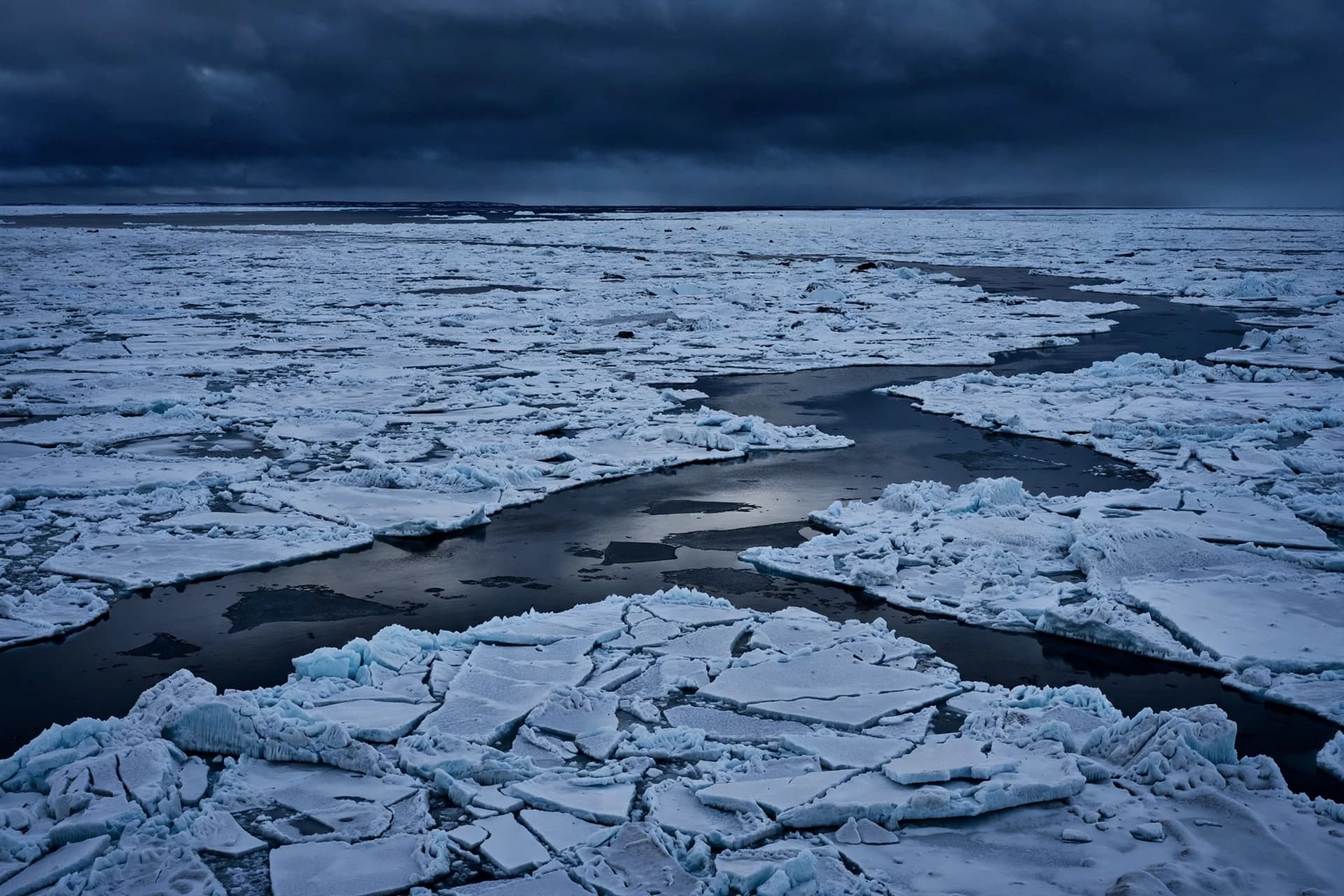
For decades, the Snowball Earth hypothesis has painted a stark and mesmerizing portrait: hundreds of millions of years ago, our planet frozen from pole to pole, oceans sealed beneath vast sheets of ice, sunlight reflecting off a global white silence. The theory emerged from geological and chemical clues found across continents — glacial deposits in unexpected latitudes, isotopic signatures hinting at extreme cold, and sedimentary layers that seemed to mark a world on pause.
Yet the newly examined Scottish rocks complicate this image. Their mineral compositions and structural features appear to record environmental conditions that may not align neatly with a fully frozen globe. Instead of a planet entirely entombed in ice, the evidence hints at dynamic zones — perhaps open waters or thinner ice cover — where sediment could still move and life might have persisted.
If this interpretation holds, it does not necessarily dismantle the Snowball Earth theory, but it invites refinement. Science, after all, rarely moves by demolition; it evolves through adjustment. A model once conceived as absolute may soften into something more textured — a “Slushball Earth,” as some researchers have proposed, where ice dominated yet did not wholly conquer the seas.
The implications stretch beyond academic debate. Understanding the true severity of ancient ice ages informs how we think about planetary resilience. It shapes our grasp of how life survived, adapted, and eventually flourished after extreme climatic upheaval. If pockets of open ocean endured, they may have served as refuges — cradles of persistence in a world otherwise gripped by cold.
There is also a broader lesson in this rocky reconsideration. Geological evidence is never a single voice but a chorus, and each outcrop adds harmony or tension to the melody of Earth’s past. The Scottish formations remind us that even well-established scientific narratives remain open to revision. Certainty in science is not a rigid monument; it is a living bridge, strengthened each time it is tested.
As research continues, laboratories will analyze samples, debate will circulate through journals, and field teams will return to the hills with sharper questions. For now, the ancient rocks do not shout. They simply suggest — with the patience of deep time — that Earth’s frozen chapter may have been more complex than a single, global winter.
In the measured language of ongoing study, scientists acknowledge that further data is needed to determine how widespread these conditions were and how they fit into existing climate models. The findings add perspective rather than finality, offering new directions for inquiry into one of Earth’s most dramatic climatic eras.
AI Image Disclaimer: Illustrations were produced with AI and serve as conceptual depictions.
Sources: BBC News The Guardian Nature Science National Geographic
Published by Banx Network. This article is part of the Banx decentralized media programme, powered by the BXE token on the XRP Ledger.