There are moments in science that feel like opening an old book only to discover a forgotten chapter hidden between familiar pages. Paleontologists recently lifted a fragment of Earth’s distant past — not a complete skeleton, not an entire fossilized body, but a set of curious jawbones whispering clues from 275 million years ago. In these twisted remains, scientists have read the story of a creature whose unusual design once puzzled researchers, and whose ancient lineage has reshaped our understanding of early tetrapod evolution.
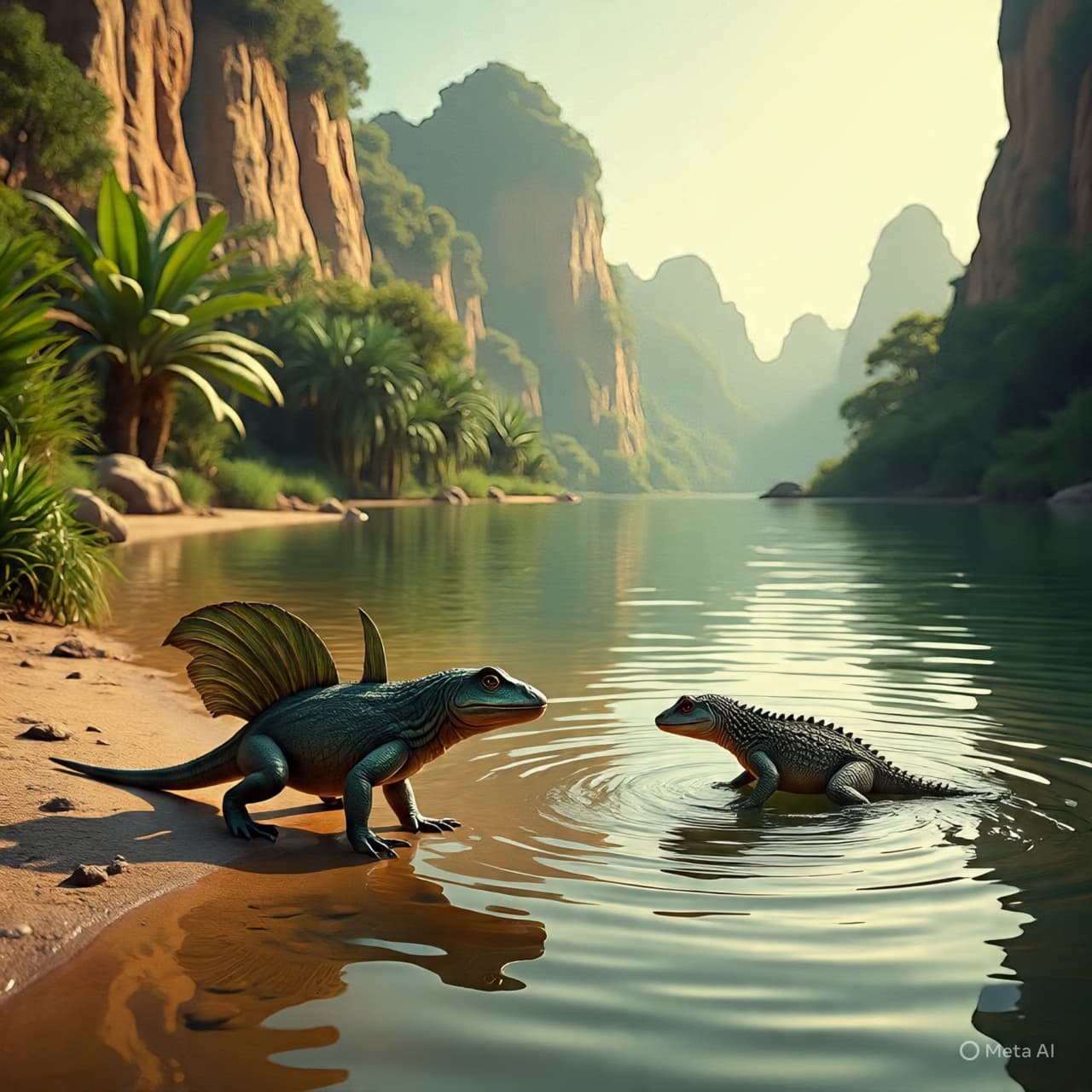
This creature, now named Tanyka amnicola, lived long before the age of dinosaurs. Its habitat was a freshwater realm in what is now northeastern Brazil, a landscape transformed over hundreds of millions of years but one that once sustained rivers and lakes rich with life. Though all we possess are jawbones roughly six inches long, those fragments speak volumes about Tanyka’s uniqueness. Its lower jaw was twisted, causing teeth to point sideways rather than straight upward as in most four‑limbed vertebrates — an adaptation that has left scientists marveling and scratching their heads in equal measure.
At first glance, such a jaw might look like a deformation caused by time’s pressure. But the discovery of multiple identical jawbones in the same rock layers confirmed that this was no accident of fossilization — this was anatomy as it originally existed. Covered with rows of small, tightly packed denticles, the jaw’s inner surface would have formed a grinding platform, suggesting an unusual feeding strategy that may have included plant matter alongside small invertebrates. Such adaptations hint at an ecological niche distinct from relatives thought to have been mostly carnivorous.
Strikingly, Tanyka belonged to a lineage called stem tetrapods — ancient four‑limbed vertebrates from which all modern tetrapods eventually descended, including reptiles, birds, mammals, and amphibians. By the time Tanyka existed, many of its primitive relatives had already vanished. Yet this lineage endured, making Tanyka itself something scientists describe as a “living fossil” in its own era, much like a modern platypus represents an older evolutionary branch among mammals.
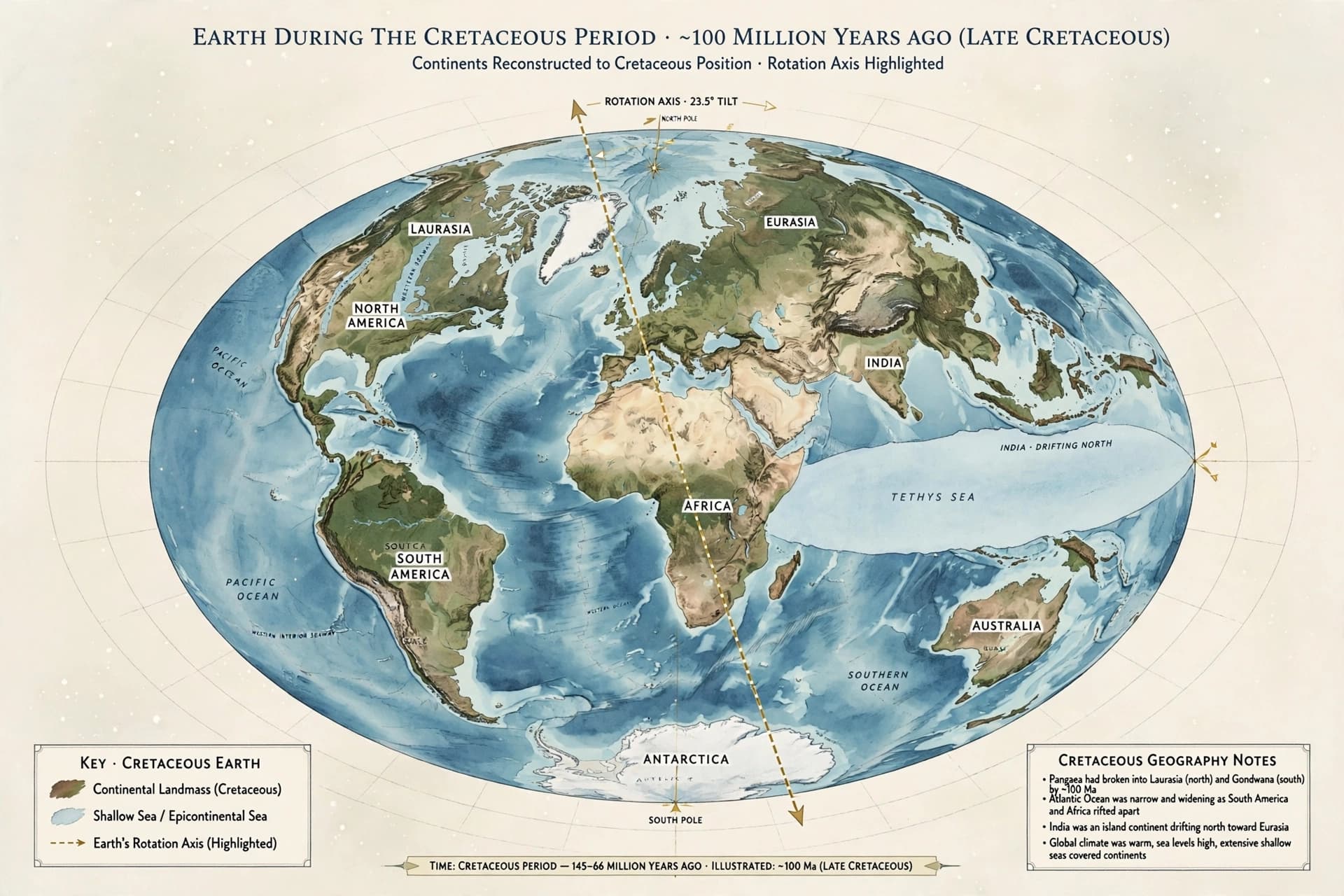
Because only lower jaws have been found so far, much about Tanyka’s body remains a mystery. Comparisons with related animals suggest it may have resembled a long‑snouted salamander, perhaps measuring up to about three feet from snout to tail. Its discovery in the Pedra de Fogo Formation — one of the rare windows into the Permian ecosystems of the southern supercontinent Gondwana — also enriches a fossil record that has long lacked representation from that part of the ancient world.
Though the fragmentary nature of the fossils leaves some questions unanswered, the discovery of Tanyka amnicola invites us into a moment of wonder at life’s ingenuity across deep time. These twisted jaws are not just odd curiosities; they are evidence of evolutionary experiments and ecological roles that do not easily fit within our expectations. In the contours of such ancient bones, science finds both mystery and meaning — a reminder that Earth’s earliest ecosystems were as complex and surprising as the living world we know today.
AI Image Disclaimer (Rotated Wording) Visuals are created with AI tools and are not real photographs.
📰 Sources Live Science, EurekAlert (Field Museum release), Phys.org, Discover Magazine, National Today.
Published by Banx Network. This article is part of the Banx decentralized media programme, powered by the BXE token on the XRP Ledger.