On certain nights, when the sky is clear and the world grows quiet, the stars appear almost eternal. They seem fixed in place, like silver pins holding the fabric of the universe together. Yet long before telescopes, satellites, or digital observatories, someone once tried to chart that celestial tapestry by hand—patiently, carefully, guided only by human eyes and the rhythm of the night.
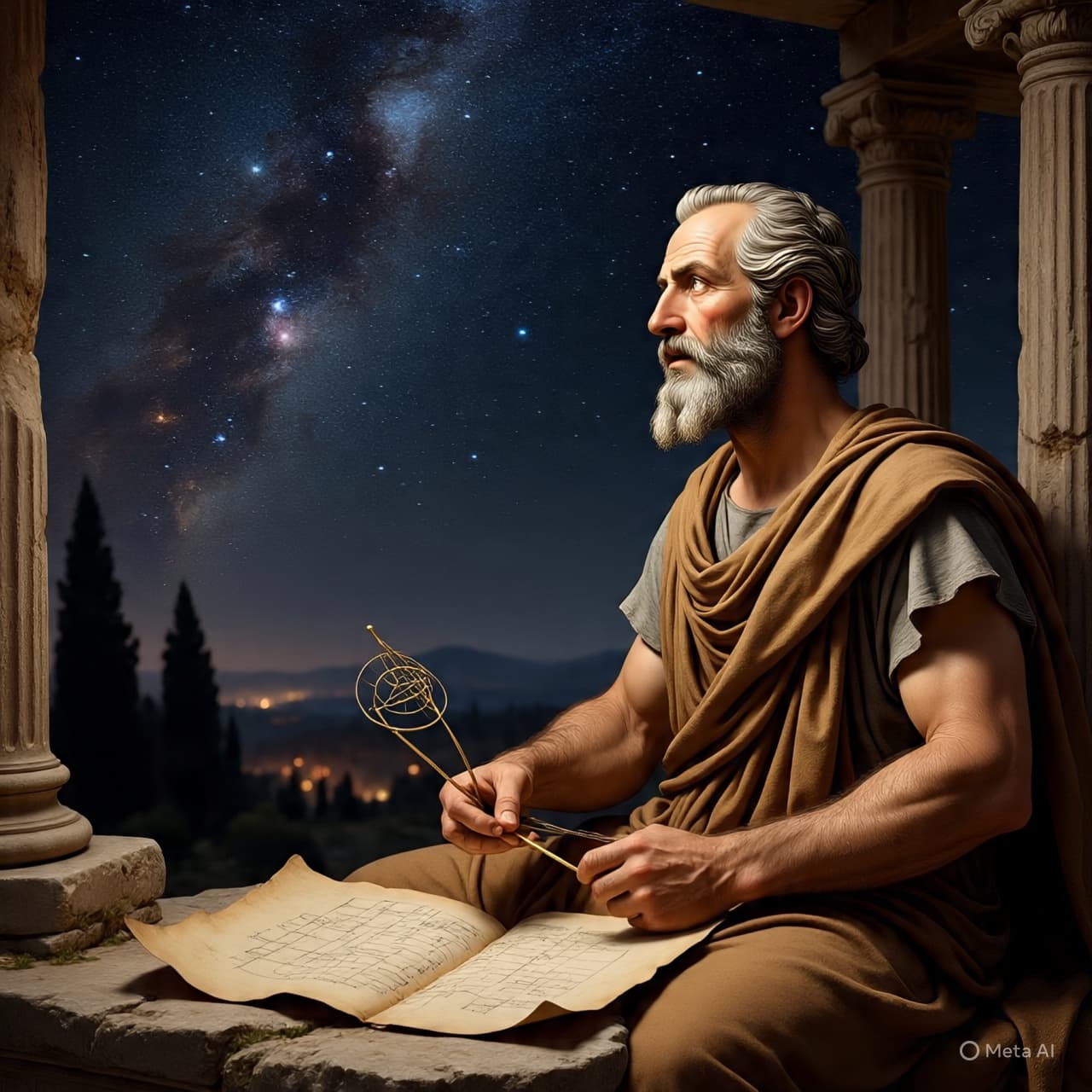
More than two thousand years ago, the Greek astronomer Hipparchus stood beneath those same stars and attempted something extraordinary. Instead of simply admiring the sky, he began measuring it. With simple instruments and careful observation, he recorded the positions of stars across the heavens, creating what historians now believe was the oldest map of the night sky ever produced.
For centuries, however, that map seemed to have vanished.
Ancient writers referred to Hipparchus’ star catalog, but the document itself appeared lost to time. Later astronomers, including Claudius Ptolemy in the second century CE, built their own star charts, and many assumed those works represented humanity’s earliest systematic attempts to map the sky. Hipparchus’ original measurements remained more legend than artifact.
That mystery began to shift when researchers turned their attention to a medieval manuscript known as a palimpsest—a piece of parchment that had been reused. In earlier centuries, scribes often scraped away older texts to make room for new writings. What seemed erased, however, sometimes lingered faintly beneath the surface.
Using multispectral imaging, a technique that analyzes manuscripts under different wavelengths of light, scientists were able to reveal hidden layers of text beneath the visible writing. Beneath the later script, fragments of ancient Greek astronomical measurements began to appear.
What emerged was remarkable.
The recovered lines described precise coordinates for several stars belonging to the constellation Corona Borealis. When historians and astronomers analyzed those coordinates, they realized the measurements corresponded closely to positions recorded around 129 BCE—the era when Hipparchus was active.
Even more striking was the accuracy. Despite relying only on naked-eye observation and primitive instruments, the coordinates were found to be within roughly one degree of modern measurements.
For scholars of science history, the implications are profound. The discovery suggests that Hipparchus was not only cataloging stars but also applying a coordinate system resembling modern latitude and longitude to the celestial sphere. In other words, he was attempting to transform the night sky into a measurable map.
Such an effort marked a quiet turning point in human thought.
Before systematic mapping, the stars often belonged to myth and storytelling. Constellations carried the shapes of heroes, animals, and gods. Hipparchus’ work did not erase those stories, but it added something new: measurement, prediction, and the idea that the heavens could be studied with mathematical precision.
His observations also contributed to one of astronomy’s earliest major discoveries—the precession of the equinoxes, the slow wobble of Earth’s axis that causes the positions of stars to shift gradually over centuries.
Yet the rediscovered fragments are only a small piece of what was once a much larger catalog. Researchers believe other pages from the same work may still lie hidden within ancient manuscripts scattered across libraries and monasteries.
The possibility has turned scholars into a kind of astronomical detective, scanning old parchments with modern imaging tools in search of faint traces of erased knowledge.
What makes the story especially poetic is the contrast between eras. The original observations were made with nothing more than human sight and patience. The rediscovery, however, required advanced imaging technology capable of detecting ink invisible to the naked eye.
Across the centuries, two forms of curiosity quietly met each other.
For historians, the fragments offer a rare glimpse into how ancient astronomers saw the universe. For scientists, they show how early measurement laid the foundations of astronomy long before telescopes transformed the field.
The night sky has always invited questions. In Hipparchus’ time, those questions were written carefully onto parchment. Today, they are recorded by satellites and digital telescopes scanning billions of galaxies.
Yet in a quiet way, both efforts share the same impulse: to look upward, and to draw meaning from the silent geometry of the stars.
The rediscovered star catalog does not change the sky itself. But it reminds us that humanity has been trying to understand that sky for far longer than modern science alone might suggest.
And somewhere, perhaps in another forgotten manuscript, more pieces of that ancient map may still be waiting to be seen again.
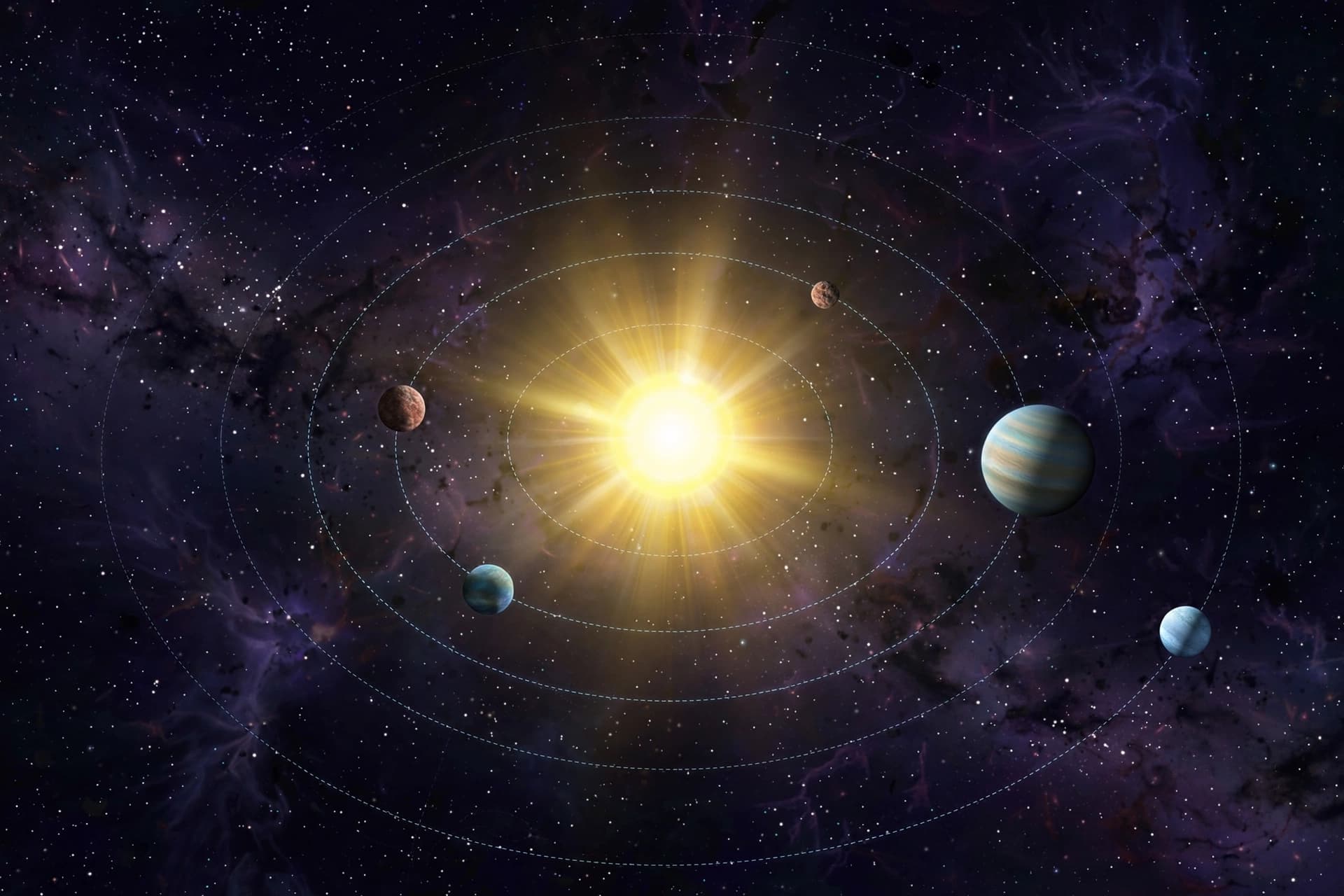
AI Image Disclaimer Graphics are AI-generated and intended for representation, not reality. They illustrate concepts described in the article.
Sources National Geographic Smithsonian Magazine Space.com Yahoo News Nature
Published by Banx Network. This article is part of the Banx decentralized media programme, powered by the BXE token on the XRP Ledger.