There is a quiet poetry in the strands of our DNA — a tapestry woven not only from survival and adaptation but from moments of meeting between groups once separated by geography and time. When modern humans and Neanderthals encountered one another tens of thousands of years ago, their interactions did more than leave an archaeological footprint; they imprinted echoing traces within the very fabric of our genomes. Yet those traces do not lie evenly across every branch of our genetic tree. They rise and fall in subtle patterns, reflecting not only the mechanics of inheritance but the nuanced rhythms of ancient lives.
For years, scientists have puzzled over why modern non‑African humans carry small percentages of Neanderthal DNA — typically around 1–4% — while portions like the X chromosome seem curiously depleted of these archaic sequences. Early explanations leaned on notions of natural selection, suggesting that certain Neanderthal variants were disadvantageous and thus eliminated over generations. But a growing body of genetic research, highlighted in Science and reported by news outlets including Reuters and the Washington Post, proposes a different thread woven through prehistory: the direction of mating itself may have shaped where Neanderthal DNA persists — and where it doesn’t.
The key lies in the interplay between biology and behavior, particularly how sex chromosomes are passed from one generation to the next. Because males carry one X chromosome and females carry two, an imbalance in the direction of interbreeding — for example, if Neanderthal males and human females mated more often than the reverse — would naturally result in fewer Neanderthal X chromosomes entering the gene pool of the modern human lineage. At the same time, human X chromosomes would be more likely to find their way into Neanderthal genomes. This pattern emerges clearly when scientists compare X‑chromosome data from Neanderthals and humans, and it challenges the idea that incompatibility between species was the main reason for the scarcity of Neanderthal DNA on human X chromosomes.
The implications are both scientific and human. Genetic models that incorporate mating direction suggest that social interactions — preferences, circumstances, or patterns of movement and contact — played a role in shaping our ancestral genome. It is a reminder that evolution is not dictated solely by abstract pressures of selection, but also by the lived choices and encounters of individuals across millennia. Neanderthal DNA remains a testament to a world where distinct hominin groups met, mingled, and left intertwined legacies in the descendants who walk the Earth today.
What remains clear is that these findings do not rewrite the broad arc of human evolution — the “Out of Africa” model and the narrative of expanding Homo sapiens remain well supported — but they refine our understanding of how those expansions played out in practice. They reveal the subtle contours of contact and coexistence, offering a nuanced view of how ancient social interactions shaped the patterns we observe in genomes now.
In straightforward terms, recent genetic research shows that prehistoric interbreeding between modern humans and Neanderthals was predominantly between Neanderthal males and human females. This sex‑biased pattern helps explain why Neanderthal DNA is largely absent from the human X chromosome rather than being removed solely by natural selection.
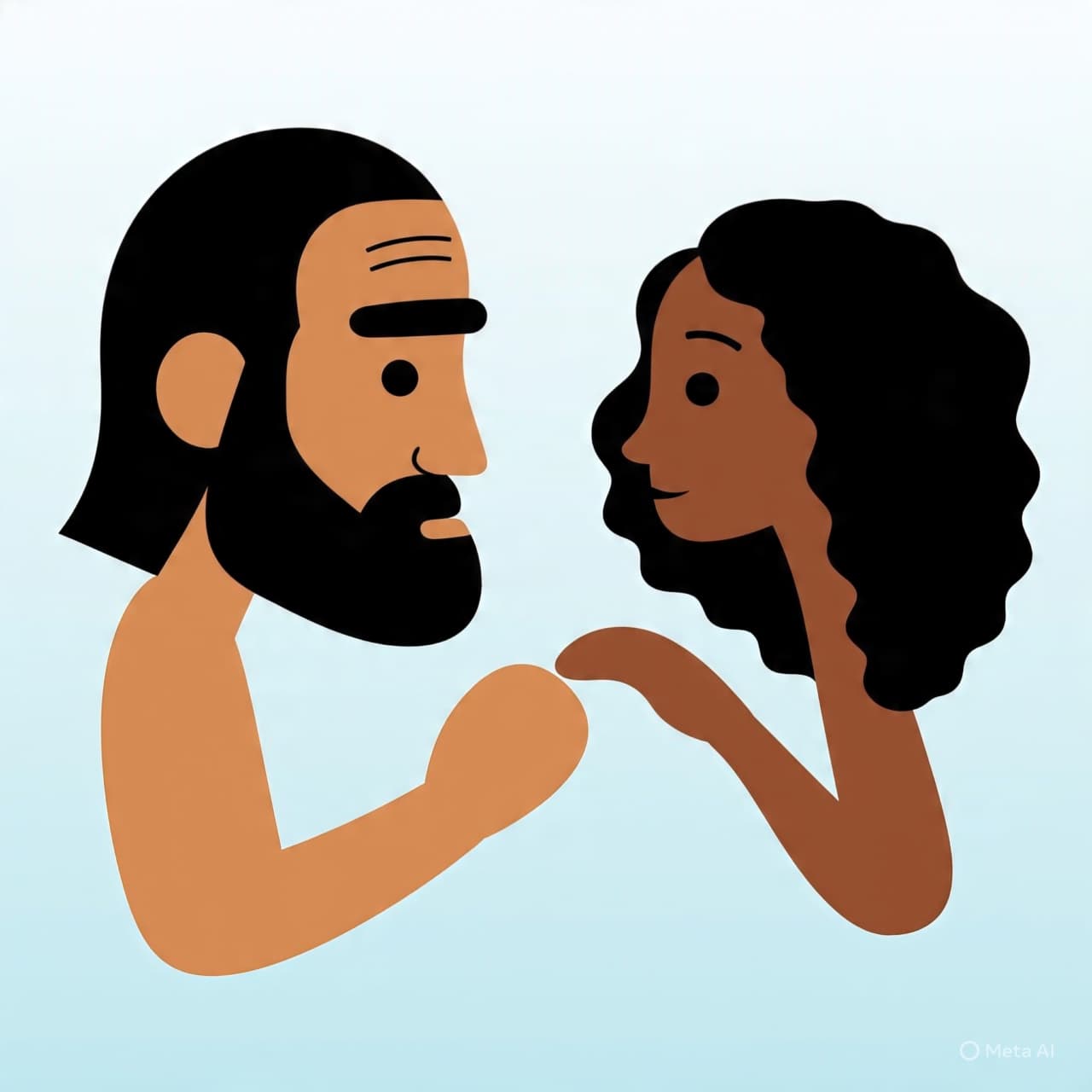
AI Image Disclaimer Visuals are created with AI tools and are not real photographs.
Sources (Media Names Only) Reuters Bloomberg Space.com Ars Technica The Wall Street Journal
Published by Banx Network. This article is part of the Banx decentralized media programme, powered by the BXE token on the XRP Ledger.