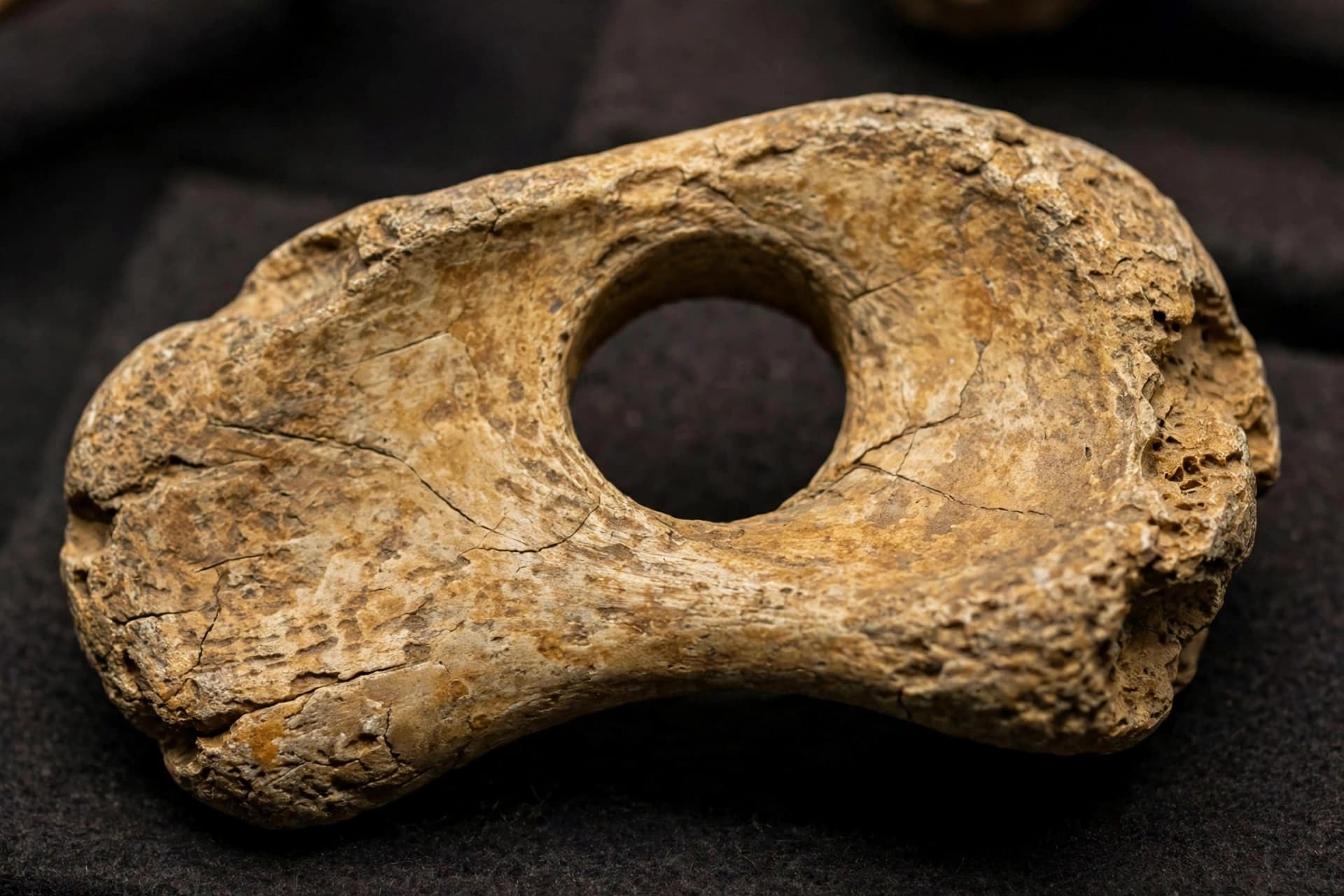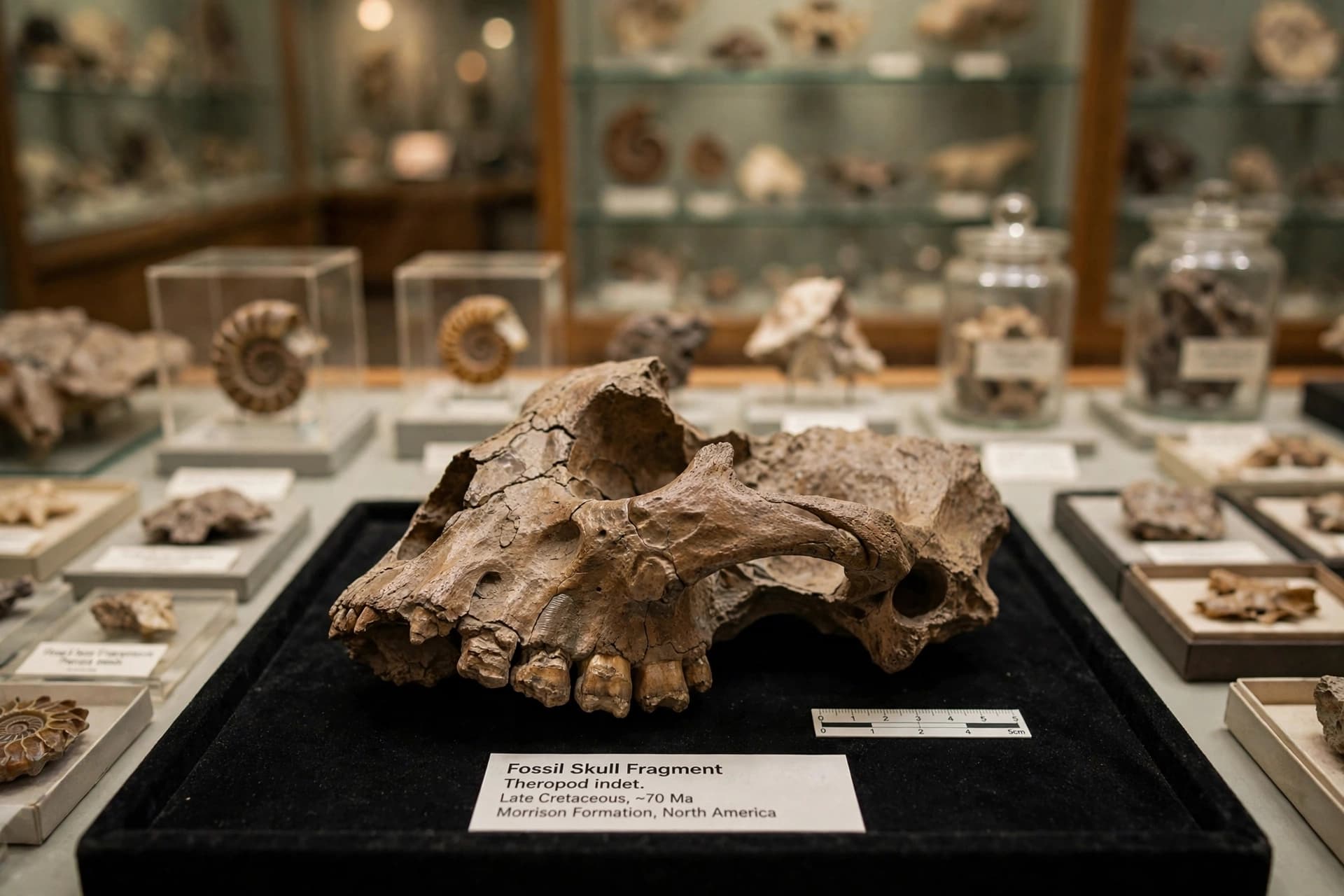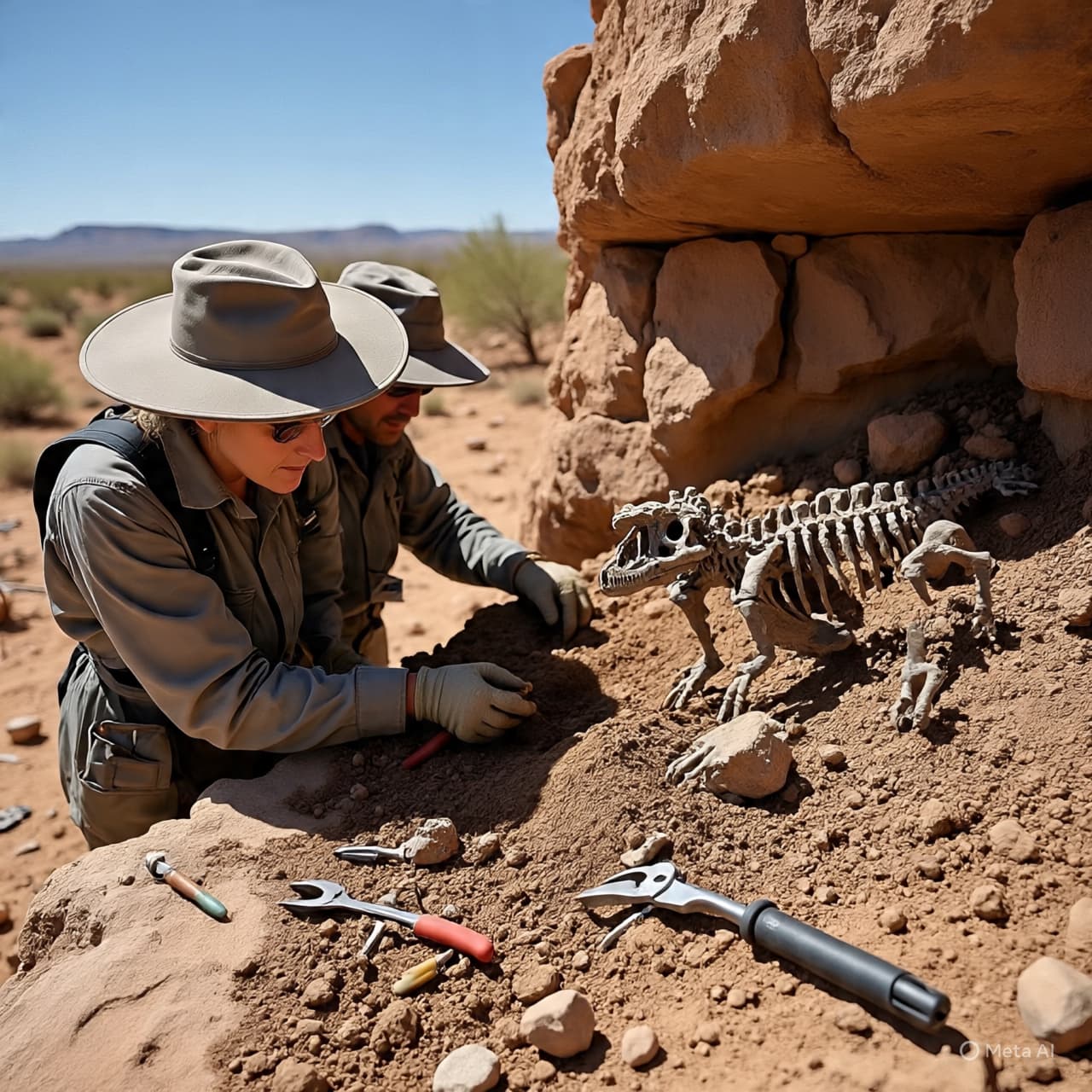
There are moments in science when the earth offers a quiet surprise. A fragment of bone emerges from ancient rock, and suddenly the past—once thought to be well understood—seems to stir again. Paleontology often advances in this patient way, with discoveries that do not shout loudly but instead whisper gently, inviting us to look again at stories long written in textbooks.
One such whisper has come from a fossil more than 90 million years old.
The specimen, uncovered from layers of rock dating back to the late Cretaceous period, has drawn attention among scientists because of its unusual combination of physical features. At first glance, it resembles known dinosaur groups. Yet the closer researchers look, the more it seems to sit between familiar categories, as though bridging evolutionary paths that had previously appeared separate.
The fossil includes well-preserved skeletal elements that allow scientists to examine details of the animal’s anatomy—its limbs, bone structure, and distinctive traits. These details suggest that the dinosaur may represent either a previously unknown species or a transitional form linking different branches of dinosaur evolution.
Discoveries like this are particularly important in paleontology because they help fill the quiet gaps in the fossil record. Evolution rarely proceeds in simple, straight lines. Instead, it unfolds like a branching tree, where species diverge, adapt, and sometimes share traits that blur the boundaries scientists once assumed were clear.
The unusual features of this fossil have encouraged researchers to reconsider certain assumptions about how particular dinosaur groups developed. Some of its characteristics resemble those seen in meat-eating theropods, while other traits echo structural patterns associated with different lineages. This combination raises new questions about how these animals may have evolved and spread across ancient ecosystems.
The fossil also offers clues about the environment in which the dinosaur once lived. Around 90 million years ago, during the Cretaceous period, much of the planet looked very different from today. Continents were arranged in new positions, sea levels were higher, and vast regions were covered with warm forests and coastal plains. Dinosaurs thrived across these landscapes, adapting to a wide range of habitats.
Each fossil recovered from this era acts like a small window into that distant world. Bone structure can hint at how an animal moved, what it may have eaten, and how it interacted with other species around it. In this case, the fossil’s anatomy suggests a creature that may have occupied an ecological niche scientists had not fully recognized before.
For researchers, the discovery is less about overturning established knowledge and more about refining it. Scientific understanding grows gradually, shaped by evidence collected over decades. A single fossil rarely rewrites the entire story, but it may adjust a chapter or illuminate a passage that once seemed unclear.
That quiet process of revision is part of the strength of science itself. Every new discovery invites careful analysis, comparison with earlier findings, and sometimes a gentle reshaping of ideas that once appeared settled.
The 90-million-year-old fossil now joins the long archive of specimens studied in laboratories and museums around the world. Paleontologists will continue examining its structure, comparing it with other fossils, and exploring what it might reveal about the evolutionary pathways of dinosaurs.
For the wider public, such discoveries carry a simple but enduring fascination. They remind us that beneath layers of stone and soil, the story of Earth’s past still waits patiently to be uncovered.
And in the quiet dialogue between rock and science, even a single bone can encourage history to speak again.
AI Image Disclaimer
Graphics are AI-generated and intended for representation, not reality.
---
Sources
BBC News CNN National Geographic Smithsonian Magazine Live Science
Published by Banx Network. This article is part of the Banx decentralized media programme, powered by the BXE token on the XRP Ledger.