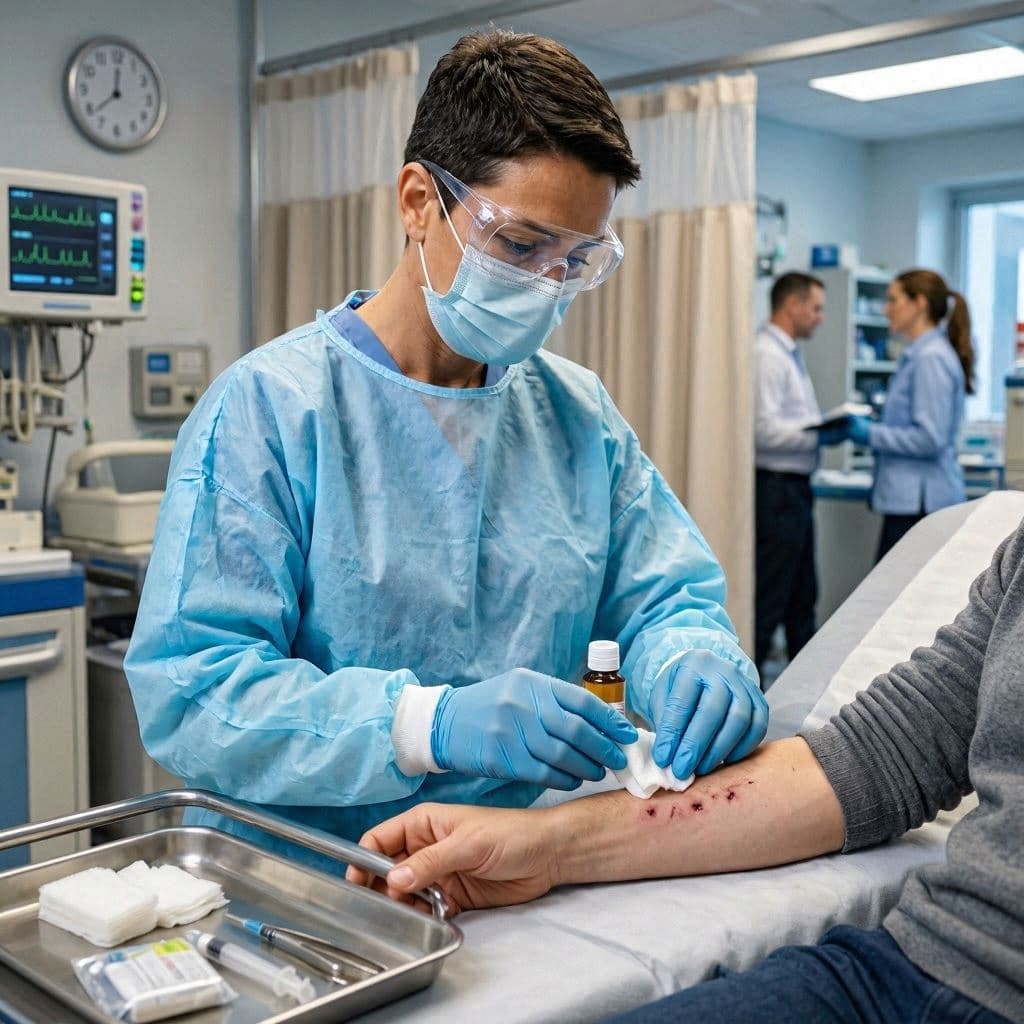
There are moments when an ordinary afternoon changes as suddenly as a calm breeze giving way to an unexpected storm. Encounters with familiar animals often carry a sense of comfort, yet on rare occasions they become reminders that nature can behave in unpredictable ways. For one woman in Quebec, what began as a routine encounter quickly became a frightening experience that also highlighted the importance of public health awareness.
The Quebec woman recalled that the cat repeatedly bit and scratched her during the attack, leaving her with injuries that required immediate medical attention. Health authorities later confirmed that the animal had rabies, transforming what first appeared to be an isolated animal attack into a public health concern requiring careful follow-up.
Medical professionals advised the woman to begin post-exposure treatment, which is considered highly effective when administered promptly after a potential rabies exposure. Public health officials emphasize that immediate wound cleaning and rapid medical assessment are essential whenever a person is bitten or scratched by an animal suspected of carrying the virus.
Rabies remains uncommon in domestic animals, but it is one of the world's most serious viral diseases because symptoms are almost always fatal once they develop. Fortunately, modern preventive treatment can stop the disease if given before symptoms appear, making early intervention critically important.
Quebec authorities continue to monitor the spread of raccoon rabies in several regions of the province through surveillance and vaccination programs targeting wildlife. Officials note that infected animals may display unusual aggression, disorientation, excessive salivation, or unexplained behavioral changes, although symptoms can vary.
Public health agencies encourage anyone bitten or scratched by an unfamiliar or potentially infected animal to wash the wound thoroughly with soap and running water for at least 10 to 15 minutes before contacting healthcare professionals. Veterinary authorities also play an important role in observing domestic animals involved in bite incidents to determine whether rabies is a concern.
The incident has renewed attention on the importance of reporting unusual animal behavior and maintaining rabies vaccination programs for pets. Officials stress that preventive measures, combined with public awareness, remain the most effective tools for protecting both people and animals from the disease.
As the woman continues her recovery, health authorities are using the incident as an opportunity to remind the public that while rabies is rare, it should always be treated as a medical emergency. Prompt reporting, timely treatment, and cooperation between healthcare providers and veterinary officials remain central to preventing further cases.
AI Image Disclaimer:
The illustrations accompanying this article are AI-generated representations created for visual context and do not depict the actual people, animals, or events described.
Sources:
CBC News CTV News Gouvernement du Québec Institut national de santé publique du Québec (INSPQ)
Published by Banx Network. This article is part of the Banx decentralized media programme, powered by the BXE token on the XRP Ledger.