
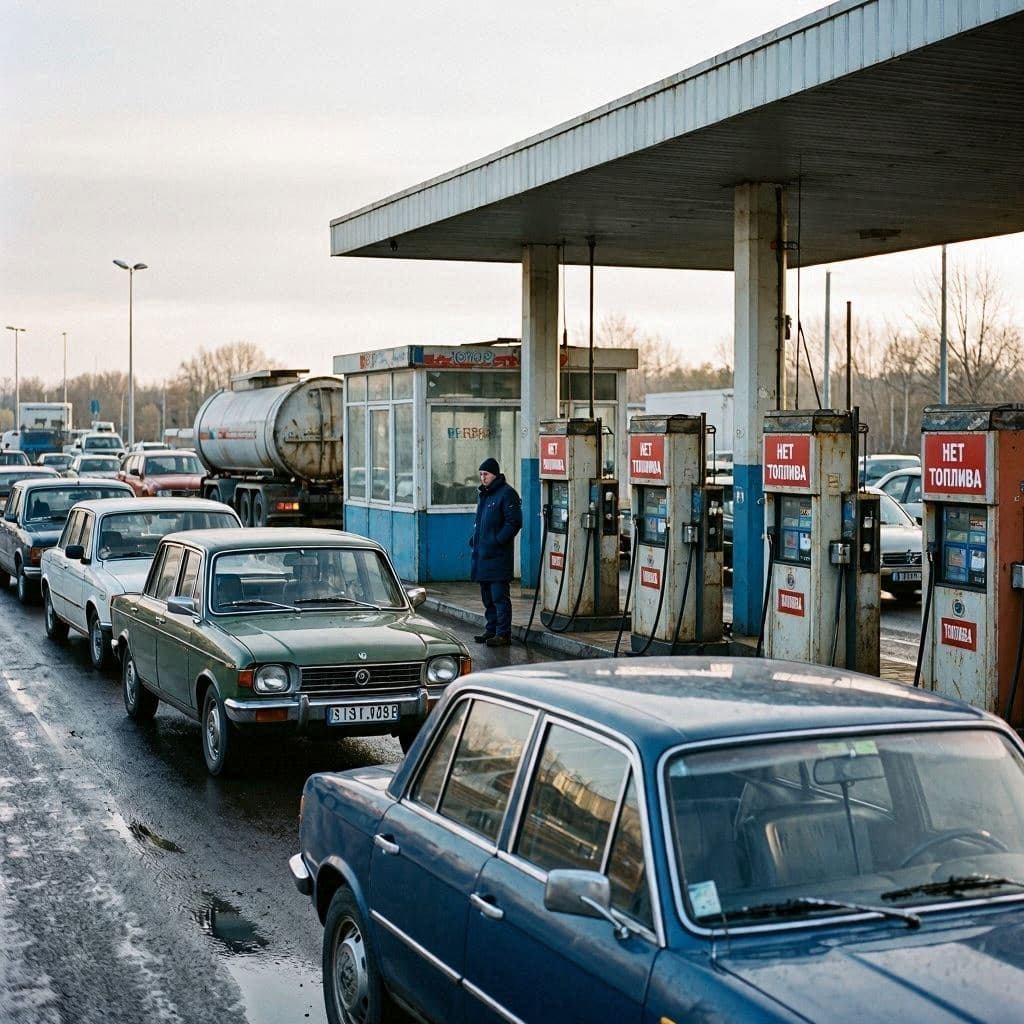
Key Highlights
- Fuel shortages in Russia have led to long lines at gas stations nationwide.
- The crisis is linked to Ukrainian drone attacks disrupting oil production.
- Government measures include banning diesel exports and prioritizing essential deliveries.
The ongoing conflict in Ukraine has manifested in unexpected ways across Russia, particularly through severe fuel shortages that have disrupted daily life. What was once a simple task of refueling has turned into a frustrating ordeal for many drivers, with long lines forming at gas stations from the Leningrad region to Siberia. This situation highlights how national events can ripple through ordinary routines, affecting the lives of countless individuals.
Reports indicate that drivers are waiting for hours only to find that their local gas stations have run out of fuel or are enforcing strict purchase limits. In some areas, pumps have been marked as "Out of Order," exacerbating public frustration. The impact is felt most acutely by taxi drivers, delivery workers, and commuters, whose daily travel has become increasingly challenging due to these shortages.
The Russian government has recognized the severity of the situation and has implemented several emergency measures to alleviate the crisis. These include a temporary ban on diesel fuel exports, increased imports from neighboring countries, and prioritization of fuel deliveries for vehicles transporting food and essential goods. Deputy Prime Minister Alexander Novak has stated that these actions aim to stabilize domestic fuel supplies and ease the burden on consumers.
The agricultural sector is also facing significant challenges due to the fuel shortages. Farmers preparing for the harvest season have reported difficulties in obtaining diesel for their tractors and harvesting equipment. Given that Russia is one of the world's largest wheat exporters, prolonged fuel constraints could have serious implications for agricultural production and export logistics, raising concerns about food security both domestically and internationally.
Economists warn that the fuel shortages could lead to higher consumer prices as transportation costs for food and other goods rise. The central bank of Russia has noted a decline in business sentiment as companies grapple with increasing operational costs and uncertainty stemming from disruptions in energy infrastructure.
This broader crisis underscores how attacks on critical infrastructure can have far-reaching effects beyond military objectives, impacting everyday economic activities. While Ukrainian officials assert that strikes on energy facilities are aimed at increasing the costs of war for Russia, Russian authorities are focused on restoring refinery operations and stabilizing fuel distribution throughout the country.
As repairs continue and emergency measures remain in effect, millions of Russians are adjusting to longer wait times and tighter fuel supplies. The future of this situation hinges on the restoration of refining capacity and developments in the ongoing conflict, with government efforts aimed at improving fuel availability across the vast transportation network of the country.
Published by Banx Network. This article is part of the Banx decentralized media programme, powered by the BXE token on the XRP Ledger.



