
Key Highlights
- Incident:A Blue Origin rocket explosion occurred during a controlled test.
- Industry Context:Such failures are common in experimental rocket development.
- Future Implications:Data from the incident will inform future designs and safety measures.
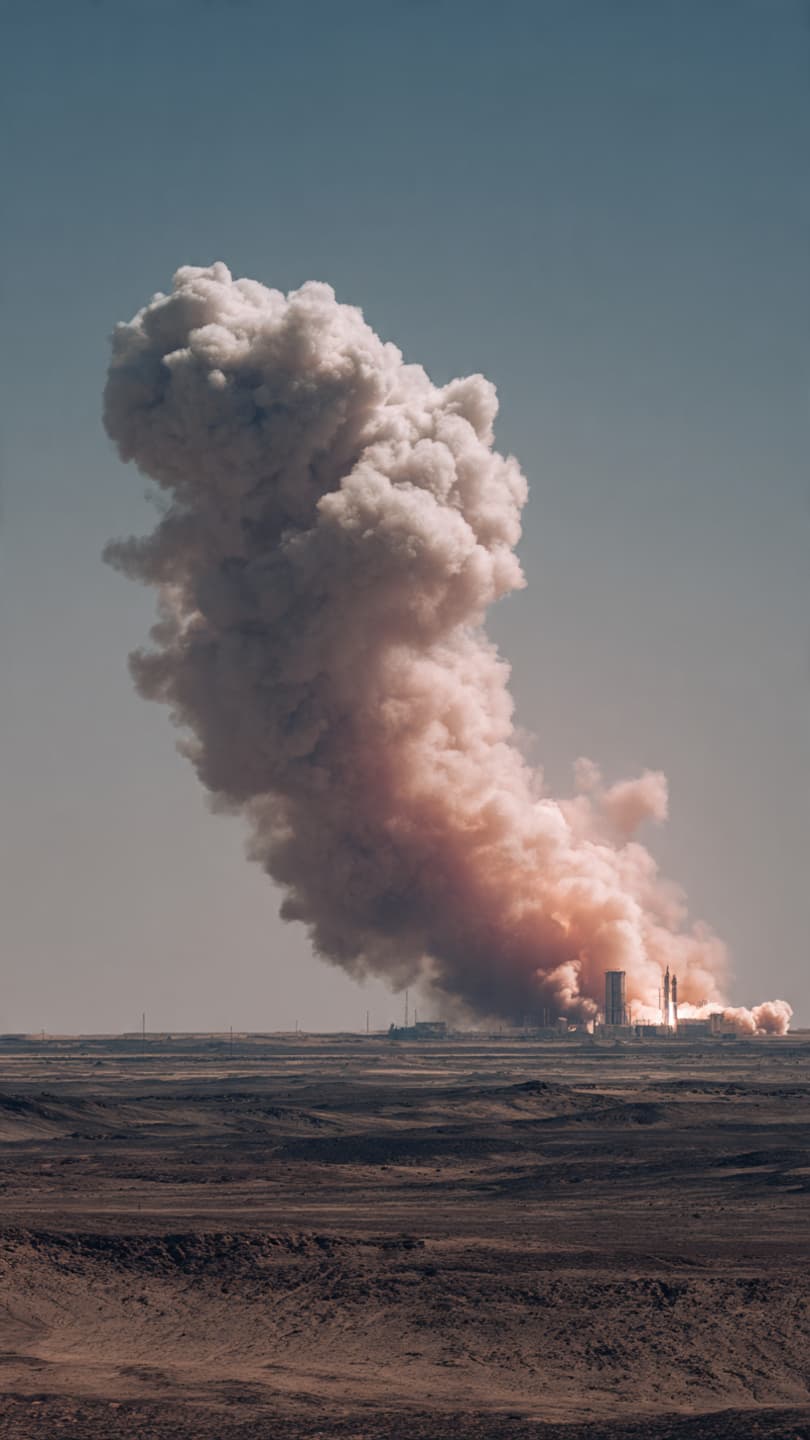
The sky has always been a quiet witness to human ambition, yet there are moments when that silence is broken by fire and sound. Recently, a test involving a Blue Origin rocket ended in an unexpected explosion, reminding observers that even the most carefully engineered systems remain vulnerable to uncertainty. This incident has sparked discussions across major scientific and aerospace monitoring channels, highlighting the inherent risks associated with pushing technological boundaries.
Reports indicate that the explosion occurred during a controlled environment evaluation, a standard practice in the aerospace industry aimed at testing the limits of new technologies. While such tests are designed to push technology to its limits, they also carry the possibility of failure, which is a known aspect of experimental rocket development. Aerospace analysts have pointed out that this event is not entirely unusual; companies like Blue Origin operate in a field where iterative testing is essential, and setbacks often contribute to long-term improvements in design and safety systems.
Engineers familiar with private spaceflight programs emphasize that each failure event becomes a data-rich moment. The explosion, while visually dramatic, serves as a source of telemetry that may help refine propulsion stability and structural resilience in future models. This perspective is crucial in understanding how the aerospace industry views such incidents—not as catastrophic failures, but as opportunities for learning and improvement.
The broader space industry has witnessed similar moments across various organizations, reflecting the competitive and complex nature of the race toward reusable and reliable spacecraft. Each company, whether public or private, navigates the same physical laws, where precision must coexist with unpredictability. Observers note that public reaction often amplifies the dramatic nature of such events, yet within engineering circles, these outcomes are treated with measured analysis rather than alarm. The focus typically shifts quickly toward diagnostics and redesign, underscoring the industry's resilience.
Still, incidents like this highlight the delicate balance between innovation and risk. As private aerospace companies expand their ambitions, the margin for error narrows, and the consequences of testing become more visible to the public eye. The Blue Origin rocket explosion serves as another chapter in the evolving story of space exploration, where progress is rarely linear, and each setback contributes quietly to future advancements.
In the wake of this incident, the aerospace community continues to advocate for a culture of safety and learning, emphasizing that each test, successful or not, is a step toward achieving the ultimate goal of reliable space travel. As the industry moves forward, the lessons learned from such events will be critical in shaping the future of aerospace technology.
Published by Banx Network. This article is part of the Banx decentralized media programme, powered by the BXE token on the XRP Ledger.



