
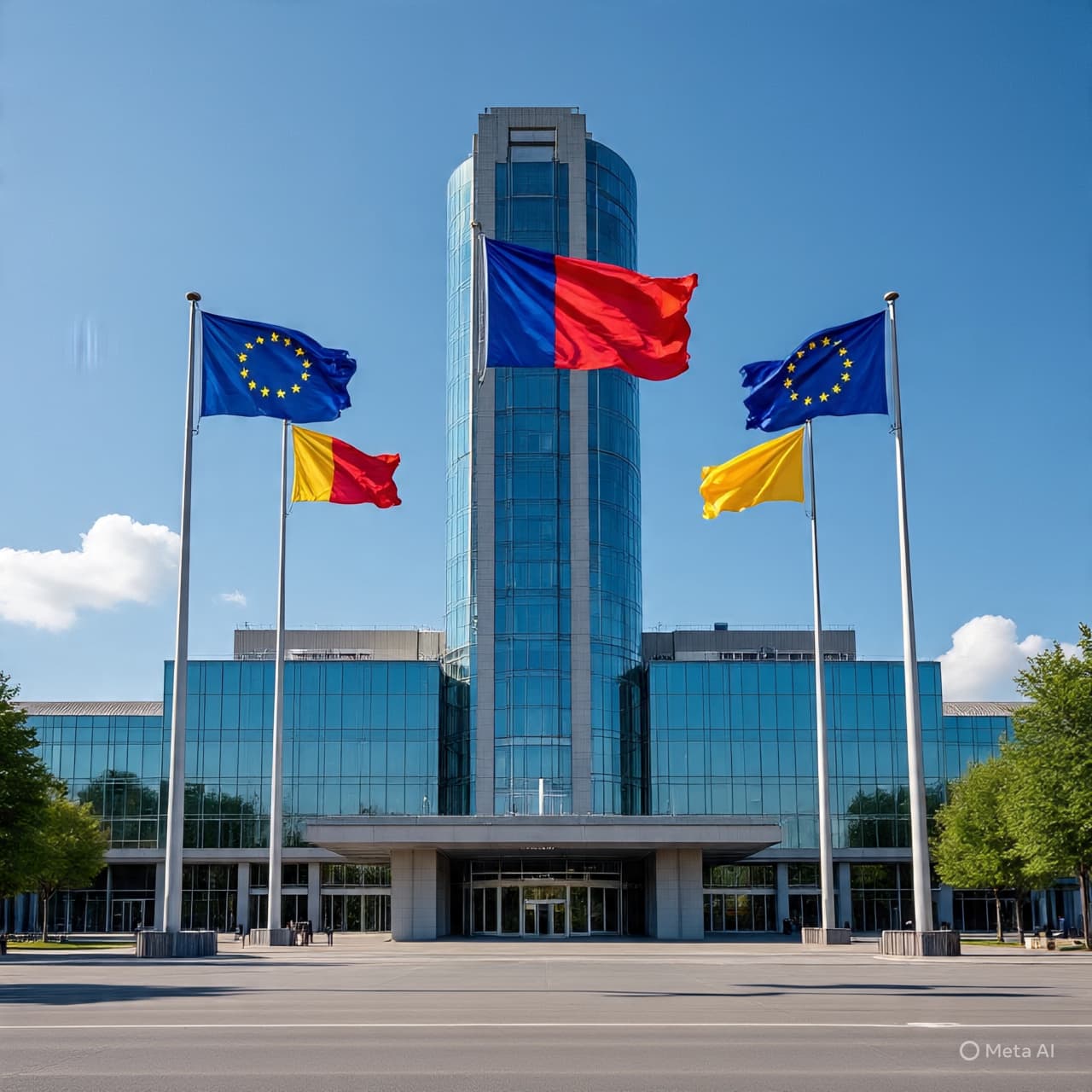
In the quiet choreography of global business, major deals often unfold like distant thunder—heard first as a murmur, then as a gathering echo. When Netflix signaled interest in Warner Bros. Discovery, the ripple traveled far beyond Hollywood boardrooms. It reached the structured corridors of Brussels, where policy and competition are weighed with deliberate care.
The bid, still a matter of negotiation and market speculation, has drawn allegations from a European Union lawmaker who questioned the broader implications of such consolidation. According to reports from Reuters, Bloomberg, Financial Times, Politico Europe, and Variety, concerns were raised about market dominance, competitive fairness, and the cultural balance within Europe’s media landscape. The lawmaker suggested that a deal of this magnitude could warrant close regulatory scrutiny under EU competition rules.
Warner Bros. Discovery, a media conglomerate with extensive film, television, and streaming assets, represents more than a commercial acquisition. It embodies intellectual property, production infrastructure, and global distribution networks. For Netflix, whose rise reshaped the entertainment industry, acquiring or merging with such an entity would signal another evolution in scale. Yet in Europe, scale invites examination.
The European Union has long positioned itself as a vigilant steward of competition law. Technology firms and digital platforms, in particular, have faced detailed review processes in recent years. Against this backdrop, the Netflix-WBD bid naturally enters a regulatory climate attentive to concentration of power. The allegations voiced by the EU lawmaker reflect this broader environment rather than a formal ruling or enforcement action at this stage.
At the heart of the discussion lies a familiar tension: innovation and growth on one side, oversight and balance on the other. Proponents of consolidation often argue that scale enables investment in content, technology, and global reach. Critics caution that fewer players can narrow diversity and influence pricing structures. Europe’s audiovisual sector, with its emphasis on local production quotas and cultural preservation, adds another dimension to the conversation.
Financial markets have responded with measured interest. Investors assess not only the strategic logic of such a move but also the potential regulatory timeline. Any cross-border transaction of this magnitude would likely involve thorough reviews by competition authorities, potentially extending months or longer.
Netflix has not publicly indicated a change in its strategic direction following the remarks. Warner Bros. Discovery likewise continues its operational course amid ongoing industry transformation. The streaming sector, once defined by rapid expansion and subscriber growth, now navigates an era shaped equally by profitability and regulatory awareness.
For now, the allegations remain part of the political dialogue rather than a formal legal challenge. Whether they evolve into concrete regulatory action will depend on the specifics of any formal proposal and the assessment of European authorities.
As discussions continue, the matter stands as a reminder that global ambition often meets regional responsibility. In the interplay between corporate strategy and public oversight, the outcome will be shaped not only by balance sheets but by the frameworks that govern competition across borders.
AI Image Disclaimer: Graphics are AI-generated and intended for representation, not reality.
Sources: Reuters Bloomberg Financial Times Politico Europe Variety
Published by Banx Network. This article is part of the Banx decentralized media programme, powered by the BXE token on the XRP Ledger.



.jpg&w=3840&q=75 "India Says First Phase of U.S. Trade Deal Is Nearly Done, Seeks Edge Over Rivals")