
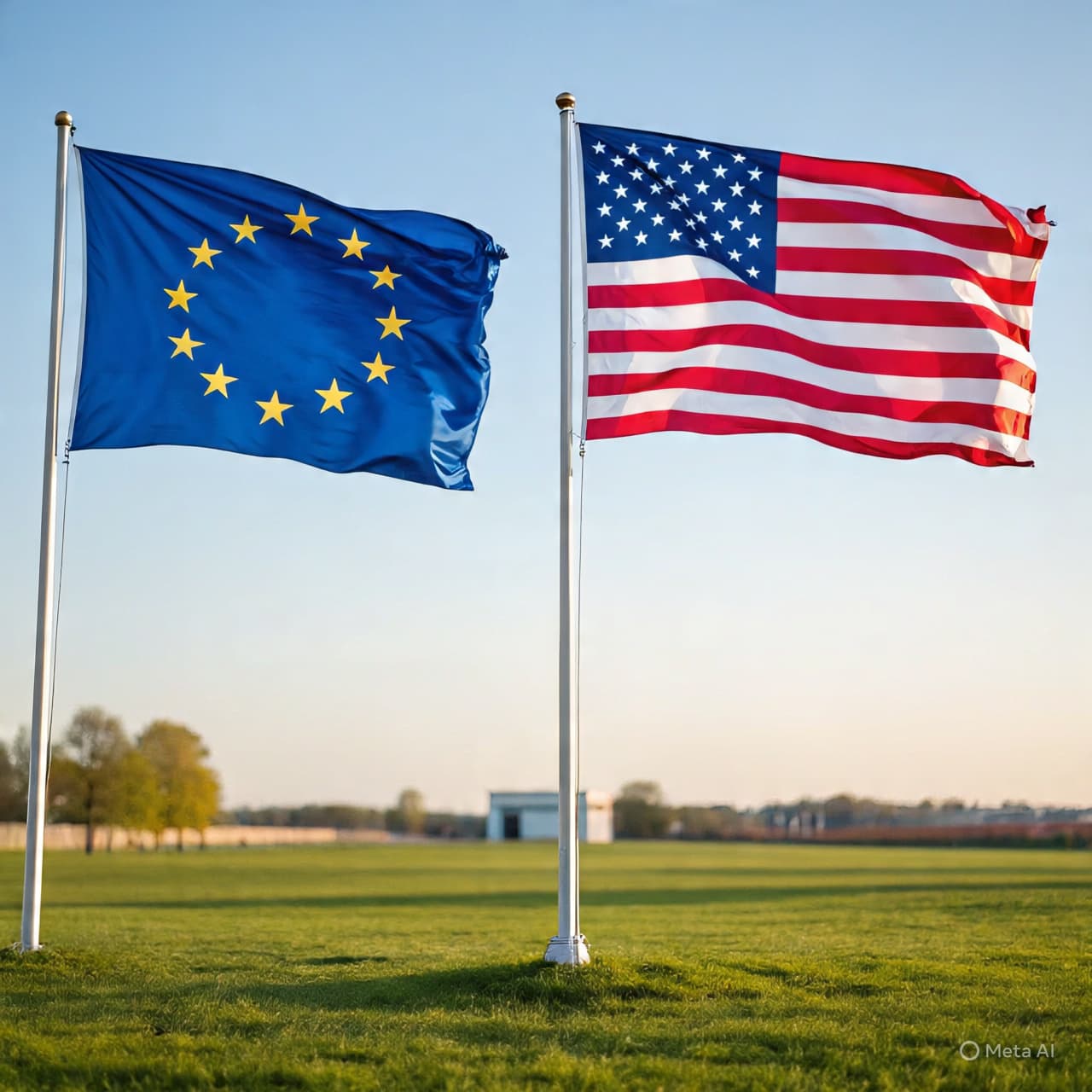
Key Highlights
- Macron warns EU leaders of potential future tensions with the U.S.
- He describes the Trump administration as 'openly anti-European'.
- Urges for reforms to enhance EU's strategic autonomy.
French President Emmanuel Macron's recent remarks have sparked significant discussion regarding the future of transatlantic relations. In a series of interviews published this week, he cautioned that Europe must prepare for ongoing friction with the United States. Macron's comments are not merely reactive; they reflect a broader strategic challenge that he believes is shaping the future of the European Union (EU) and its relationship with the U.S.
Macron's critique centers on the notion that the current approach of seeking accommodation with the U.S. has proven ineffective. He specifically pointed to the Trump administration's actions, which he characterized as 'openly anti-European.' This phrase underscores his concern about the potential dismemberment of the EU, a sentiment that resonates deeply given the historical context of European unity. Macron's use of the term 'Greenland moment' refers to past tensions over U.S. territorial claims and trade disputes, highlighting vulnerabilities within the Atlantic alliance.
The French president's remarks come at a critical time as EU leaders prepare for an upcoming summit where issues of economic resilience and strategic autonomy are expected to dominate discussions. Macron's call for reform is not just about addressing current tensions; it is about positioning Europe to respond effectively to future challenges. He advocates for initiatives such as common borrowing, including eurobonds, to strengthen the EU's financial capabilities and reduce reliance on external powers.
A significant aspect of Macron's warning pertains to the anticipated clashes over digital regulation. He specifically mentioned the EU's Digital Services Act, which could provoke U.S. retaliation if perceived as restrictive to American tech firms. This potential for conflict is not merely speculative; Macron believes it is almost certain in the coming months, emphasizing the need for Europe to adopt a proactive stance.
Macron's comments also reflect a broader concern about the global balance of power, particularly in light of intensifying competition between the U.S. and China. He argues that Europe must adopt a cohesive and forward-looking approach to avoid being outpaced in economic and technological arenas. This perspective aligns with his vision of a Europe that is not just a passive partner but an assertive global actor with its own strategic interests.
In conclusion, Macron's remarks serve as both a warning about U.S. policy and a rallying cry for European unity. He envisions a future where Europe stands confidently on the global stage, equipped with the tools and strategies necessary to navigate complex international dynamics. As the EU prepares for its summit, the implications of Macron's insights will likely resonate throughout discussions on the continent's future direction.
Published by Banx Network. This article is part of the Banx decentralized media programme, powered by the BXE token on the XRP Ledger.



