
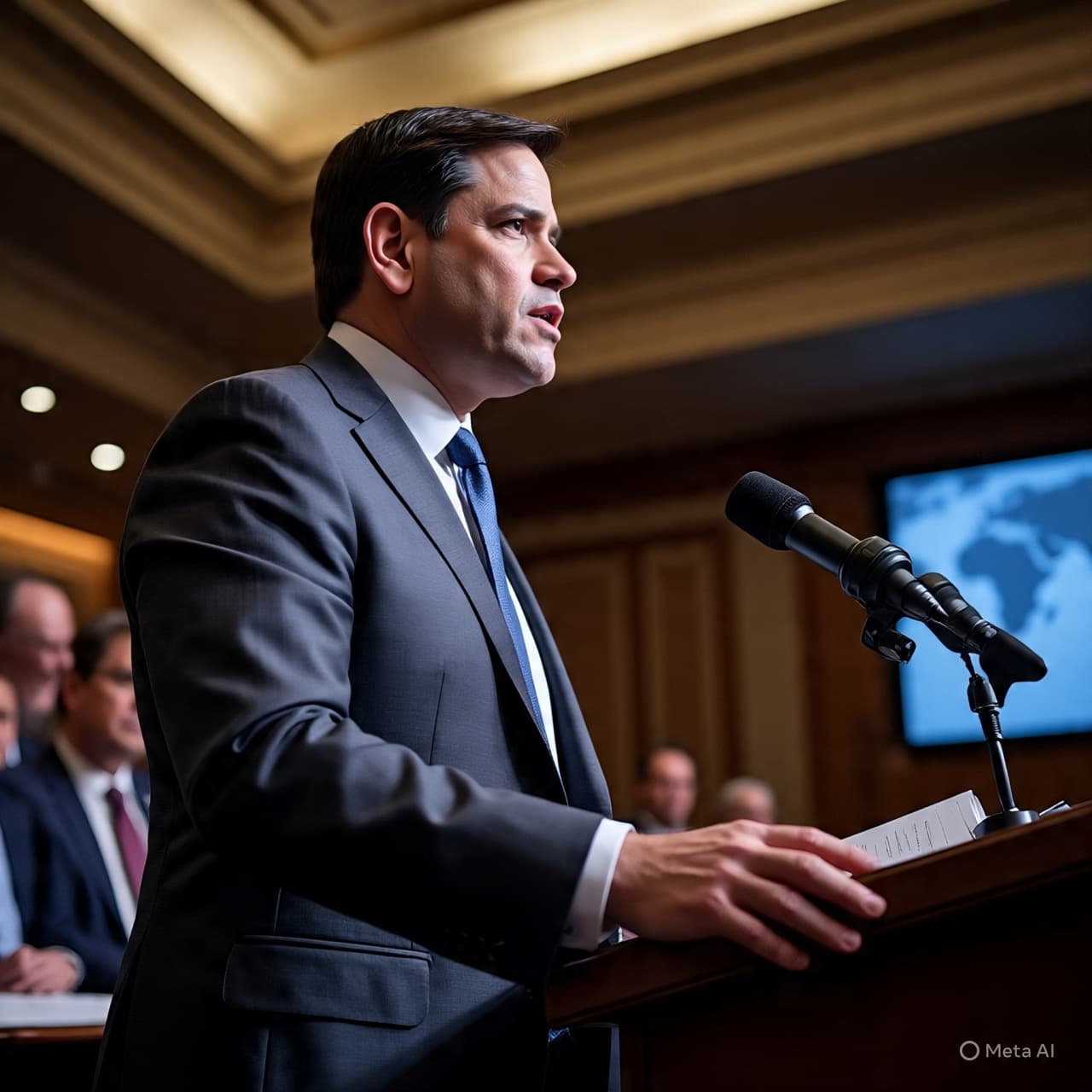
In the corridors of international diplomacy, disagreements rarely arrive as thunderclaps. More often, they surface as measured critiques—phrases carefully chosen, yet carrying unmistakable weight. This week, across a transatlantic conversation shaped by shared history and shifting priorities, another such moment unfolded.
U.S. Senator criticized European approaches to climate policy and migration, arguing that certain strategies risk economic strain and political fragmentation. Speaking at a public forum, Rubio suggested that Western allies must reassess policies he believes have placed disproportionate burdens on working populations while failing to curb irregular migration flows.
His remarks touched on climate regulations adopted by several European governments, which aim to accelerate decarbonization and reduce fossil fuel dependency. Rubio contended that while environmental stewardship is essential, overly aggressive mandates can disrupt energy markets and raise costs for households. He framed his critique not as opposition to climate action itself, but as a call for balance—one that safeguards economic competitiveness alongside environmental goals.
On migration, Rubio pointed to recent surges in asylum applications and border crossings across parts of Europe. He argued that inconsistent enforcement and broad humanitarian frameworks have strained social systems and fueled political polarization. The senator urged Western nations to coordinate more closely on border management and legal pathways, suggesting that unity depends on credible enforcement as much as shared values.
European leaders have long defended their climate commitments as necessary responses to global warming, emphasizing multilateral cooperation through agreements such as the Paris climate accord. Many also maintain that humanitarian obligations require a compassionate approach to migration, even amid logistical challenges. The divergence in tone reflects broader debates within democratic societies about how to reconcile ideals with practical constraints.
Rubio’s comments come at a time when transatlantic alliances face evolving tests—from energy security to geopolitical tensions. His call for unity, delivered alongside criticism, underscored a familiar tension: allies can disagree on tactics while asserting common strategic interests. Observers note that such debates are not new but have grown more visible in an era of heightened political scrutiny and digital amplification.
In Europe, reactions to Rubio’s remarks were mixed. Some policymakers viewed them as part of a routine exchange of perspectives among partners. Others characterized the comments as overlooking the domestic political pressures shaping European decisions. Still, both sides continue to emphasize cooperation within NATO and broader Western institutions.
As of the latest public statements, no formal policy changes have been announced in response to Rubio’s remarks. Diplomatic channels between the United States and European governments remain active, with ongoing discussions on climate, migration, and security coordination. The broader conversation about balance and unity, however, is likely to continue in the months ahead.
AI Image Disclaimer: Visuals are created with AI tools and are not real photographs.
Sources: Reuters BBC CNN The New York Times Politico
Published by Banx Network. This article is part of the Banx decentralized media programme, powered by the BXE token on the XRP Ledger.


