

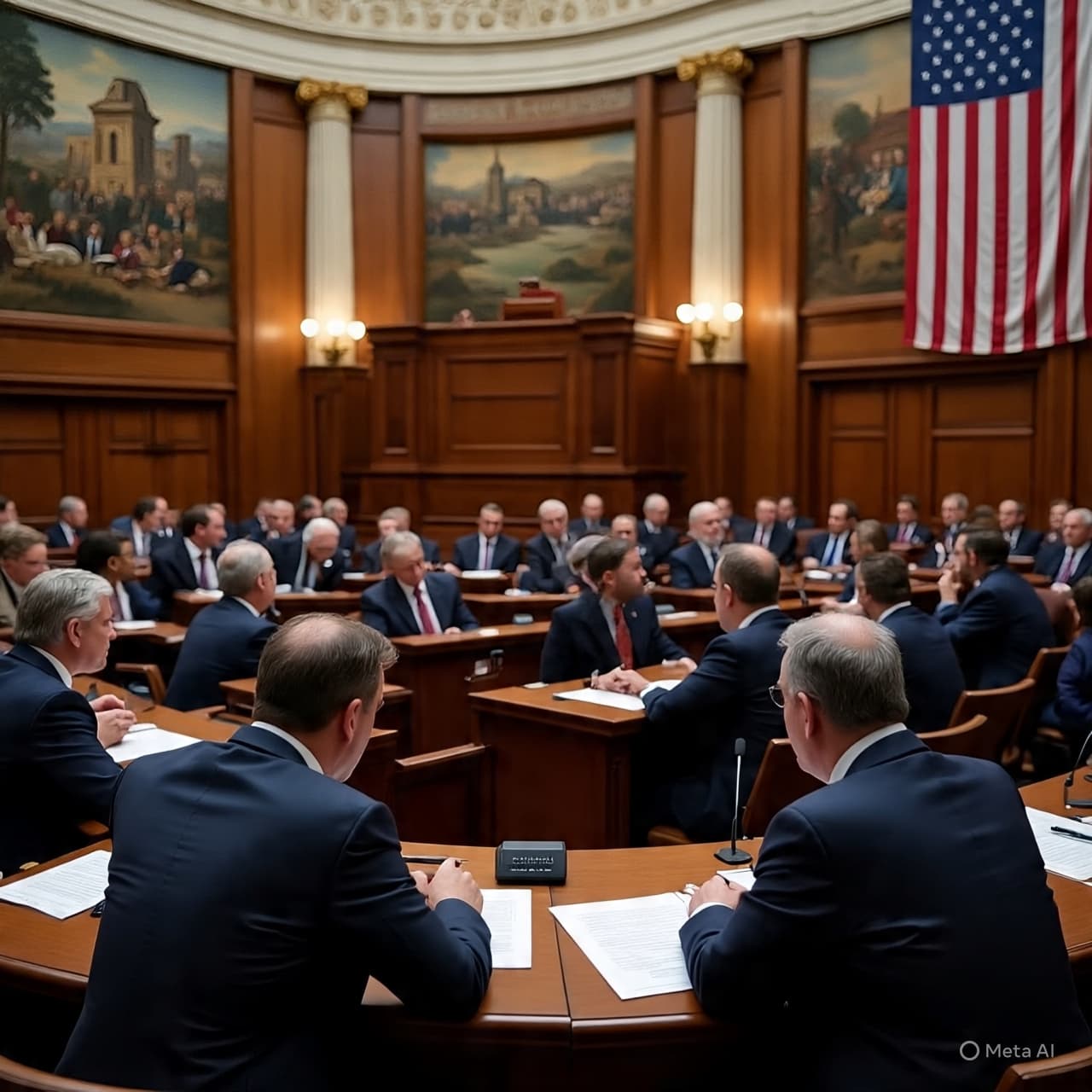
Key Highlights
- Internal disputes within the Republican Party are reshaping legislative dynamics.
- Diverging views among lawmakers reflect broader ideological currents.
- The challenge for leadership is balancing unity with diverse constituency priorities.
Internal divisions within the Republican Party have become a defining characteristic of the current legislative landscape. While disagreement is a natural aspect of democracy, the presence of such disputes within a single party introduces a unique complexity that can hinder legislative momentum. As lawmakers grapple with a range of issues—from fiscal policy to leadership priorities—their differing approaches reflect the broader ideological currents that run through the Republican base.
The implications of these internal disputes are significant. The Congress, once characterized by negotiations across party lines, now finds itself in a state of intra-party deliberation. This shift has altered the dynamics of compromise and consensus, leading to a legislative body that struggles to advance key policies. Political observers have noted that while these divisions are not entirely new, their visibility and impact have intensified in recent years, driven by changing voter expectations and evolving political identities.
For party leadership, the challenge lies in navigating these divisions while maintaining a semblance of unity. Efforts to consolidate positions must take into account the wide spectrum of views held by party members, each backed by constituencies with distinct priorities. This balancing act is crucial, as the ability to present a united front can significantly influence public perception and electoral success.
Moreover, the broader implications of a slowed Congress extend beyond legislative timelines. The public's perception of governance and effectiveness is at stake, as prolonged gridlock can lead to frustration among voters. Some analysts argue that these internal debates may ultimately strengthen the party by clarifying its direction and priorities. However, others caution that continued stalemate risks undermining both the party's strategic goals and its credibility with the electorate.
As discussions unfold both behind closed doors and on the chamber floor, the question remains not whether disagreement will persist, but how it will be navigated. The potential for movement—albeit slow—exists within this navigation, as party members seek to reconcile their differences in pursuit of common goals. The future of Republican unity may depend on the ability of its leaders and members to find common ground amid their differences, fostering an environment where diverse perspectives can coexist and contribute to a cohesive party strategy.
Published by Banx Network. This article is part of the Banx decentralized media programme, powered by the BXE token on the XRP Ledger.




