
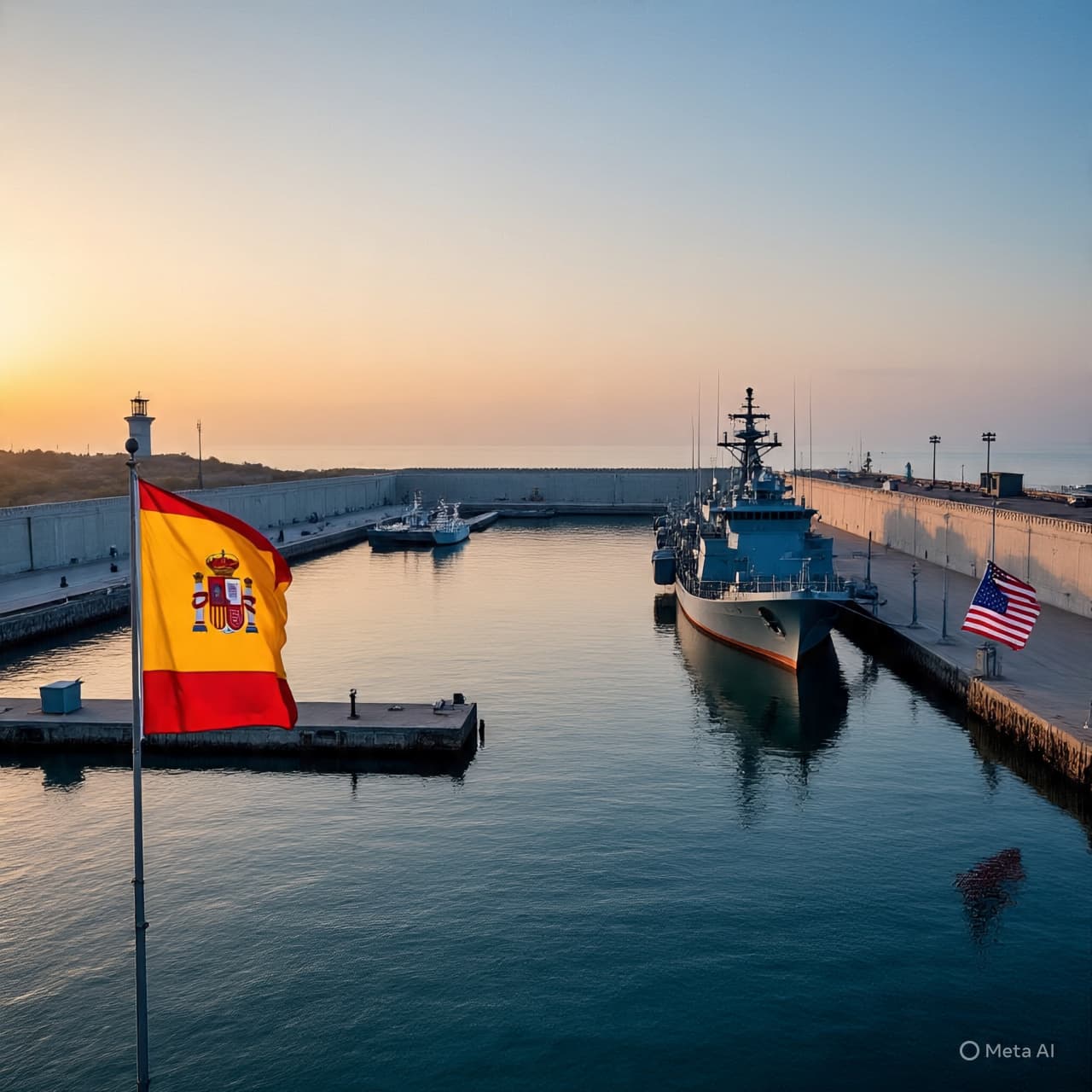
There are moments in international politics when silence speaks louder than thunder. In the quiet corridors of diplomacy, where maps are folded and unfolded like fragile letters, nations sometimes choose not the sound of marching boots, but the stillness of restraint. It is in that stillness that Spain now stands—at a crossroads where alliance meets autonomy, and loyalty must coexist with conscience. As tensions surrounding Iran once again ripple across global waters, former U.S. President Donald Trump’s hardline posture toward Tehran has revived old questions about military readiness and strategic access. Among them lies a delicate matter: the use of American military bases located on Spanish soil. These installations—symbols of long-standing transatlantic cooperation—have historically reflected the close partnership between Madrid and Washington. Yet partnership, as Spain has suggested, does not automatically translate into permission. Spain has reportedly declined to authorize the use of its military bases for potential U.S. operations targeting Iran. The decision does not arrive with raised voices or dramatic declarations. Instead, it reflects a measured recalibration of priorities—one shaped by domestic sentiment, European diplomacy, and a cautious reading of international law. The bases in question, particularly Naval Station Rota and Morón Air Base, operate under bilateral defense agreements between Spain and the United States. While these agreements enable cooperation, they also require consultation and, in many cases, explicit authorization for offensive operations launched from Spanish territory. Spain’s position appears rooted not in defiance, but in procedure—and perhaps in prudence. Within Europe, the political climate toward escalation in the Middle East remains complex. The European Union has consistently advocated for diplomatic engagement with Iran, especially regarding nuclear negotiations and regional stability. Spain, aligning with broader European perspectives, seems to be signaling that military escalation is not the path it is prepared to endorse. At home, the Spanish government must also navigate public opinion. Memories of past conflicts, including Spain’s controversial involvement in the Iraq War, still linger in the national consciousness. That chapter reshaped Spain’s foreign policy instincts, cultivating a more cautious approach toward participation in overseas military actions perceived as preemptive or unilateral. For the United States, access to overseas bases is both logistical necessity and strategic advantage. Spain’s refusal—if maintained—introduces operational recalculations. Yet it does not dismantle the alliance itself. NATO commitments remain intact, and cooperation continues in other spheres. This moment is less a rupture than a reminder: alliances are living arrangements, not blank checks. Iran, for its part, watches these developments with careful attention. Every diplomatic hesitation, every withheld authorization, alters the geometry of deterrence. In geopolitics, distance matters—not only physical distance, but political distance as well. Spain’s stance may also reflect a broader European unease with policies perceived as unilateral. The transatlantic relationship, though durable, has experienced moments of friction in recent years. Trade disputes, defense spending debates, and differing approaches to global crises have tested its elasticity. Still, such tests often strengthen rather than sever the bond. In the larger theater of global politics, Spain’s decision underscores a quiet truth: sovereignty remains a powerful currency. Even among allies, national governments must weigh risks not only to security, but to stability, reputation, and public trust. This episode is not yet a closed chapter. Diplomatic discussions may continue behind the scenes. Strategic calculations evolve. Political leadership shifts. But for now, Spain’s message appears steady—cooperation is welcome, escalation is not automatic. The story, ultimately, is not one of rebellion, but of balance. In an age when the drumbeats of conflict can echo quickly across continents, Spain has chosen the softer sound of deliberation. Whether that sound becomes harmony or tension will depend on how the coming days unfold.
AI Image Disclaimer Visuals are created with AI tools and are not real photographs.
SOURCE CHECK
Credible mainstream and international media that have reported on Spain’s position regarding U.S. military base usage and Middle East tensions include: Reuters Associated Press BBC News El País Politico Europe
Published by Banx Network. This article is part of the Banx decentralized media programme, powered by the BXE token on the XRP Ledger.


