
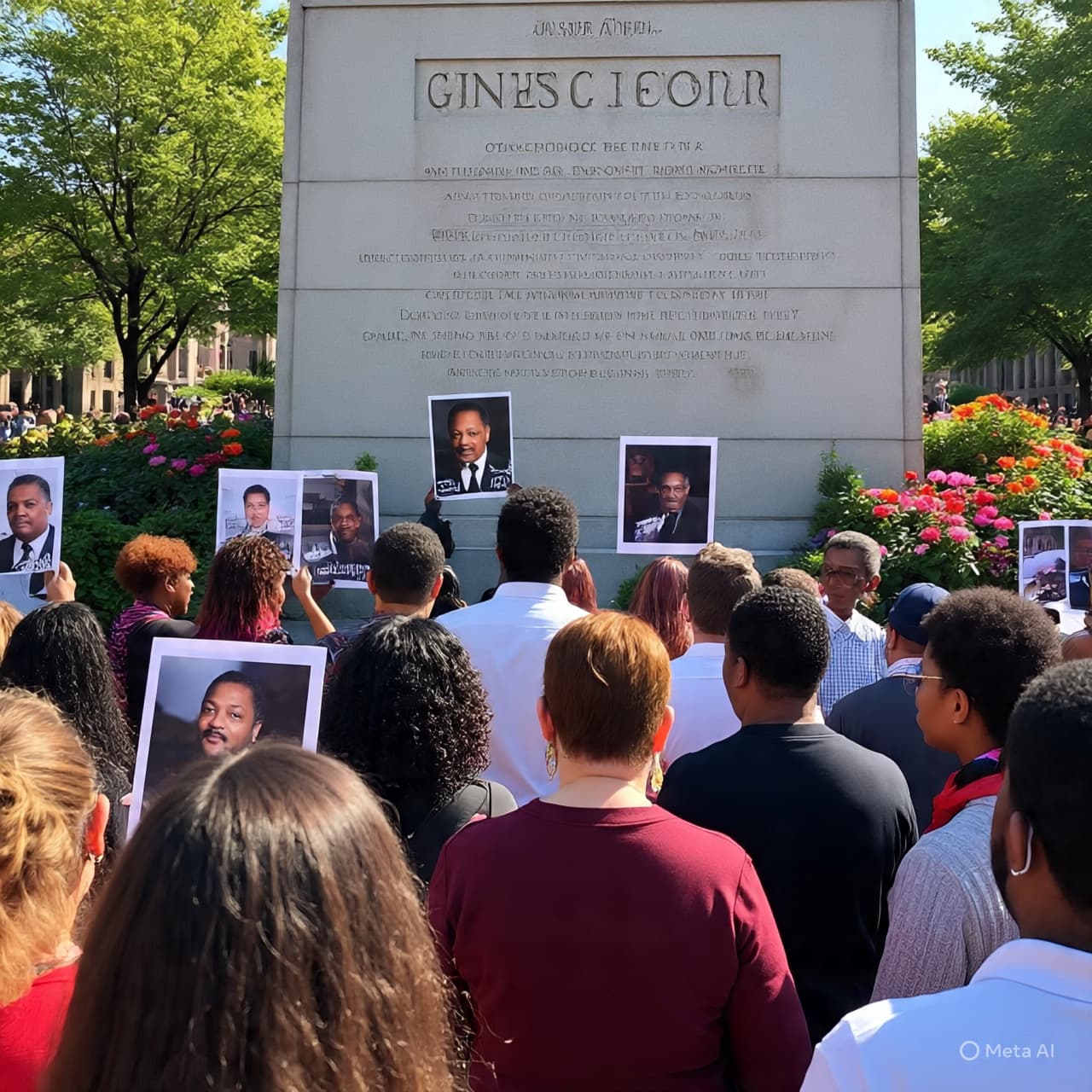
Key Highlights
- Rev. Jesse L. Jackson Sr. passed away at age 84, leaving a profound legacy.
- Tributes poured in from leaders across the political spectrum.
- Jackson's work in civil rights and politics inspired generations.
On Tuesday, the civil rights community and the nation mourned the loss of Rev. Jesse L. Jackson Sr., who passed away at the age of 84. A towering figure in the American civil rights movement, Jackson's life was marked by a relentless pursuit of equality and justice, leaving an indelible mark on the fabric of American society. His death reverberated through political corridors and community streets alike, as leaders from various backgrounds paused to reflect on his contributions.
Former President Barack Obama honored Jackson as a "true giant" whose activism not only confronted segregation but also paved the way for future leaders, including Obama himself. Michelle Obama shared her memories of Jackson, recalling how her early political education began at the Jackson family’s kitchen table, highlighting the personal connections that intertwined with his public legacy.
President Joe Biden described Jackson as "a man of God and of the people," emphasizing his optimism and persistence that inspired countless Americans. Vice President Kamala Harris echoed this sentiment, calling him "one of America’s greatest patriots" and noting how his work summoned generations toward fulfilling the promise of equality embedded in the nation’s founding principles.
Former Presidents Bill and Hillary Clinton expressed their sorrow at the loss of a friend and ally, recalling Jackson's lifelong advocacy for human dignity and opportunity. Civil rights leaders like Rev. Al Sharpton and Bernice King, daughter of Dr. Martin Luther King Jr., reflected on Jackson’s enduring influence in the movement and his role as a mentor, underscoring his significance as a bridge between different eras of struggle and hope.
Interestingly, former President Donald Trump also paid tribute, describing Jackson as a "good man" with "personality, grit, and street smarts." This bipartisan acknowledgment of Jackson's impact, even amid contrasting political narratives, highlights the universal respect he garnered throughout his life.
Jackson's influence extended far beyond political office and street marches. As a pioneer of the Rainbow PUSH Coalition and an early Black presidential candidate, he expanded the boundaries of leadership and mobilization across race, class, and geography. His efforts in the 1980s brought civil rights issues to the forefront of national campaigns, amplifying the voices of those who had long been marginalized.
The tributes following his passing were not merely political acknowledgments; they reflected a life dedicated to active engagement with American society. From voter registration drives in the South to global solidarity efforts, Jackson's legacy is rooted in persistent advocacy for inclusion. Many who spoke after his death emphasized the vast circle of influence he held, impacting grassroots activists and world leaders alike.
As tributes continue and historians begin to catalog his full impact, those who knew him personally and those who felt his influence from afar find common ground in remembrance. The conversations that follow his passing are likely to reflect both the progress made and the work yet to be completed — a dual legacy of achievement and aspiration that Jackson often articulated himself.
Published by Banx Network. This article is part of the Banx decentralized media programme, powered by the BXE token on the XRP Ledger.



