Sometimes disasters don’t write headlines — they erase maps.
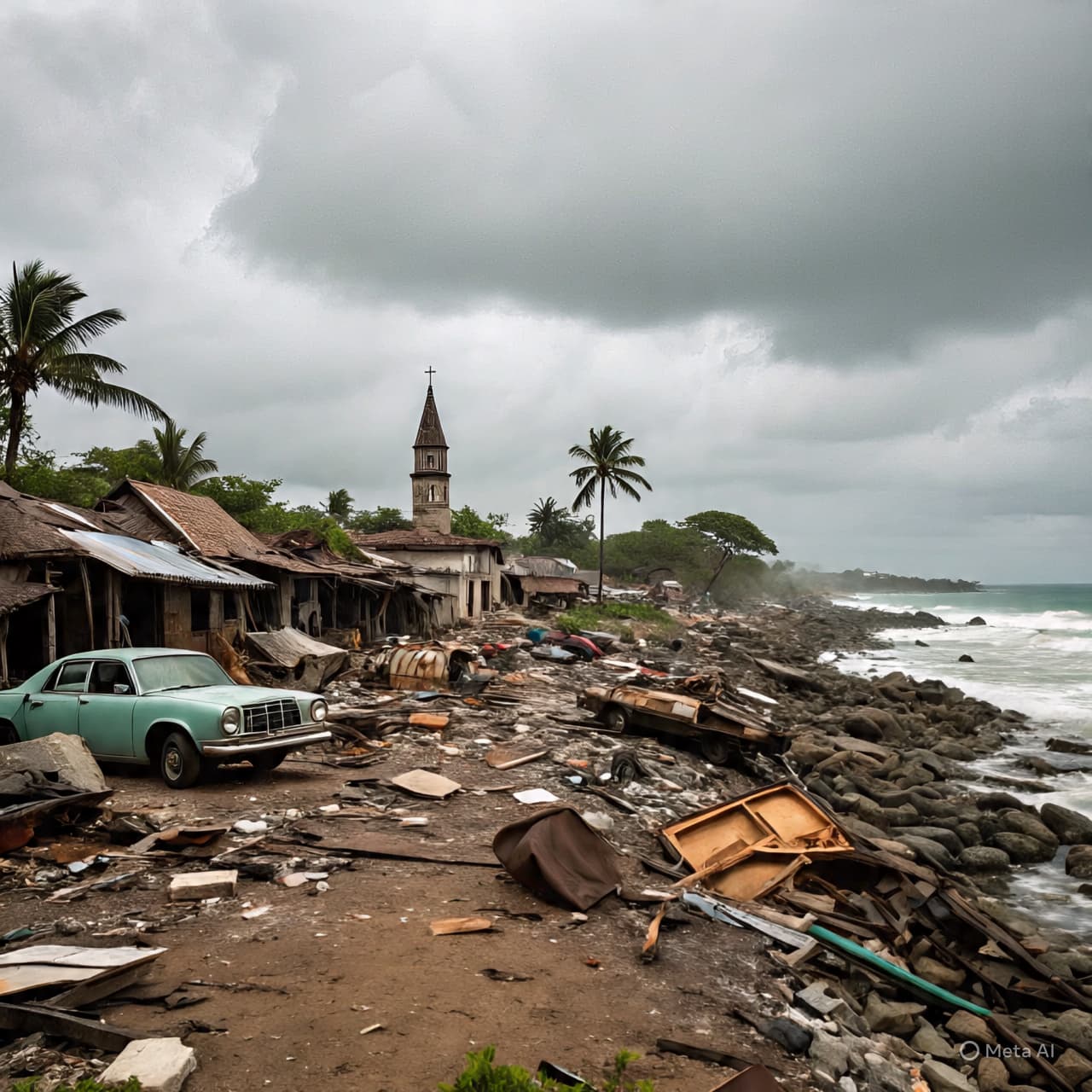
Black River, Jamaica — a quiet coastal town — is now mostly rubble. Officials say roughly 90% of homes are gone. This is not a poetic exaggeration. It is a level of destruction that changes the national vocabulary. A home is where family history lives. When almost all homes vanish — the memory architecture collapses too.
This is the part of a hurricane that never fits inside satellite imagery: the pulverized tenderness of domestic life.
Hurricane Melissa has become more than a weather narrative for Jamaica. It is becoming a case study in climate math: when storms hit warmer waters, the margins for survival shrink. When winds accelerate, rebuilding stops being logistical — and becomes existential.
Jamaican communities have seen storms before. But there is a qualitative shift this year. Melancholy is turning into strategic awareness. People understand now: the rebuilding is not about putting back what was — it’s about designing structures that assume the next Melissa is not a statistical outlier, but a recurring visitor.
Black River is therefore not just a tragedy — it is a warning.
The Caribbean will increasingly live in cycles of reconstruction. Resilience is no longer an abstract governance concept — it is the most urgent domestic policy.
Published by Banx Network. This article is part of the Banx decentralized media programme, powered by the BXE token on the XRP Ledger.