
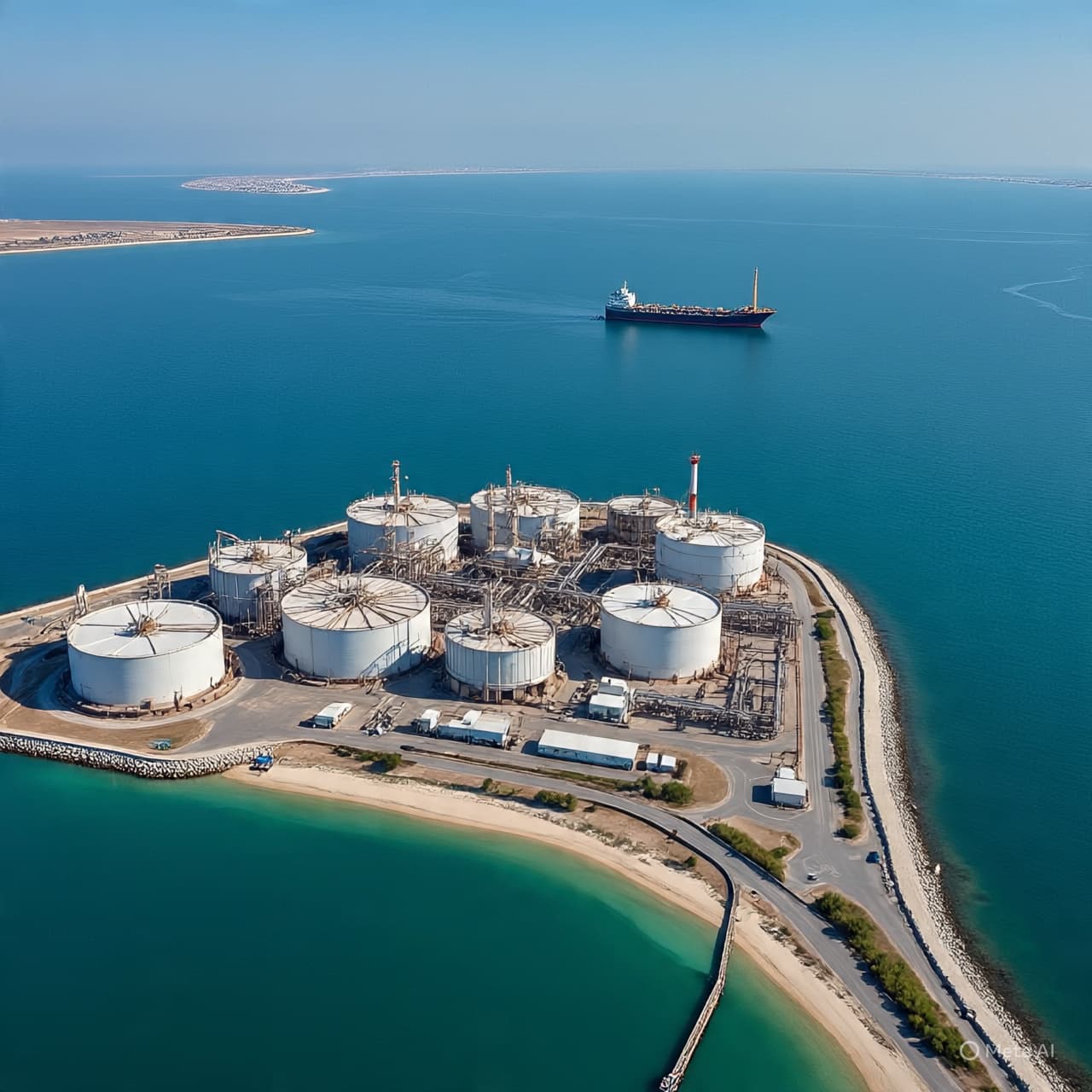
Key Highlights
- Kharg Island is Iran's primary oil export hub, crucial for global supply.
- Trump's comments raised concerns about potential disruptions in oil exports.
- Oil prices reacted swiftly to the uncertainty surrounding Kharg Island's operations.
Kharg Island, a small yet strategically significant outpost in the Persian Gulf, serves as the primary gateway for Iran's oil exports. This island functions as a critical valve in the global energy trade, controlling the flow of crude oil to international markets. When geopolitical events touch this valve, the repercussions can be felt far beyond the warm waters of the Gulf.
Recently, the spotlight turned back to Kharg Island following remarks from former President Donald Trump, who claimed that the United States had "totally demolished" Iran's oil export capabilities at the island. This assertion, made amid escalating tensions between the U.S. and Iran, quickly captured the attention of governments, analysts, and energy traders. The implications of such a statement are profound, as any disruption to Kharg Island could significantly impact global oil supply.
In response to Trump's comments, oil prices began to climb, reflecting market concerns over potential disruptions to one of the Middle East's most vital export facilities. The mere suggestion of reduced exports from Iran can lead to swift market reactions, as traders adjust their expectations based on the uncertainty surrounding major production and shipping hubs.
Kharg Island has long been integral to Iran's energy infrastructure. Located in the northern part of the Persian Gulf, it is equipped with storage facilities, terminals, and loading platforms that handle a substantial portion of the country's crude oil exports. Tankers regularly depart from Kharg Island, bound for various destinations across Asia and beyond, underscoring its importance in the global energy supply chain.
Given its critical role, developments affecting Kharg Island are closely monitored by international observers. Energy analysts emphasize that disruptions at such facilities can significantly influence global oil balances, particularly during periods of heightened geopolitical tension. Markets are sensitive not only to confirmed supply changes but also to the broader uncertainty that accompanies military or political developments in the region.
In Washington, Trump's remarks were framed within a larger narrative about the U.S. stance in the Middle East. His comments suggested that American actions had severely weakened a key component of Iran's oil export capabilities. However, officials and analysts are still evaluating the scale and implications of his claims as more information becomes available.
Meanwhile, governments and industry stakeholders are watching the situation in the Persian Gulf with cautious concern. The region is home to several strategic export routes and energy facilities that connect Middle Eastern producers with global markets. Any disruption—whether temporary or prolonged—can alter shipping patterns, increase insurance costs, and shift market expectations.
The immediate response from oil markets illustrates the sensitivity of the global energy system to geopolitical developments. Despite the existence of alternative supplies and strategic reserves, the Gulf region remains central to meeting international energy demands. For energy-importing nations, the situation serves as a stark reminder of the delicate balance that underpins global supply chains. A small island, a cluster of terminals, or a narrow shipping lane can suddenly become the focus of worldwide attention amid rising tensions.
As market participants continue to monitor official statements and emerging reports, the situation surrounding Kharg Island and its export infrastructure remains fluid. Oil prices have already begun to reflect the uncertainty, and analysts suggest that further clarity regarding the condition of facilities and shipping activity will dictate market responses in the coming days.
In the meantime, discussions among governments are ongoing as the geopolitical landscape evolves. The next few days may yield more detailed assessments of the impact on Iran's export capacity and the broader implications for global energy markets.
Published by Banx Network. This article is part of the Banx decentralized media programme, powered by the BXE token on the XRP Ledger.



