In the quiet theater of space, motion is often measured in patience rather than speed. Planets circle their stars with steady devotion, asteroids wander along ancient paths, and the rhythm of the solar system unfolds across centuries. Yet sometimes, even a small interruption—a carefully aimed spacecraft—can leave a faint ripple in that long choreography.
Such a ripple may now be emerging from NASA’s Double Asteroid Redirection Test, better known as the DART mission. In September 2022, the spacecraft deliberately collided with Dimorphos, a small moonlet orbiting the asteroid Didymos, in the first planetary defense experiment of its kind. The impact successfully shortened the moonlet’s orbit around its parent asteroid, demonstrating that a kinetic strike could deflect a hazardous object.
But as scientists continue to study the aftermath of that historic collision, a quieter discovery has begun to unfold. New research suggests the event may have done more than alter the orbit of Dimorphos. It may also have slightly shifted the path of the entire Didymos system as it travels around the Sun.
The DART mission was designed with a focused purpose: to test whether a spacecraft could nudge an asteroid by transferring momentum through a direct collision. When the spacecraft struck Dimorphos at roughly 14,000 miles per hour, it produced a dramatic plume of debris and successfully shortened the moonlet’s orbit around Didymos by about 33 minutes. The result exceeded mission expectations and provided the first real-world demonstration of asteroid deflection.
Yet space rarely keeps its changes contained. Dimorphos and Didymos form a binary asteroid system, meaning the two bodies are gravitationally bound while together orbiting the Sun. When the collision altered Dimorphos’ movement, it also subtly redistributed momentum within the system.
Researchers analyzing post-impact data believe that the recoil from the ejecta—the material blasted away from the surface—acted somewhat like a natural thruster. As debris shot outward, it carried momentum away from the system, gently pushing back on the asteroids themselves. Over time, that recoil may have caused a tiny adjustment in the system’s solar orbit.
The shift, if confirmed through continued observation, would be extremely small. It does not dramatically change the path of Didymos around the Sun, nor does it pose any risk to Earth. Instead, it represents a delicate reminder of how even controlled experiments in space can ripple through gravitational relationships.
Scientists involved in planetary defense research view this finding not as a concern, but as an opportunity to refine future models. Understanding exactly how momentum transfers during asteroid impacts is essential if humanity ever needs to redirect a hazardous object on a collision course with Earth.
Asteroids, after all, are not uniform stones drifting in emptiness. Their surfaces vary in texture, composition, and density. When struck, they may respond differently depending on their internal structure. Some may absorb energy quietly, while others may eject vast clouds of debris that amplify the deflection effect.
DART’s impact produced precisely such a dramatic plume, captured by telescopes around the world. The expanding tail of dust stretched thousands of kilometers into space, offering scientists an unexpected natural experiment in how asteroid material behaves after collision.
As astronomers continue studying the Didymos system, they are piecing together a fuller picture of the event. Every fragment of data—from orbital measurements to dust dynamics—adds another line to the story of humanity’s first attempt to deliberately change the motion of a celestial body.
The broader goal remains steady and pragmatic. Planetary defense researchers seek to understand how to protect Earth from potentially dangerous asteroids. Demonstrating that a spacecraft can shift an asteroid’s trajectory, even slightly, represents a meaningful step in that effort.
Meanwhile, the Didymos system continues its quiet journey around the Sun, now carrying a faint memory of that moment in 2022 when a human-built spacecraft briefly interrupted its ancient path.
For scientists watching from Earth, the lesson is not that the solar system has been dramatically altered. Rather, it is that careful exploration can reveal how interconnected even small events may be in the vast mechanics of space.
The findings add another layer to the legacy of the DART mission, whose data will continue to guide planetary defense research for years to come.
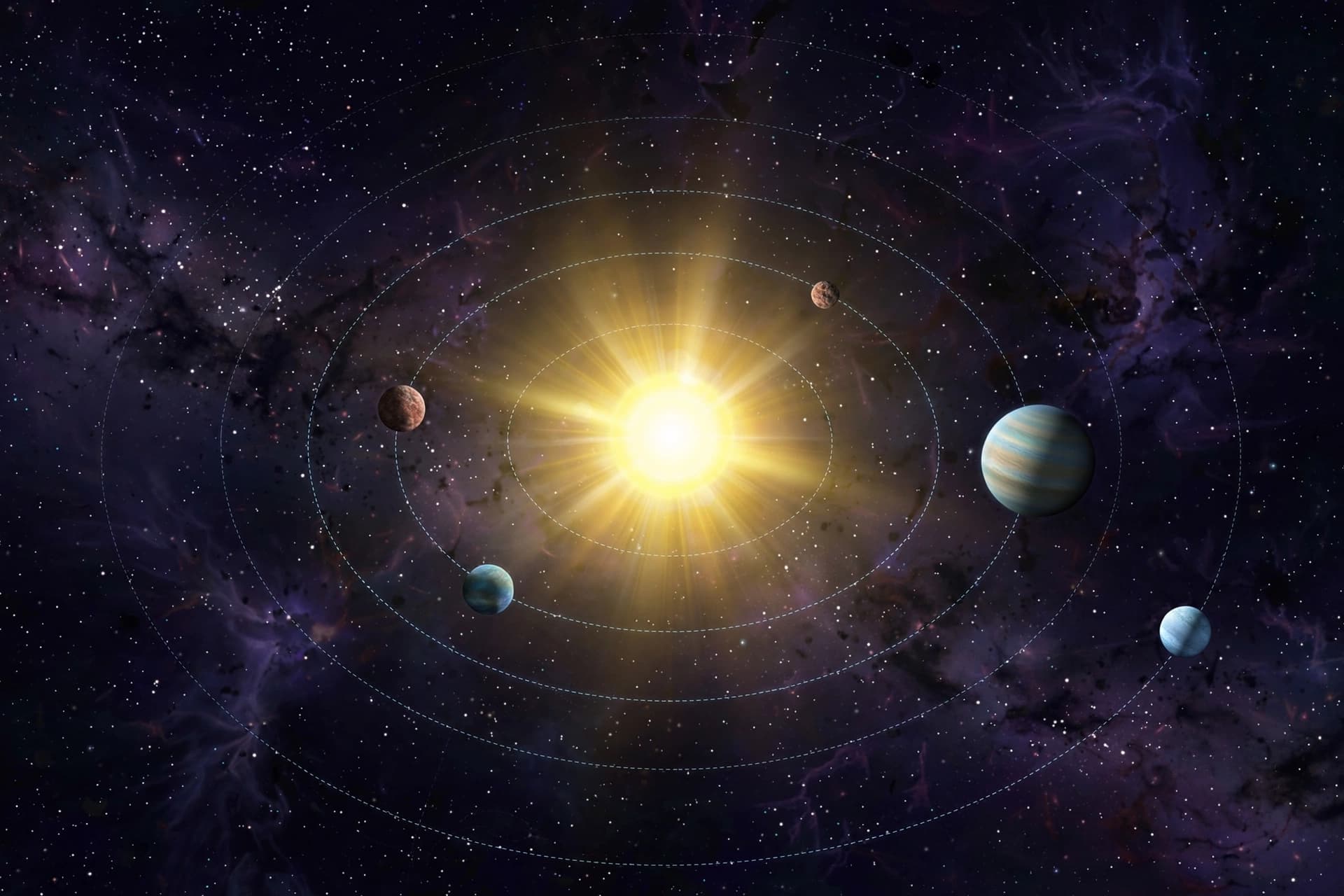
AI Image Disclaimer Graphics are AI-generated and intended for representation, not reality.
Sources NASA Space.com ScienceAlert New Scientist
Published by Banx Network. This article is part of the Banx decentralized media programme, powered by the BXE token on the XRP Ledger.