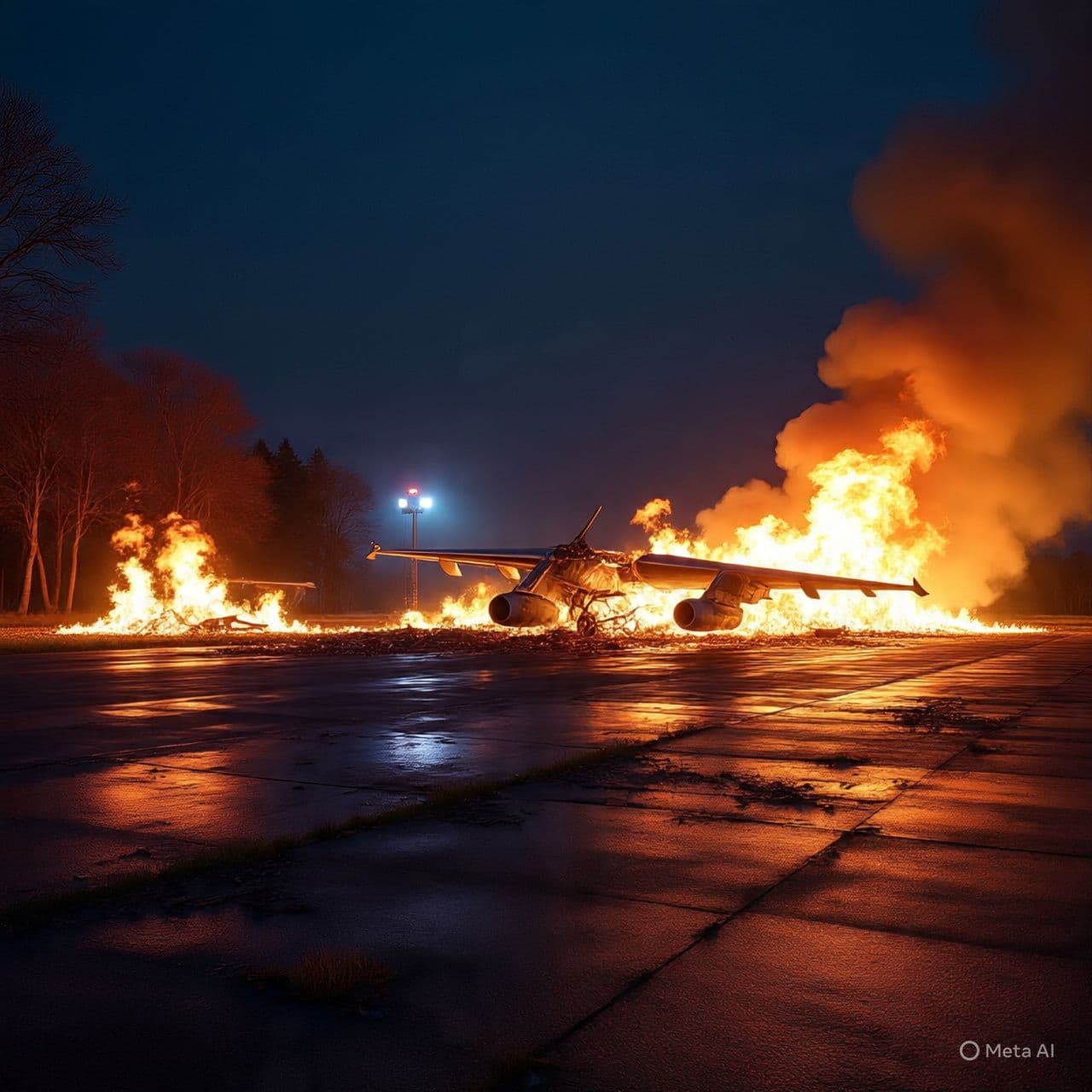
There is a strange poetry in aviation: steel and fuel, data and trust, weight and balance. People assume that cargo planes, unlike passenger jets, are somehow colder and more transactional in their purpose — like they deserve less attention. But when one falls from the sky, the noise is the same. The fire is the same. The shock is the same. And Kentucky learned that on a night that should have been uneventful — when an aircraft that was supposed to quietly deliver goods instead carved a blast crater into memory.
Witnesses described the ignition as instant — a plume, a roar, and then the kind of fire that doesn’t look like something on Earth. A warehouse shipment becomes a fuel bomb when gravity and velocity join forces. The cargo doesn’t matter at that point. Boxes — maybe medical parts, maybe e-commerce items, maybe nothing at all — become more like accelerants than products.
Local responders say the fire spread fast across the perimeter, and that the radiant heat made it almost impossible to approach in the first minutes. Neighbors reported the windows vibrating. One described it as “like someone punched the whole air.”
The FAA and NTSB will do what they always do: grids of debris, flight data modules, forensic metallurgy, chain-of-responsibility for maintenance records. The methodical science that comes after the chaos always feels quiet. And yet, sometimes the most human part of an aviation disaster is that silence — when investigators finally arrive after the flames are done, and the only thing left to tell the first part of the story is the way metal cooled and folded.
This is the cycle: aviation is precise, and yet the world still sometimes produces a moment where all the redundancies evaporate. There will be press conferences. There will be official language. And then there will be the quieter part — the part where people who live near that Kentucky field will spend a month jumping at any low-flying sound.
AI image disclaimer Images are conceptual artistic directions, not evidence or documentary materials.
Published by Banx Network. This article is part of the Banx decentralized media programme, powered by the BXE token on the XRP Ledger.