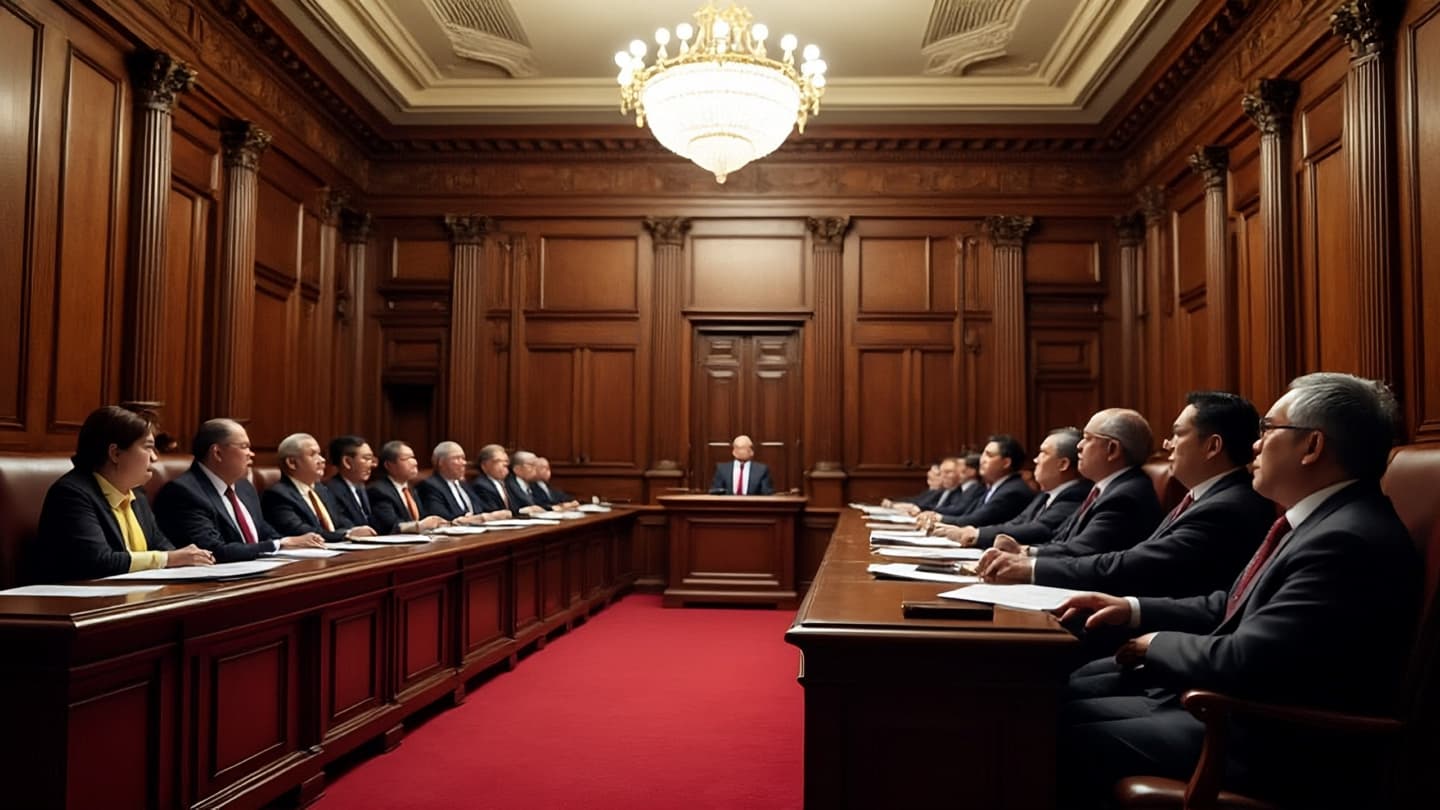
In every democracy, there are moments when political disagreement moves beyond speeches and campaign rallies into the formal halls of constitutional law. Impeachment proceedings represent one of those moments, where institutions are called upon to weigh evidence, interpret legal standards, and demonstrate that public office remains accountable to the rule of law.
The Philippine Senate formally opened the impeachment trial of Vice President Sara Duterte, beginning what is expected to be a lengthy and closely watched legal and political process. Senators convened as an impeachment court amid heightened political tension, with the proceedings expected to last for several months.
Vice President Duterte faces allegations that include misuse of public funds, unexplained wealth, bribery, corruption, and public threats directed at President Ferdinand Marcos Jr. and other officials. She has denied all allegations, while her legal team argues that the impeachment proceedings are politically motivated and that the accusations will be challenged through the constitutional process.
Security was significantly strengthened around the Senate complex as thousands of police officers were deployed to maintain order. Demonstrators both supporting and opposing Duterte gathered outside the venue, reflecting the deep political divisions surrounding the trial. Duterte did not personally attend the opening session and was instead represented by her lawyers.
House prosecutors described the trial as an important test of accountability within Philippine democracy, arguing that the evidence collected justifies proceeding with the case. The defense, meanwhile, maintained that the prosecution has not established sufficient factual grounds and emphasized Duterte's electoral mandate as vice president.
Political analysts believe the outcome could influence the country's political landscape well beyond the current administration. Sara Duterte has already declared her intention to seek the presidency in 2028, and a conviction could permanently disqualify her from holding future public office. Under Philippine law, conviction requires the support of at least two-thirds of the Senate.
Observers also note that the impeachment unfolds against the backdrop of the deteriorating alliance between the Marcos and Duterte political families, once partners during the 2022 national elections. Their increasingly public disagreements have shaped much of the country's recent political debate.
Legal scholars emphasize that impeachment is both a constitutional and political process. While public attention remains intense, the final outcome will depend on the presentation of evidence, legal arguments, and the deliberations of senator-judges over the coming months.
Closing The opening of the impeachment trial marks one of the most consequential political proceedings in the Philippines in recent years. As hearings continue, attention will remain focused on the Senate's ability to conduct a process viewed as fair, transparent, and consistent with constitutional principles.
AI Image Disclaimer: The images accompanying this article are AI-generated editorial illustrations and are intended solely for visual representation. They are not actual photographs of the reported proceedings.
Sources (Source Verification Check) Reuters Associated Press (AP) The Guardian Al Jazeera
Published by Banx Network. This article is part of the Banx decentralized media programme, powered by the BXE token on the XRP Ledger.