There is a particular irony in the promise of an ice-free passage through the top of the world. For years, Russia has presented its Northern Sea Route as a shortcut to Asia, a route freed by warming waters and untouchable by Western sanctions. The numbers this year seem to support the boast: oil exports through the Arctic route reached roughly 20 million barrels by mid-October 2026, nearly 50 percent above last year's total . But the ice has not entirely retreated, and neither have the obstacles that make the route far less than the reliable corridor its advocates describe.
The surge in traffic is real, and it has a clear cause. Disruptions in the Strait of Hormuz and the Red Sea have made traditional routes to Asia riskier and more expensive, pushing Russian exporters toward the Arctic as an alternative . The route cuts travel time to markets like China and India by up to two weeks compared with the Suez Canal, and it avoids Western inspections and port restrictions that have targeted Russia's shadow fleet . Gazprom Neft plans to increase its Northern Sea Route shipments by 35 percent this year, and President Vladimir Putin has predicted cargo turnover will double to 70 million tons annually by 2030 .
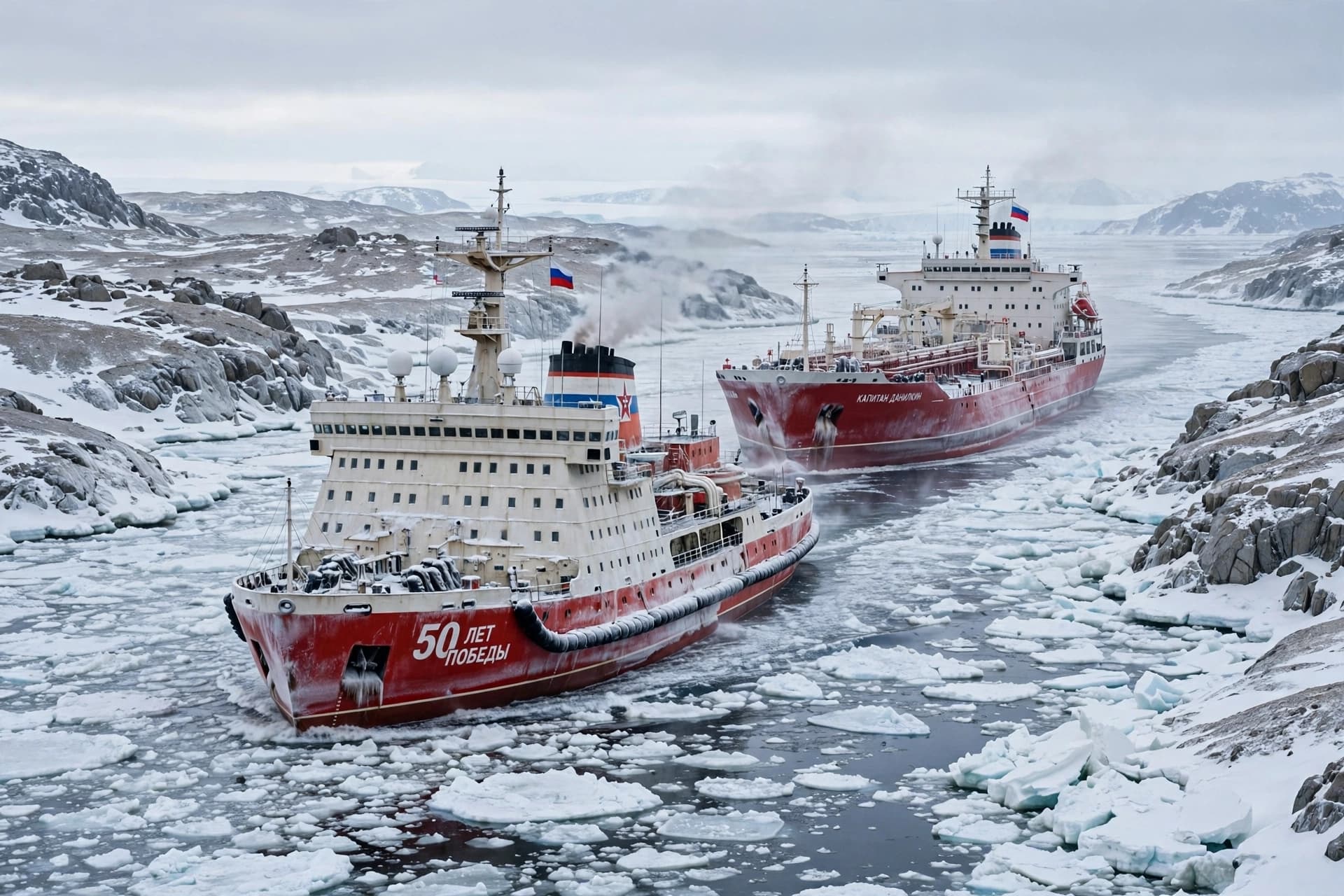
But the story beneath those headline figures is more complicated. This summer, a group of sanctioned Russian tankers dropped anchor some 1,300 kilometers north of the Arctic Circle after getting stuck near the Vilkitsky Strait, a 55-kilometer-wide choke point between the Siberian coast and Bolshevik Island. Help from two nuclear-powered icebreakers was several days away . The incident illustrates a lesson that Arctic specialists have long emphasized: less ice does not mean easier navigation. When ice melts, it breaks and floats, and in narrow straits it can pack together in ways that block ships without the proper ice classification .
Russia's fleet is part of the problem. The country lacks enough ice-class tankers and icebreakers to support the volumes it envisions, and Western sanctions have hampered its ability to build and maintain them. Spare parts and construction materials often must be procured through third parties to avoid sanctions regimes, and maintenance and repairs previously handled by Norwegian, Danish, and Dutch companies are no longer available . The 20 million barrels shipped this year, while a record for the route, represent only about 1 percent of Russia's total seaborne oil exports .
There are environmental concerns as well. Increased traffic in Arctic waters raises the risk of oil spills in an ecosystem that is slow to recover and difficult to access for cleanup. The nuclear icebreakers that escort tankers through the route carry their own risks, and the expansion of fossil fuel infrastructure in the Arctic locks in emissions at a time when the region is warming faster than any other part of the planet. These concerns are not hypothetical; they are the predictable consequence of treating a fragile environment as a thoroughfare.
For Russia, the Northern Sea Route represents something more than a commercial opportunity. It is a statement of sovereignty, a claim to the Arctic as a strategic domain, and a way to redirect energy flows away from Europe and toward Asia. The Kremlin has pledged 2 trillion rubles over 13 years to develop the route, including icebreakers, ports, and rescue centers . The investment is real, and so is the commitment. But commitment alone does not overcome ice, sanctions, or the limits of a fleet that cannot yet meet the ambition.
The Arctic route will continue to carry Russian oil, and the volumes may well grow as new projects like Vostok Oil come online. But the wall of ice remains, and so do the costs—financial, logistical, and environmental—of navigating around it. The shortcut is real, but it is not yet the reliable artery that Moscow promises. It is a route shaped by geography and sanctions alike, and the ships that use it do so with the knowledge that the ice has not finished telling them what it will allow.
Image note: The visual accompanying this article is an AI-generated illustration and does not depict actual tankers, icebreakers, or Arctic conditions.
Sources: OilPrice.com, Radio Free Europe/Radio Liberty, Reuters, BTA
Published by Banx Network. This article is part of the Banx decentralized media programme, powered by the BXE token on the XRP Ledger.