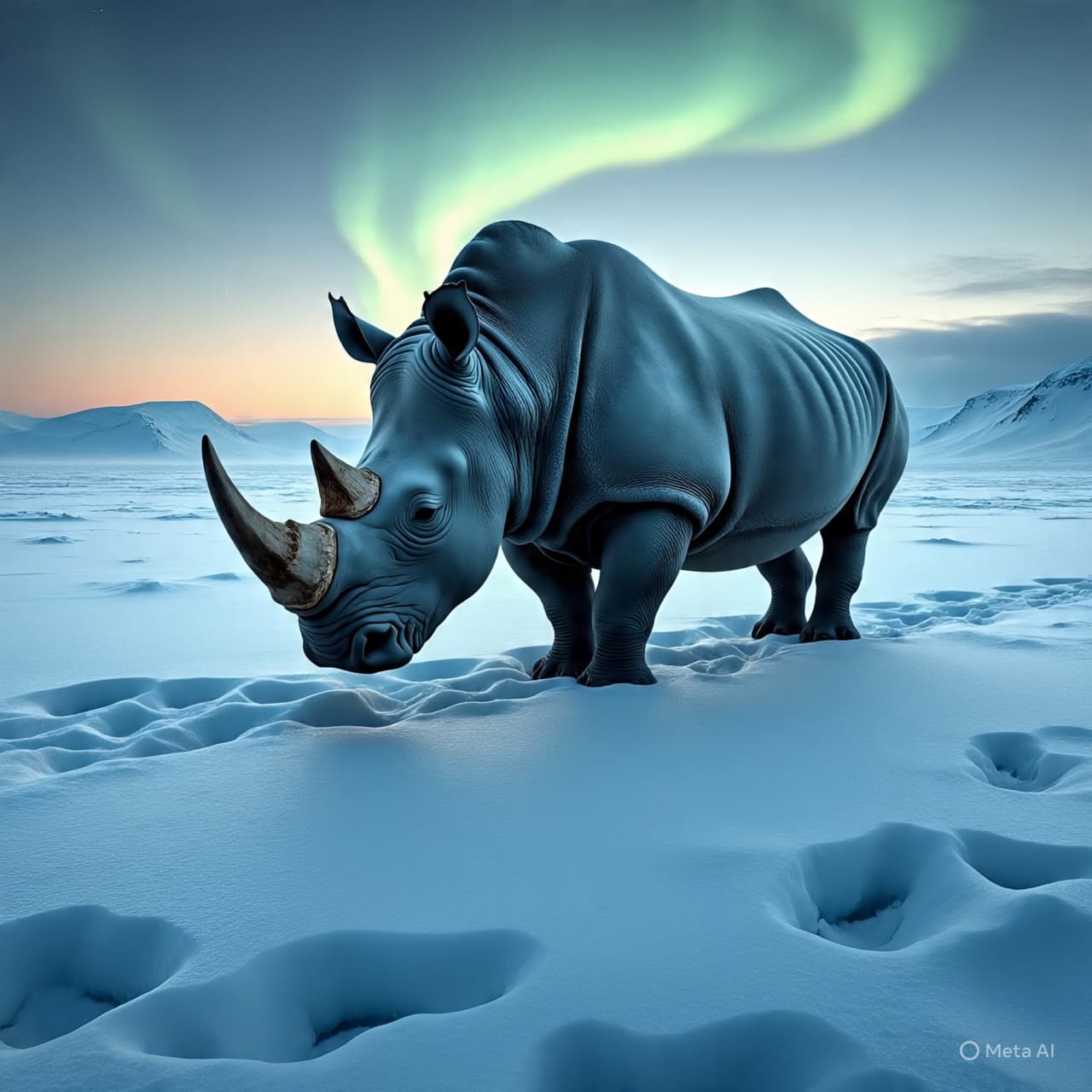
Imagine the Arctic — ice, snow, endless cold — and then picture a rhino: broad, heavy, more at home under sun and savannah than beneath polar skies. That image once belonged in fiction. Now, it may belong in prehistory. A discovery of a high-Arctic rhino fossil suggests that some ancient animals braved extremes we never believed they would — rewriting what we know about migration, adaptation, and the limits of life.
This isn’t a tale of a single wanderer lost in a blizzard. Instead, the finding points to a rhino population living, surviving, perhaps thriving in Arctic landscapes. For paleontologists and ecologists, the implications stretch far beyond an exotic headline. It calls into question theories about animal climate tolerance, migration corridors, and the ways Ice-Age fauna adapted to harsh environments.
If rhinos — large, warm-blooded mammals — once ranged as far north as the Arctic, then climate zones in prehistory must have been far more dynamic, more forgiving, or different in nature than previously thought. It suggests migrations not just across continents, but across climates: from temperate lowlands to near-polar extremes. The map of prehistoric life, long drawn in broad, comfortable strokes, suddenly gains new, jagged paths — corridors of survival carved by species we now consider strictly temperate.
For modern science, the discovery carries humility: what we assume about limitation, adaptation, and environmental boundaries may reflect more of our time than the past’s reality. It opens the possibility that ancient ecosystems, climates, and animal behaviours were more fluid, more surprising than textbooks suggest. And it leaves room for wonder. Because if a rhino once breathed Arctic air, then perhaps more of prehistory’s secrets wait just beneath permafrost, frozen but not forgotten.
As researchers prepare detailed analysis — of bone structure, tooth wear, isotope data, and more — the story remains fragile but potent: a species displaced in our imagination is being restored by evidence. And with each fossil fragment, the narrative of Earth’s biological past shifts ever so slightly, reminding us that nature’s compass doesn’t always point where we expect.
Published by Banx Network. This article is part of the Banx decentralized media programme, powered by the BXE token on the XRP Ledger.