There are phrases that enter public discourse like thunderclaps — not because of their novelty, but because of the weight they carry. “World War III” is one such phrase, heavy with memory and shadow. When Ukrainian President Volodymyr Zelensky suggested that Vladimir Putin has, in effect, already started a third world war, the words traveled swiftly beyond Kyiv, echoing in capitals and living rooms alike.
Zelensky’s remark did not describe a formal declaration or a conventional global battlefield. Rather, it framed the ongoing conflict in Ukraine as a confrontation whose consequences and alignments have already expanded far beyond its original geography. Since Russia’s full-scale invasion in 2022, the war has drawn in military aid from NATO members, sanctions regimes spanning continents, and strategic calculations reaching from Europe to the Indo-Pacific.
From Kyiv’s vantage point, the conflict has never been contained. Missiles launched at Ukrainian cities ripple outward in economic shocks, refugee flows, and diplomatic realignments. Energy markets shift. Defense budgets expand. Alliances strengthen or strain. Zelensky’s language appears intended to underscore this interconnected reality — that a war fought on Ukrainian soil now influences global security architecture.
Western leaders have generally avoided using the term “World War III,” mindful of its historical resonance and potential to escalate rhetoric. Yet they have acknowledged that the stakes extend beyond territorial boundaries. NATO has reinforced its eastern flank. The European Union has approved successive sanctions packages. The United States has provided military assistance while maintaining that it seeks to avoid direct confrontation with Russia.
For Moscow, the narrative differs. Russian officials have portrayed the war as a defensive operation against Western encroachment, accusing NATO of waging a proxy conflict. The rhetorical divide itself illustrates the broader information struggle accompanying the military one. Words become strategic instruments, shaping public perception as much as policy.
Zelensky’s statement may also reflect growing concern about what he and his government view as the normalization of prolonged conflict. By invoking a world war, he situates Ukraine’s struggle within a larger moral and geopolitical framework — one that seeks sustained international engagement rather than fatigue.
Analysts note that global involvement has indeed widened. Countries far from Eastern Europe have felt indirect consequences, from grain supply disruptions to shifts in defense planning. At the same time, the conflict has not escalated into direct large-scale combat between major powers, a distinction that many policymakers consider crucial.
The tension between rhetoric and restraint defines much of the current diplomatic environment. Leaders balance warnings about escalation with efforts to prevent it. The language of catastrophe competes with the language of containment.
In practical terms, the war remains centered in Ukraine, with ongoing fighting along multiple fronts and continued negotiations over military aid and reconstruction support. International institutions continue to deliberate sanctions, security guarantees, and humanitarian assistance. No formal expansion into a declared global war has occurred, though geopolitical alignments remain under strain.
Zelensky’s words, whether viewed as alarm or emphasis, highlight the depth of global entanglement surrounding the conflict. The coming months will likely see continued military engagement in Ukraine alongside diplomatic efforts aimed at preventing broader escalation. Governments worldwide remain attentive to developments, even as the definition of “world war” remains debated in both political and historical terms.
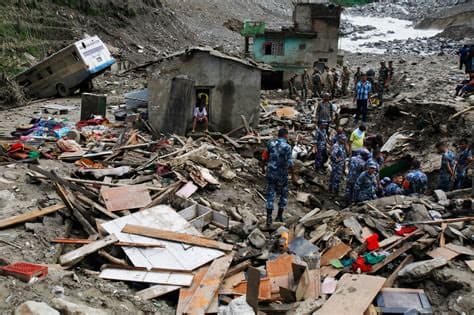
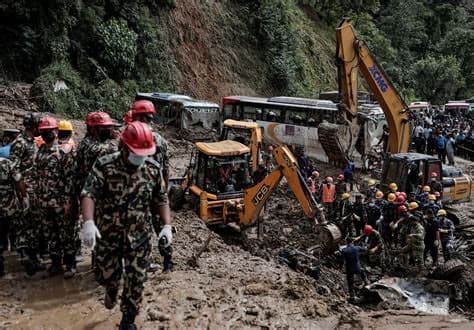
AI Image Disclaimer Illustrations were produced with AI and serve as conceptual depictions.
Source Check
Credible mainstream outlets covering President Volodymyr Zelensky’s remarks on the global implications of Russia’s invasion include:
Reuters BBC CNN The Associated Press The New York Times
Published by Banx Network. This article is part of the Banx decentralized media programme, powered by the BXE token on the XRP Ledger.