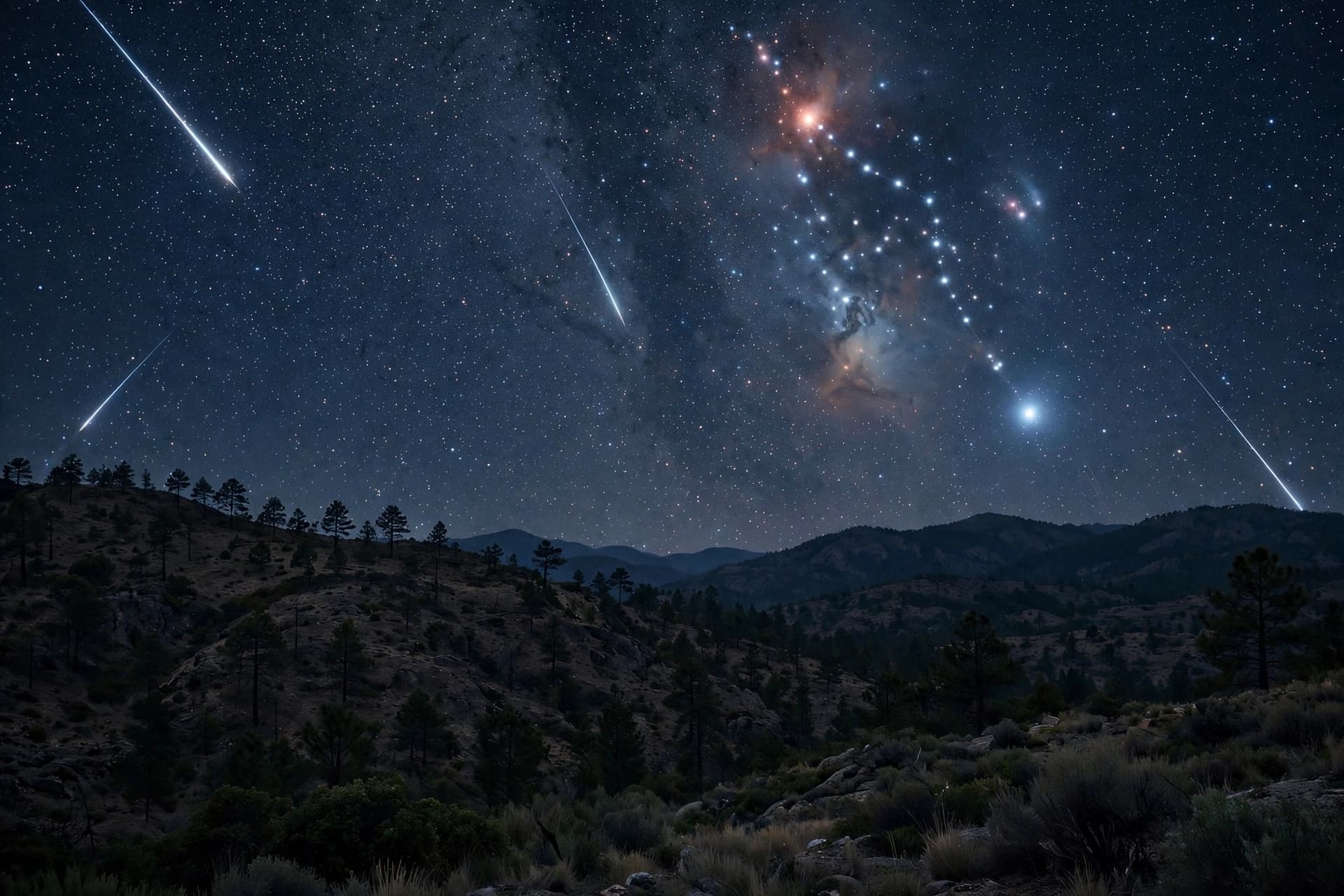
In the quiet language of the cosmos, shapes often emerge where physics meets imagination. A cloud of dust becomes a wing, a swirl of gas becomes a feather, and for a brief moment the universe seems to resemble something alive. It is not that space intends to draw pictures for us; rather, our minds gently translate chaos into familiar forms. A recent image from the Very Large Telescope invites that kind of quiet wonder. In a distant region of our galaxy, a vast nebula appears to spread its wings like a bird gliding across the night.
The scene lies about 2,300 light-years away in the constellation of Vela, where a stellar nursery known as RCW 36 quietly shapes new generations of stars. When astronomers recently observed the region using the VLT’s powerful infrared instrument, they noticed something striking: the arrangement of dust lanes and glowing gas resembles a hawk stretching its wings across space. Dark clouds near the center suggest the bird’s head and body, while long filaments of gas extend outward like wide, silent wings.
Yet the image is more than an evocative silhouette. Beneath this cosmic “hawk” lies a bustling nursery of newborn stars. Massive young stars illuminate the surrounding gas, causing the nebula to glow in shades of blue, red, and white. Their radiation pushes against the surrounding clouds, sculpting cavities and sweeping away dust as if clearing a nest for the next generation of celestial objects. Over millions of years, these energetic stars gradually reshape the environment that gave birth to them.
To reveal this hidden landscape, astronomers relied on the HAWK-I instrument mounted on the Very Large Telescope. Observing in near-infrared light allows scientists to peer through thick curtains of interstellar dust that would otherwise obscure the region. In visible light, RCW 36 appears tangled and opaque. But in infrared wavelengths, the clouds become partially transparent, exposing clusters of stars that were previously concealed within the nebula.
Among the most intriguing objects revealed in this observation are brown dwarfs — celestial bodies that hover between planets and stars. These “failed stars” contain more mass than giant planets but not enough to ignite sustained hydrogen fusion in their cores. By studying these faint objects within RCW 36, astronomers hope to better understand how stars form and why some clouds collapse into full-fledged stars while others stall along the way.
In that sense, the image of the cosmic hawk is more than a curiosity of shape. It is a snapshot of stellar birth, captured at a moment when gravity, radiation, and dust all interact in delicate balance. Massive stars are pushing outward, younger stars are emerging from dense filaments, and still more may yet form within the remaining clouds.
Astronomers sometimes describe these processes in technical language — ionized hydrogen regions, infrared wavelengths, molecular ridges. Yet images like this remind us that the universe also communicates through beauty. The hawk shape is accidental, of course, but it offers a poetic window into an otherwise invisible drama unfolding far beyond our sky.
In time, the structure we see today will change. Stellar winds will disperse the surrounding gas, new stars will drift apart, and the shape of the nebula will slowly dissolve into the broader fabric of the Milky Way. For now, however, the cosmic hawk appears suspended in flight — a quiet guardian over a nest of young stars still learning to shine.
AI Image Disclaimer Illustrations were produced with AI and serve as conceptual depictions.
Source Check Credible sources covering the story exist. Mainstream / reputable science outlets include:
European Southern Observatory (ESO) Phys.org Universe Today DIYPhotography ScienceDaily
Published by Banx Network. This article is part of the Banx decentralized media programme, powered by the BXE token on the XRP Ledger.