

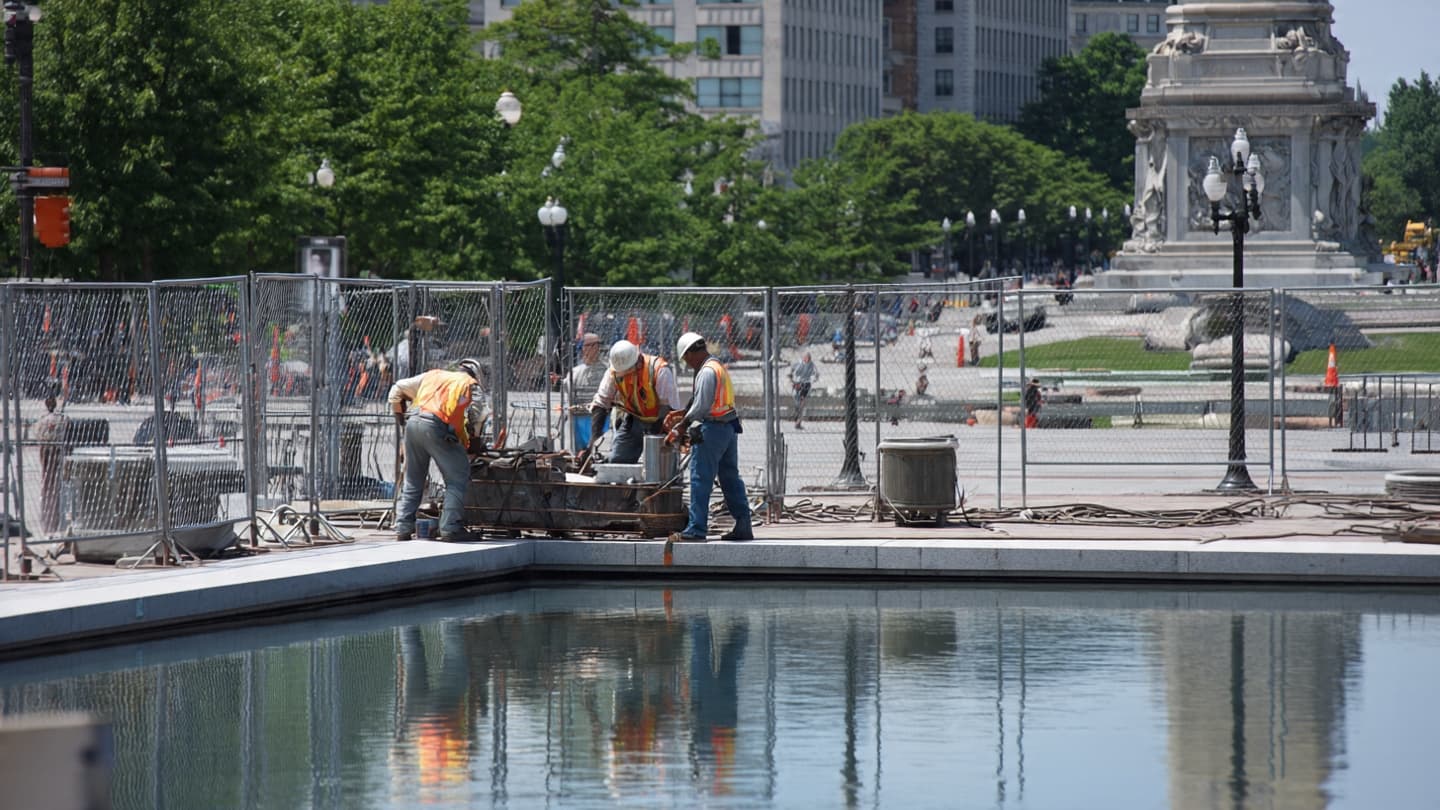
Key Highlights
- Renovation Cost:The Lincoln Memorial Reflecting Pool renovation is estimated to exceed $14 million.
- Project Delays:Algae growth and peeling liner materials have caused unexpected setbacks.
- Political Debate:The renovation has sparked discussions about federal responsibilities in preserving national landmarks.
The Lincoln Memorial Reflecting Pool, a significant national monument in Washington, D.C., has long stood as a symbol of remembrance and civic pride. Recently, however, the pool has become a focal point for public discourse, not just for its historical significance but also due to the complications arising from its multimillion-dollar renovation project. Initiated under the Trump administration, the renovation was intended to modernize the iconic site, but it has faced numerous challenges that threaten to delay its completion.
The renovation project, which is projected to cost over $14 million, was touted by President Trump as a necessary enhancement to one of the nation's most recognizable landmarks. However, reports have surfaced indicating that the project has encountered significant setbacks, including extensive algae growth and the deterioration of newly installed liner materials. These issues have raised concerns about the water quality and overall appearance of the reflecting pool, which is a central feature of the National Mall.
As the renovation progresses, officials have acknowledged that the timeline for completion remains uncertain. Sections of the new lining have reportedly peeled away, necessitating additional repairs. This has led to worries that the delays could impact preparations for upcoming national celebrations, particularly those tied to America's 250th anniversary in 2026. The reflecting pool, which stretches 2,028 feet along the National Mall, is not only a popular tourist destination but also a site of significant national events.
The challenges surrounding the renovation have sparked a broader political debate regarding the management of national landmarks. Critics have raised questions about the procurement processes involved in the renovation, suggesting that transparency and accountability may be lacking. Supporters, on the other hand, argue that preserving such historic sites is a vital federal responsibility that should be prioritized, regardless of the challenges faced.
As the situation unfolds, analysts and historians have begun to interpret the difficulties of the reflecting pool renovation through various political lenses. The polarized atmosphere surrounding public initiatives has led to differing opinions on the implications of the project’s setbacks. Some view it as a reflection of broader issues within federal contracting and project management, while others see it as an opportunity to reinforce the importance of maintaining national heritage.
Despite the ongoing challenges, federal officials remain committed to completing the necessary repairs and restoring the reflecting pool to its former glory. The National Mall continues to welcome visitors, although certain construction areas are currently restricted. As restoration efforts advance, the reflecting pool stands as both a physical landmark and a poignant reminder of the complexities involved in preserving historic public spaces for future generations.
Published by Banx Network. This article is part of the Banx decentralized media programme, powered by the BXE token on the XRP Ledger.




