
Space exploration has always carried a sense of gradual arrival, as if humanity steps forward not in leaps, but in carefully measured invitations from the universe itself. For Australia, the recognition of its first astronaut being invited toward the International Space Station marks such a moment of quiet progression.
Katherine Bennell-Pegg’s inclusion in international astronaut pathways reflects Australia’s growing participation in human spaceflight programs. Rather than emerging suddenly, this development is the result of years of training, collaboration, and institutional engagement with global space agencies.
The International Space Station itself functions as one of the most complex scientific laboratories ever constructed, orbiting Earth while hosting experiments across physics, biology, and Earth observation. Participation in missions connected to it requires extensive preparation and coordination among international partners.
Australia’s space sector has expanded in recent years, with increasing investment in satellite technology, research initiatives, and partnerships with agencies such as NASA and the European Space Agency. Bennell-Pegg’s role is often viewed within this broader context of national capability development.
Astronaut training typically involves simulations, physical conditioning, and technical education designed to prepare individuals for microgravity environments and operational responsibilities aboard orbital stations. The process is highly selective and extends over many years.
Public interest in such milestones often reflects a broader curiosity about humanity’s place beyond Earth. Rather than being solely about individual achievement, these moments tend to symbolize collective scientific progress and international cooperation.
As discussions continue around future missions, including potential commercial and research flights, Australia’s involvement may expand further into areas of space exploration that were once considered distant ambitions.
The invitation extended to Australia’s first astronaut represents not an endpoint, but a quiet opening—one that connects a growing space program to the shared orbit of human exploration.
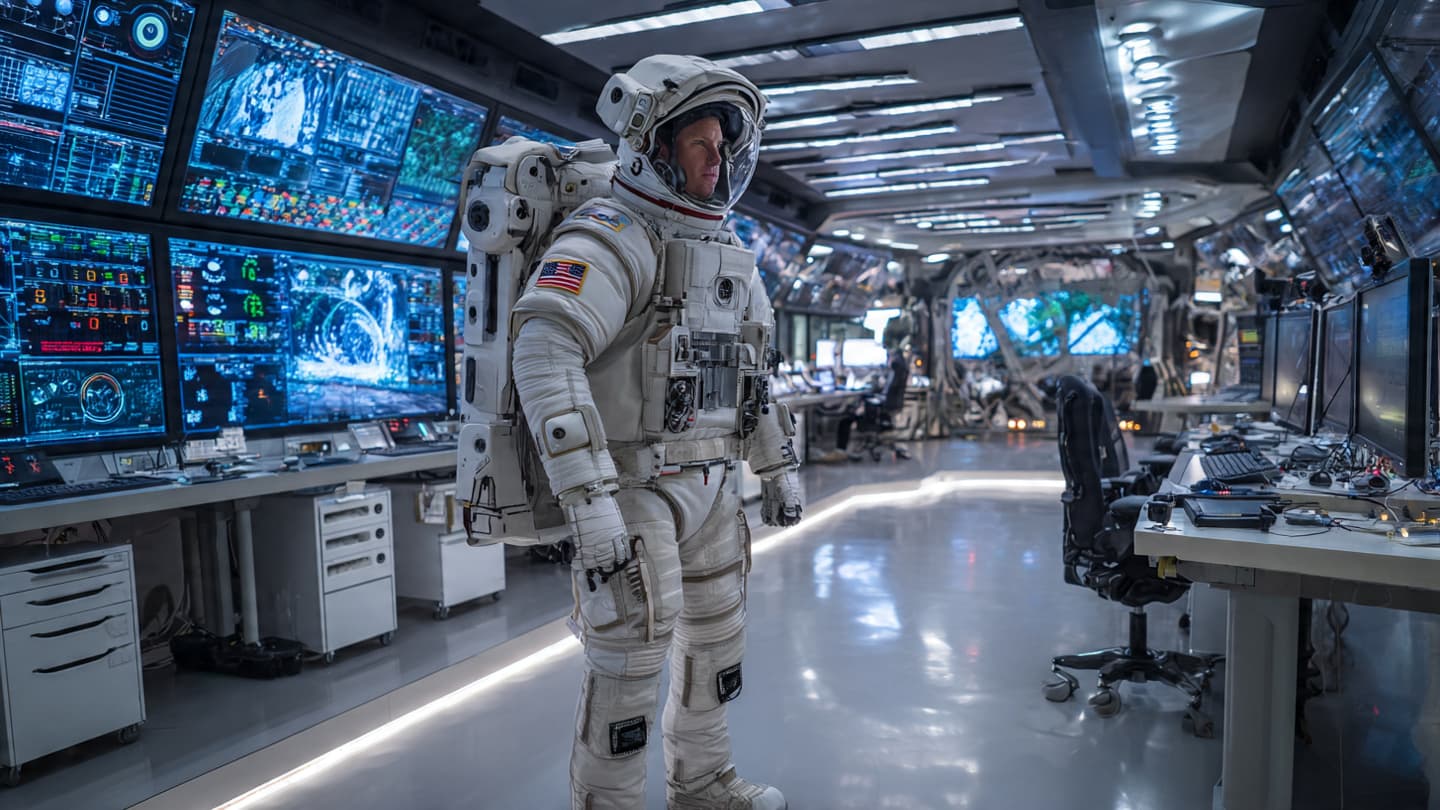
AI Image Disclaimer: Some visuals in this article may be AI-generated to represent space and training environments for illustrative purposes.
Source Verification Check: NASA, Australian Space Agency, ABC News, Reuters, BBC Science, The Guardian
Published by Banx Network. This article is part of the Banx decentralized media programme, powered by the BXE token on the XRP Ledger.



