
Key Highlights
- Campaign Launch:Péter Magyar announces his candidacy for Hungary's parliamentary elections.
- Economic Focus:Magyar emphasizes tackling corruption and economic reforms.
- EU Relations:He aims to strengthen Hungary's ties with European partners.
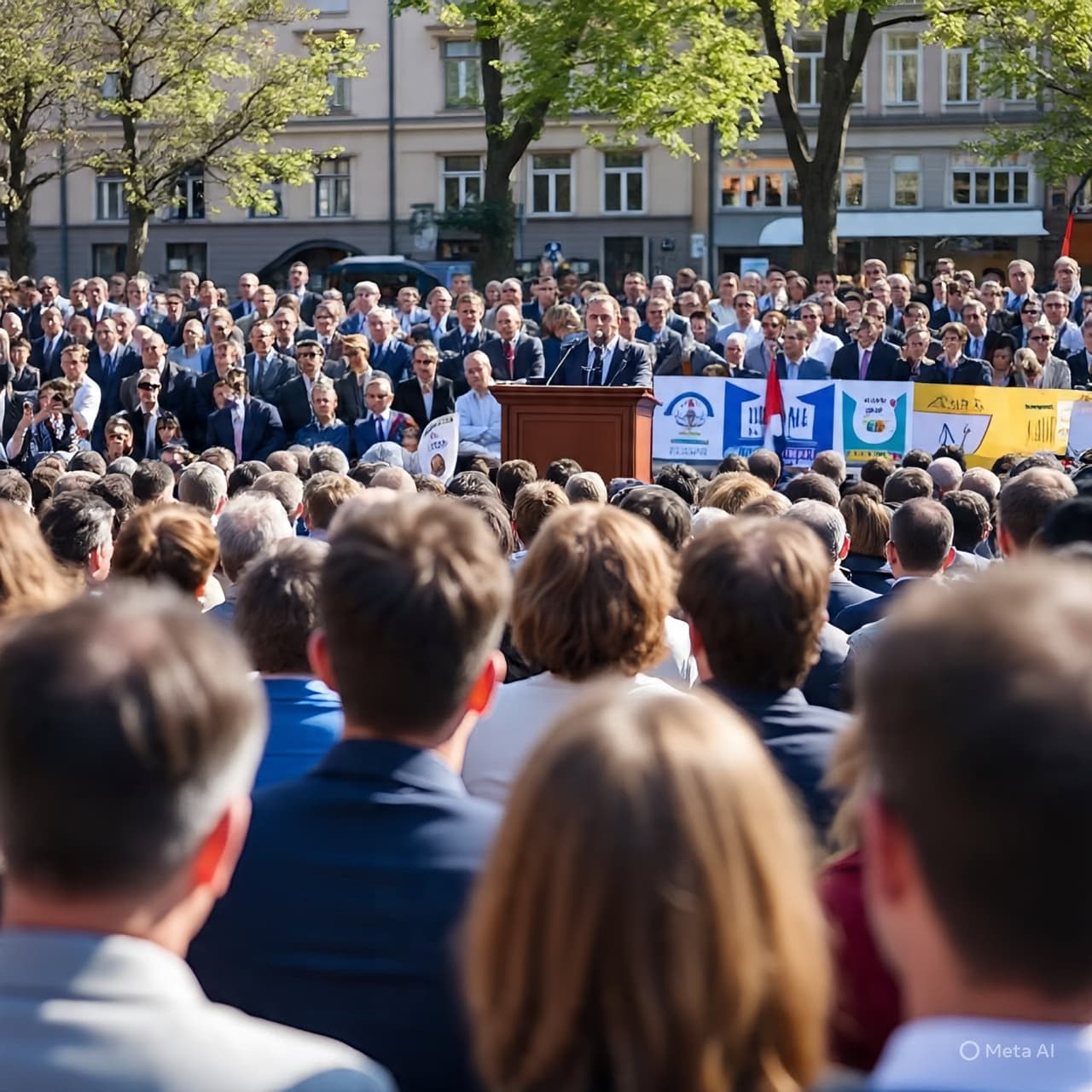
Péter Magyar, the Hungarian opposition leader and head of the Tisza party, recently launched his campaign for the upcoming parliamentary elections, marking a significant moment in Hungary's political landscape. On a brisk Sunday in mid-February 2026, Magyar addressed supporters in Budapest, framing his candidacy as a pivotal opportunity for the nation to reconsider its direction. His message resonated with themes of renewal and reconnection, particularly in the context of Hungary's relationship with the European Union.
During his speech, Magyar articulated a vision for Hungary that seeks to steer the country “back toward the West,” a clear reference to the perceived drift away from European partners under the long-standing leadership of Prime Minister Viktor Orbán. As a former member of Orbán's Fidesz party, Magyar's transition to opposition leader positions him uniquely to critique the current government while advocating for continuity in certain policies, such as border controls. His campaign promises include tackling corruption, enhancing transparency, and addressing the economic challenges faced by ordinary Hungarians, including stagnant wages and rising living costs.
Magyar's approach is characterized by a thoughtful and earnest tone, distinguishing his campaign from the often confrontational rhetoric associated with Orbán's administration. Rather than resorting to harsh criticisms, he emphasizes the importance of addressing everyday issues that resonate with voters. This strategy aims to connect with those who feel marginalized by the political status quo, offering a vision of economic improvement and public-service reforms that prioritize the needs of citizens.
In addition to economic reforms, Magyar has made a commitment to protecting personal freedoms and civil liberties, addressing concerns about political accountability and the integrity of democratic processes. His campaign underscores the significance of shared purpose among Hungarians, advocating for a collective effort to navigate the complexities of national and international challenges.
As the April 12 elections approach, Magyar's narrative extends beyond mere party competition; it encapsulates a broader discourse about Hungary's identity and future within Europe. He has expressed a desire to fulfill the criteria for adopting the euro and to invest in public health and infrastructure, framing these goals within a cultural and civic context that resonates with the electorate.
This reflective and inclusive tone stands in stark contrast to Orbán's assertive leadership style, which has often emphasized sovereignty and migration issues. Magyar's campaign, with its focus on democratic norms and constructive engagement with European institutions, appeals to a populace weary of political polarization and eager for new solutions.
As political conversations in Hungary evolve, Magyar's candidacy represents a moment of introspection and potential change. Polling data suggests that his party is gaining traction, indicating a competitive electoral environment as the nation prepares for a critical democratic milestone. Magyar's campaign not only challenges Orbán's long-standing dominance but also invites Hungarians to reconsider their priorities and the future of their governance.
In summary, Péter Magyar's campaign launch signals a significant shift in Hungary's political landscape, offering a vision of renewal and engagement as the country approaches its parliamentary elections. His focus on economic reforms, personal freedoms, and EU relations positions him as a formidable contender in the upcoming electoral battle.
Published by Banx Network. This article is part of the Banx decentralized media programme, powered by the BXE token on the XRP Ledger.



