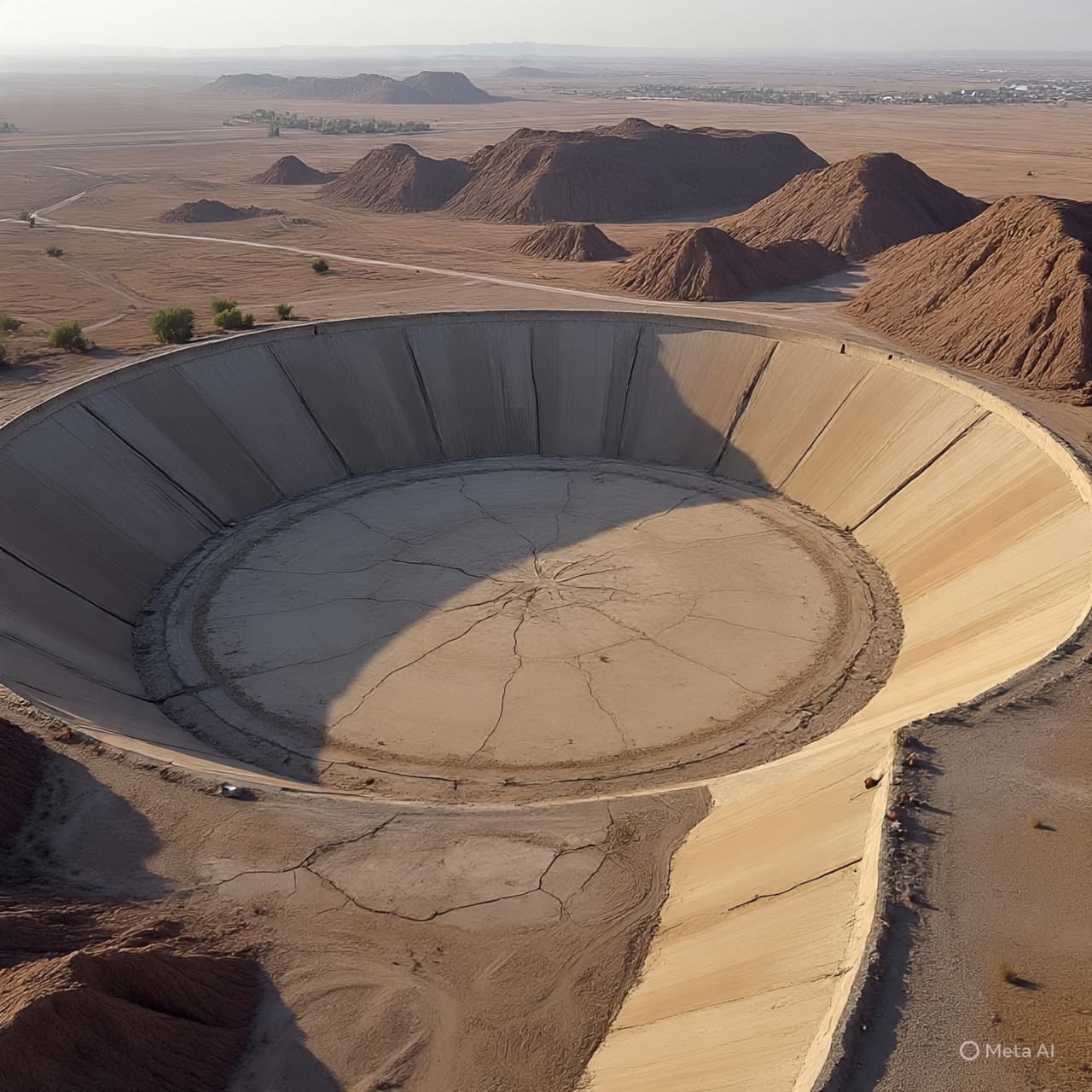
Sometimes a crisis begins with silence: a river that does not refill, an aquifer that drops one more centimeter, a farming district that quietly chooses which crop will survive this season.
Experts now say Iran is entering a phase of critical water scarcity — a structural shortage that is no longer seasonal, no longer cyclical, but potentially irreversible at long scale.
This isn’t only about drought.
This is the accumulation of decades of groundwater extraction, uneven climate patterns, rapid population growth, and industrial demand that outpaced natural replenishment. And environmental analysts inside multilateral institutions warn that this slow breakdown will eventually influence more than agriculture.
Water, in the modern state, is an input for everything.
Cities need it for cooling industrial loads. Energy plants require stable flow rates to manage operational safety. Scientific programs, high-tech facilities, and large-scale strategic projects all depend on predictable hydrological infrastructure.
When water becomes unstable, state capacity becomes unstable.
The danger is not cinematic — it is bureaucratic. It shows up in the small hidden corners: municipal networks under strain, food imports rising, farming dependency shifting toward political pressure, power plants operating with anxious margins.
In that sense, critical water scarcity is not a future headline.
It is a force multiplier.
It makes every other challenge heavier.
And in Tehran, environmental scientists have started to define this as a pivot point: water is no longer a passive natural resource — it has become a national limiting factor.
Published by Banx Network. This article is part of the Banx decentralized media programme, powered by the BXE token on the XRP Ledger.