There are moments in global affairs when geography quietly reminds the world of its power. A narrow waterway, barely visible on most maps, suddenly becomes the hinge on which economies turn. Today, the Strait of Hormuz — a thin maritime corridor between the Persian Gulf and the open ocean — has again emerged as such a hinge, as war involving Iran disrupts the flow of oil and natural gas that sustains much of Asia’s economic engine.
Ships that once crossed those waters with predictable rhythm now move under uncertainty. Tankers hesitate, insurers reconsider risks, and markets react with nervous speed. Nearly a fifth of the world’s oil and liquefied natural gas passes through this chokepoint, meaning that even partial disruption can ripple far beyond the region. In recent days, Brent crude prices have climbed roughly 15%, reflecting a market suddenly aware of how fragile energy supply routes can be.
For Asia, the implications are especially significant. The region depends heavily on imported fuel, much of it originating in the Middle East and transported through Hormuz. China and India, the world’s largest and third-largest crude importers respectively, sit at the center of this dependency. Higher energy prices could ripple across transportation networks, industrial output, and household costs in both economies.
Some countries may weather the turbulence more comfortably than others. China, for instance, maintains sizable strategic reserves and has diversified some energy imports, including purchases from sanctioned producers. India’s reserves, while meaningful, are more limited, leaving it somewhat more exposed to sudden price shocks. The scale of both economies means that even modest shifts in supply costs can influence inflation, trade balances, and economic growth.
Further east, the vulnerabilities take different forms. Japan and South Korea import the vast majority of their energy, and Taiwan relies heavily on liquefied natural gas shipments, including supplies from Qatar. Strategic reserves provide temporary protection, but analysts note that such buffers are designed for short disruptions, not prolonged geopolitical turbulence. Industries that rely heavily on steady energy supplies — such as Taiwan’s semiconductor sector — could feel pressure if shipments remain uncertain.
Meanwhile, the situation is equally delicate in Southeast Asia. Energy-hungry economies across the region often rely on spot markets for fuel purchases, leaving them exposed when competition intensifies. In times of shortage, wealthier nations can outbid smaller or developing countries for cargoes, creating a cascade of higher domestic fuel prices and government responses ranging from conservation campaigns to export suspensions.
The energy sector itself is also adjusting. Refining margins across Asia have surged to multi-year highs as refineries respond to tightening supply, while global shipping routes and insurance premiums shift to reflect heightened risk in the Gulf. Analysts note that even without a full closure of Hormuz, logistical delays, rerouting, and security concerns can significantly reduce the effective flow of fuel across global markets.
Behind these immediate market reactions lies a broader reflection about the structure of global energy systems. For decades, economic growth across Asia has been fueled by imported fossil energy moving through a handful of strategic maritime passages. The current disruption underscores how concentrated and interconnected that system remains — and how quickly geopolitical tensions can test its resilience.
Governments across the region are now balancing caution with preparation. Many are monitoring reserves, securing alternative suppliers, and encouraging conservation measures while the situation evolves. For now, the world’s energy arteries continue to flow, albeit under strain, reminding policymakers and markets alike that stability in distant waterways often shapes everyday life far beyond the horizon.
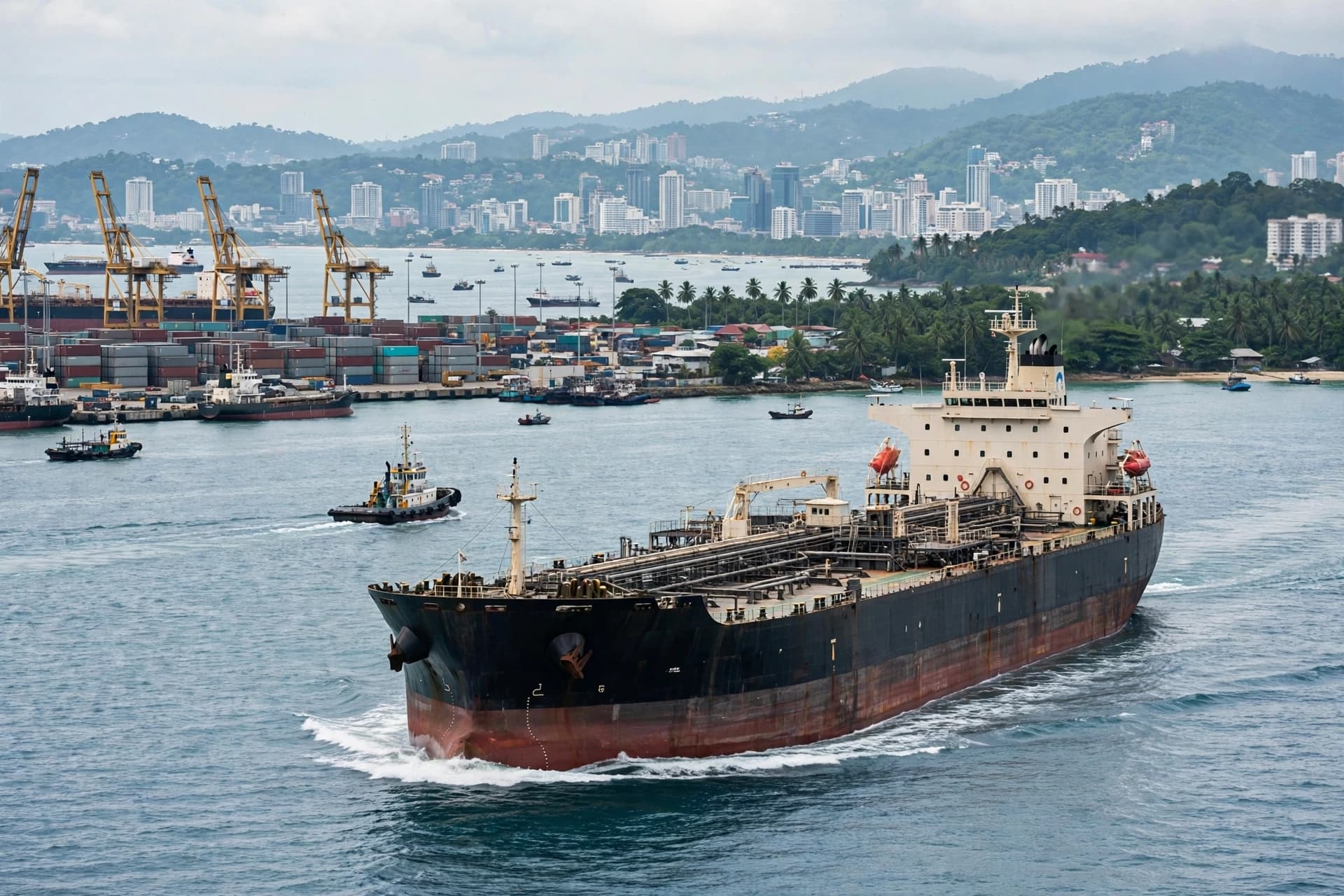
AI Image Disclaimer
Visuals in this article were created using AI tools and are intended as conceptual illustrations There are moments in global affairs when geography quietly reminds the world of its power. A narrow waterway, barely visible on most maps, suddenly becomes the hinge on which economies turn. Today, the Strait of Hormuz — a thin maritime corridor between the Persian Gulf and the open ocean — has again emerged as such a hinge, as war involving Iran disrupts the flow of oil and natural gas that sustains much of Asia’s economic engine.
Ships that once crossed those waters with predictable rhythm now move under uncertainty. Tankers hesitate, insurers reconsider risks, and markets react with nervous speed. Nearly a fifth of the world’s oil and liquefied natural gas passes through this chokepoint, meaning that even partial disruption can ripple far beyond the region. In recent days, Brent crude prices have climbed roughly 15%, reflecting a market suddenly aware of how fragile energy supply routes can be.
For Asia, the implications are especially significant. The region depends heavily on imported fuel, much of it originating in the Middle East and transported through Hormuz. China and India, the world’s largest and third-largest crude importers respectively, sit at the center of this dependency. Higher energy prices could ripple across transportation networks, industrial output, and household costs in both economies.
Some countries may weather the turbulence more comfortably than others. China, for instance, maintains sizable strategic reserves and has diversified some energy imports, including purchases from sanctioned producers. India’s reserves, while meaningful, are more limited, leaving it somewhat more exposed to sudden price shocks. The scale of both economies means that even modest shifts in supply costs can influence inflation, trade balances, and economic growth.
Further east, the vulnerabilities take different forms. Japan and South Korea import the vast majority of their energy, and Taiwan relies heavily on liquefied natural gas shipments, including supplies from Qatar. Strategic reserves provide temporary protection, but analysts note that such buffers are designed for short disruptions, not prolonged geopolitical turbulence. Industries that rely heavily on steady energy supplies — such as Taiwan’s semiconductor sector — could feel pressure if shipments remain uncertain.
Meanwhile, the situation is equally delicate in Southeast Asia. Energy-hungry economies across the region often rely on spot markets for fuel purchases, leaving them exposed when competition intensifies. In times of shortage, wealthier nations can outbid smaller or developing countries for cargoes, creating a cascade of higher domestic fuel prices and government responses ranging from conservation campaigns to export suspensions.
The energy sector itself is also adjusting. Refining margins across Asia have surged to multi-year highs as refineries respond to tightening supply, while global shipping routes and insurance premiums shift to reflect heightened risk in the Gulf. Analysts note that even without a full closure of Hormuz, logistical delays, rerouting, and security concerns can significantly reduce the effective flow of fuel across global markets.
Behind these immediate market reactions lies a broader reflection about the structure of global energy systems. For decades, economic growth across Asia has been fueled by imported fossil energy moving through a handful of strategic maritime passages. The current disruption underscores how concentrated and interconnected that system remains — and how quickly geopolitical tensions can test its resilience.
Governments across the region are now balancing caution with preparation. Many are monitoring reserves, securing alternative suppliers, and encouraging conservation measures while the situation evolves. For now, the world’s energy arteries continue to flow, albeit under strain, reminding policymakers and markets alike that stability in distant waterways often shapes everyday life far beyond the horizon.
AI Image Disclaimer
Visuals in this article were created using AI tools and are intended as conceptual illustrations rather than real photographs
Source Check
Associated Press Reuters The Wall Street Journal The Guardian Korea JoongAng Daily
Published by Banx Network. This article is part of the Banx decentralized media programme, powered by the BXE token on the XRP Ledger.