In laboratories where the air is filtered and silence often accompanies careful hands, the future sometimes begins quietly. No roaring engines, no dramatic countdowns—just engineers leaning over delicate instruments, wires gently connected, systems awakened one by one. It is here, in these calm rooms on Earth, that humanity prepares its most daring questions for the cosmos.
The latest chapter of that preparation belongs to NASA’s Dragonfly mission. Designed as a rotorcraft that will one day fly through the hazy skies of Titan, Saturn’s largest moon, Dragonfly has now entered a crucial stage: integration and testing. It is the moment when ideas, once confined to drawings and simulations, begin to gather into something tangible—a machine slowly learning to become a spacecraft.
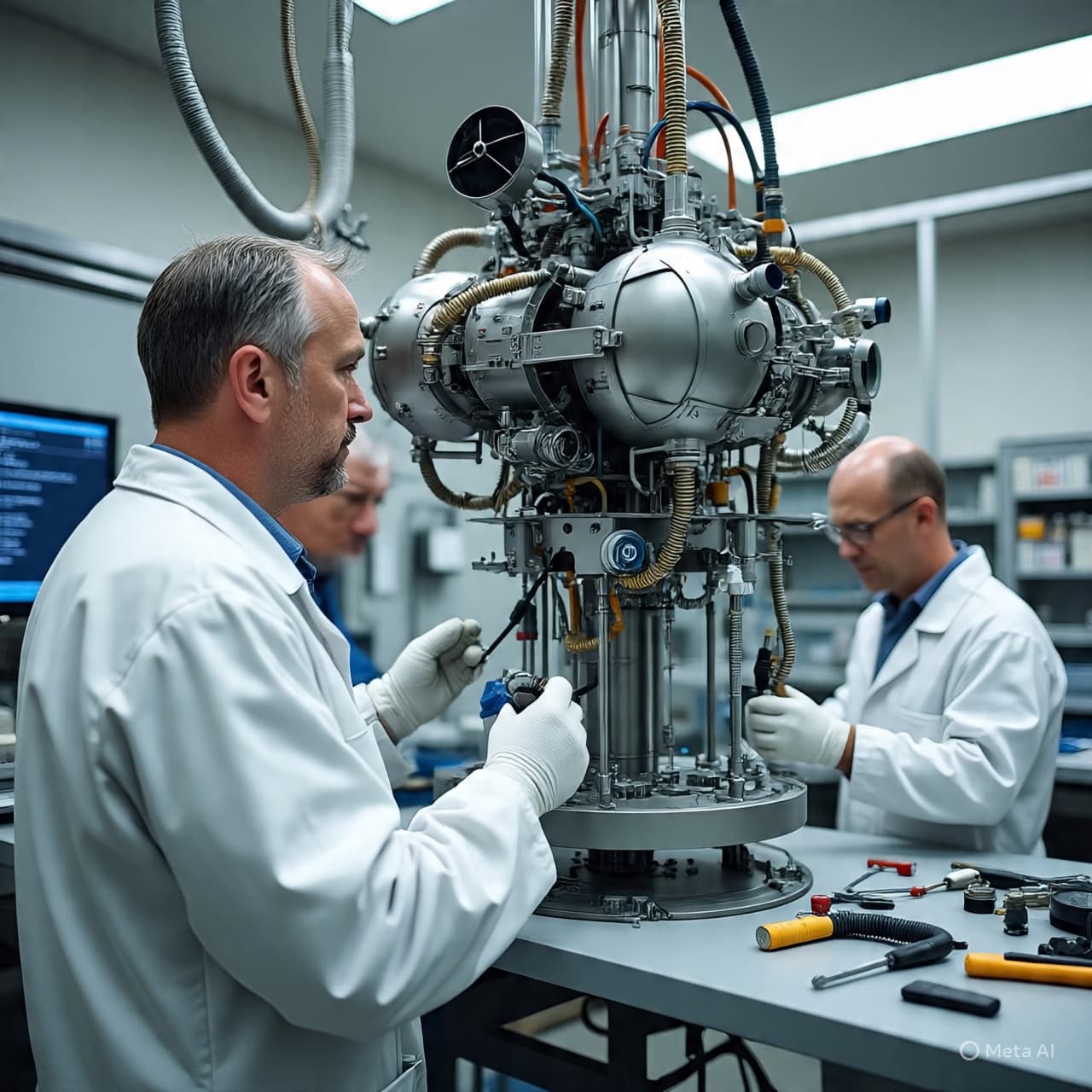
At the Johns Hopkins Applied Physics Laboratory in Maryland, engineers have begun assembling and testing the central components of Dragonfly’s flight system. Among the first elements undergoing examination is the Integrated Electronics Module, a compact system often described as the “brain” of the rotorcraft. Within it lie the avionics that will guide the craft’s navigation, communications, and command systems once it departs Earth. Alongside it are the Power Switching Units, responsible for distributing energy to instruments and subsystems that will eventually operate far beyond our planet.
These early tests focus on ensuring that power flows correctly and that the systems respond as expected when awakened for the first time. It may sound modest, but for mission engineers it marks a meaningful threshold. After years of design work and laboratory experiments, the spacecraft’s components are beginning to function together as a unified system.
The Dragonfly mission itself carries an ambitious vision. Roughly the size of a small car and powered by a radioisotope energy source, the rotorcraft is designed to explore Titan by flying between multiple locations on the moon’s surface. Titan’s thick atmosphere and low gravity make flight surprisingly practical there, allowing Dragonfly to travel kilometers at a time between scientific sites—something no rover could accomplish.
Titan has long intrigued planetary scientists. Beneath its orange haze lie dunes of organic material, icy terrain, and lakes of liquid methane and ethane. Its chemistry, rich with carbon-based molecules, resembles conditions that scientists believe may have existed on early Earth. By sampling materials from different landscapes, Dragonfly hopes to study the chemical pathways that could lead toward life.
But before it can investigate that distant world, the spacecraft must first prove itself here at home. Integration and testing will continue throughout 2026 and into early 2027. During this period, engineers will connect additional systems, simulate launch conditions, and ensure the vehicle can withstand the stresses of space travel and Titan’s frigid environment.
Later stages will involve more comprehensive system-level testing at Lockheed Martin facilities in Colorado, followed by final environmental trials. Only after these careful preparations will Dragonfly travel to NASA’s Kennedy Space Center, where it is scheduled to launch no earlier than 2028 aboard a Falcon Heavy rocket.
If all proceeds as planned, the rotorcraft will embark on a six-year journey across the solar system, eventually reaching Titan in the mid-2030s. There, in skies never before crossed by human-made aircraft, Dragonfly will rise from the surface and glide from one landscape to another, carrying instruments designed to read the chemistry of an alien world.
For now, though, the story remains grounded in the quiet patience of engineering. Each wire connected, each system tested, is a small promise to the future. And somewhere beyond Saturn’s rings, Titan waits—silent, distant, and full of questions.
AI Image Disclaimer Visuals are created with AI tools and are not real photographs.
Sources NASA Science Space.com Astrobiology Magazine Moneycontrol The Business Monthly
Published by Banx Network. This article is part of the Banx decentralized media programme, powered by the BXE token on the XRP Ledger.