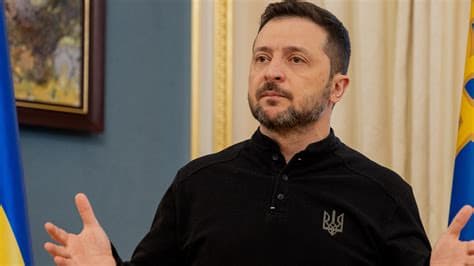
In the quiet corridors of justice, where echoes of history meet the weight of present verdicts, a country pauses to listen. It is here, in the measured hush of Seoul’s Central District Court, that South Korea’s recent political storm finds its moment of judgment — a place where the past, the law, and the collective conscience of a nation converge.
The prosecutors’ request for the death penalty against former President Yoon Suk Yeol has drawn international attention and stirred deep, reflective debate about the meaning of accountability in a democracy. The charge at the heart of the request: that Yoon’s brief declaration of martial law in December 2024 an action prosecutors describe as an insurrection aimed at retaining power struck at the very bedrock of the constitutional order.
For many observers, this moment feels like more than a courtroom drama. It reads like a ledger in which a nation must tally the weight of leadership, the imperatives of constitutional restraint, and the symbolic power of punishment. In their closing arguments, prosecutors asserted that the former president’s actions were not merely an overreach of authority but a threat to democratic institutions, one severe enough to merit the harshest legal penalty still on the books.
Yoon, who denies wrongdoing and frames his declaration of martial law as a constitutional exercise meant to confront political obstruction, stands at the center of a legal and moral crucible. His defense underscores tension between executive latitude and democratic limits a narrative that resonates beyond court transcripts into the wider conversation about governance and rights in divided societies.
Yet, the broader context colors this request with nuance. South Korea retains the death penalty in law but has observed an unofficial moratorium on executions since 1997, a practice shaped by decades of democratic evolution and human rights advocacy. International human rights voices have cautioned that pursuing capital punishment, even symbolically, can feel like a step backward for those values that uphold dignity and due process.
The request also frames an ongoing national reckoning with the specters of power and protest, the push and pull of legislative authority, and the public’s role in defending democratic norms. What was a tumultuous few hours of martial law has grown into a sustained legal saga, involving additional charges and trials and stretching into the fabric of South Korea’s collective political memory.
As judges prepare to deliberate and a verdict is anticipated in February, the country watches with a sense of gravity that extends beyond the courtroom. The outcome will not only shape the immediate future of a former leader but will resonate through discussions about how a modern democracy confronts its own transgressions balancing justice, historical experience, and the promise of the rule of law.
AI Image Disclaimer
Illustrations were produced with AI and serve as conceptual depictions, not real photographs.
Credible sources found (mainstream / reputable):
1. Reuters 2. AP News (Associated Press) 3. Washington Post 4. Amnesty International 5. South China Morning Post (SCMP)
Published by Banx Network. This article is part of the Banx decentralized media programme, powered by the BXE token on the XRP Ledger.