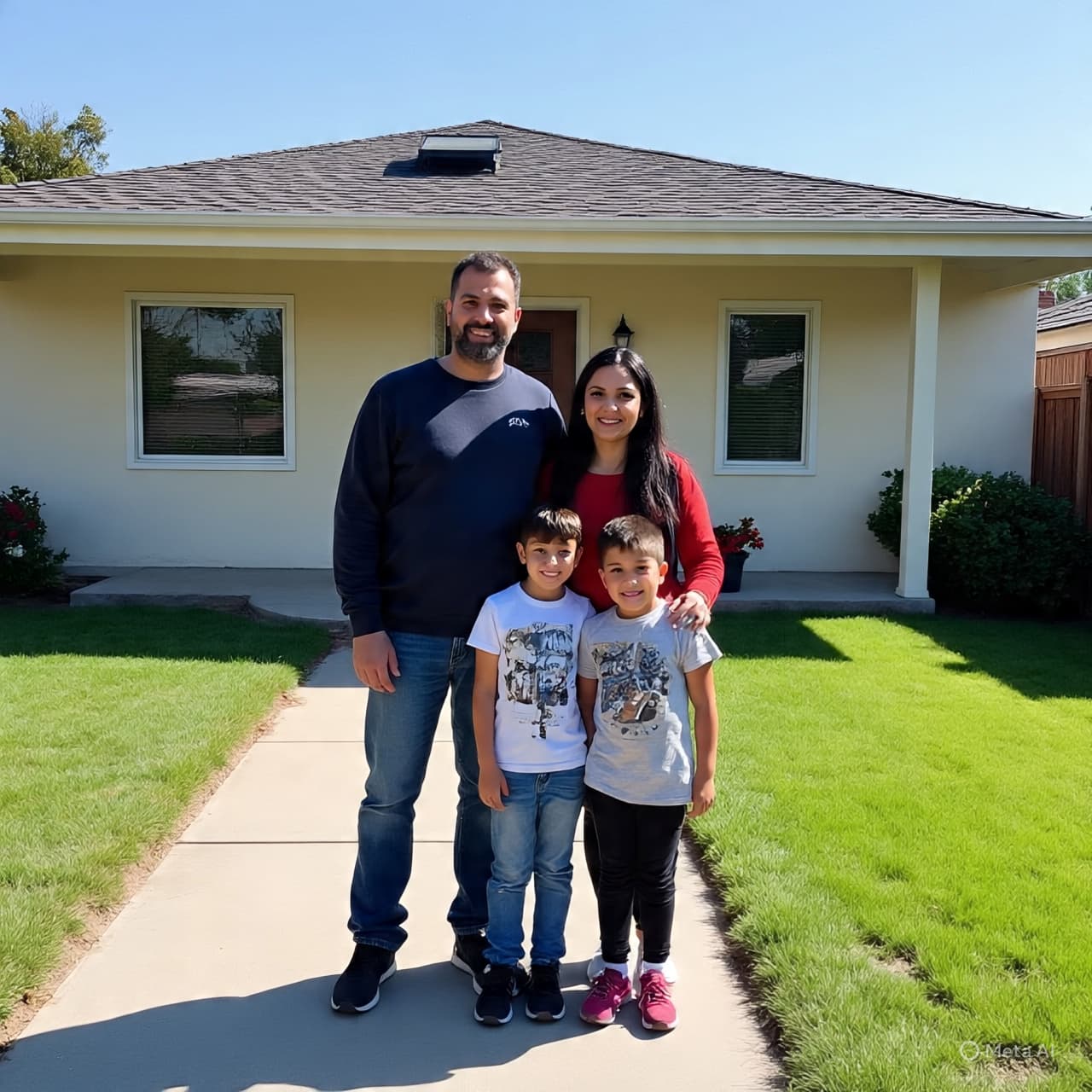
For some children, a house is an ordinary thing — walls, a door, a window framing the sky. For others, it is an idea first imagined long before it is seen. In the quiet testimonies of Syrian children who have resettled in Australia, one sentence lingers with particular weight: “I saw houses for the first time.” It is not merely a description of architecture, but of arrival — of crossing from uncertainty into something steadier.
Many of these children came from landscapes shaped by conflict, where buildings were reduced to fragments and daily life unfolded amid impermanence. Camps and temporary shelters were not pauses between homes; they were, for years, the only reality. In that context, the sight of intact streets in Australia — rows of homes standing whole and calm — can feel almost unreal.
Australia has resettled thousands of Syrian refugees over the past decade under humanitarian programs responding to the civil war that began in 2011. Families arriving often carry stories of displacement that stretch across borders — from Syria to neighboring countries, and eventually to cities and towns across Australia. For children, the journey is not measured in geopolitical milestones but in moments: a classroom desk, a backyard lawn, a bedroom of their own.
Parents speak of relief, but children often speak of discovery. Some recall the first time they saw uninterrupted electricity, or water running from a tap without fear of interruption. Others describe the strangeness of silence at night — no distant explosions, no sudden urgency to move. Safety, for them, is not an abstract policy; it is the absence of noise.
Schools have become central to their adjustment. In classrooms across Melbourne, Sydney, Adelaide, and regional communities, Syrian children are learning English while holding onto Arabic. Teachers and support workers describe resilience that coexists with fragility. Trauma does not vanish at arrival, but structure and routine can soften its edges.
Community organizations and local volunteers have played a quiet role in shaping these transitions. From helping families navigate public transport to assisting with paperwork and employment pathways, the support network extends beyond government policy. For children especially, integration often begins in playgrounds, where language barriers can dissolve in shared games.
Yet resettlement carries complexity. Many children balance gratitude with memory. They miss extended family members who remain abroad. They carry recollections of homes that no longer stand. The word “home” itself becomes layered — part geography, part longing, part new beginning.
Australia’s humanitarian intake has evolved over time, influenced by global displacement trends and domestic policy debates. While numbers fluctuate, the lived experience of each arriving family unfolds quietly, one household at a time. In suburbs and regional towns, Syrian Australians are gradually weaving their stories into the broader national fabric.
The phrase “I saw houses for the first time” reminds listeners that stability is not universal. What may appear ordinary to one child can represent the end of years defined by transience. In this sense, resettlement is both logistical and deeply human — involving visas and housing, but also trust and belonging.
As these children grow, their memories will stretch across continents. Some may remember camps and checkpoints; others will remember the first day of school in Australia. Between those memories lies a chapter shaped by courage and adaptation.
Today, many Syrian families continue to rebuild their lives across Australia, supported by settlement services and local communities. Their children attend school, form friendships, and imagine futures that once seemed distant. The houses they saw for the first time have become places of study, rest, and hope — ordinary structures carrying extraordinary meaning.
AI Image Disclaimer Visuals are created with AI tools and are not real photographs.
SOURCE CHECK
Credible mainstream sources covering this topic include:
The Guardian Australia ABC News Australia SBS News The Sydney Morning Herald Al Jazeera English
Published by Banx Network. This article is part of the Banx decentralized media programme, powered by the BXE token on the XRP Ledger.