Hotels in a capital city often feel like pauses within motion.
They sit between departures and arrivals, holding transient lives for a night or two before releasing them back into the rhythm of streets, meetings, and distant flights. In Washington, where political gravity and everyday routine share the same geography, these spaces are rarely just buildings—they are intersections of anonymity and exposure.
It is within such a space that an investigation continues to unfold after an alleged shooting incident at a hotel, with authorities in Washington releasing additional details as inquiries progress.
The early outlines of the case remain fragmented, as is often true in the first days of a criminal investigation. What is known so far comes from law enforcement briefings and preliminary reports, which suggest that the incident prompted an emergency response and a rapid securing of the premises.
Additional information emerging from investigators points to a focus on identifying the circumstances surrounding the suspect’s presence at the location, as well as the sequence of events leading up to the reported shooting.
In large urban investigations, particularly in a city like Washington, timelines are constructed carefully—reassembled from surveillance footage, witness accounts, access logs, and forensic evidence. Each piece does not immediately complete the picture, but instead adds another layer to a still-forming outline.
Hotels, by design, complicate such reconstructions.
They are spaces of constant movement: guests checking in and out, staff circulating through service corridors, deliveries passing through back entrances. This fluidity means that moments of disruption must be traced through overlapping systems of records and memory.
Authorities have not released comprehensive details regarding motive or identity at this stage, and investigations typically proceed cautiously in order to verify information before public confirmation.
What has been emphasized in official communications is the ongoing nature of the inquiry and the continued collection of evidence.
For residents and visitors in Washington, such incidents are often absorbed into the broader texture of city life, where security responses are visible but temporary—police tape eventually removed, entrances reopened, and normal activity gradually restored.
Still, the presence of an investigation leaves an imprint that is not immediately visible.
It exists in procedural memory: staff interviews conducted in quiet rooms, security footage reviewed frame by frame, radio communications replayed for timing and clarity.
In the broader context of urban safety, hotel incidents occupy a particular category of concern for law enforcement agencies. They involve both public access and private accommodation, requiring coordination between hotel management, local police, and sometimes federal authorities depending on jurisdiction and circumstances.
Washington, as a capital city, operates within this layered structure of security awareness more frequently than many other urban centers.
Yet even here, each incident retains its own specificity—its own chain of decisions, movements, and consequences that must be understood before conclusions are drawn.
At this stage, officials continue to gather information, and no final determinations have been publicly released regarding the full scope or motive behind the alleged shooting.
What remains is the investigative process itself: careful, incremental, and often quiet in its progression.
Outside the hotel, the city continues in its familiar rhythm.
Traffic lights change, government buildings maintain their schedules, and pedestrians move through intersections without knowledge of the details still being assembled behind closed doors.
And within that contrast—between the visible continuity of the city and the slower unfolding of investigation—lies the space where such events are ultimately understood.
Not immediately.
But gradually, as fragments settle into sequence, and sequence becomes story.
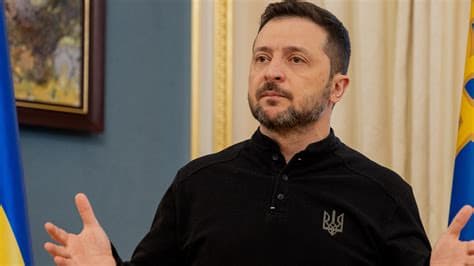
AI Image Disclaimer Visuals are AI-generated and serve as conceptual representations of an ongoing news investigation.
Sources Reuters Associated Press BBC News CNN Washington Post
Published by Banx Network. This article is part of the Banx decentralized media programme, powered by the BXE token on the XRP Ledger.